Arundhati Roy warns delimitation Bill could pave way for ‘forever fascism’ in India
Says proposed exercise would undermine democracy by redrawing constituencies along caste, religious and community lines
- Cites redrawn constituencies in Assam and Kashmir as evidence of a plan to consolidate BJP’s political control
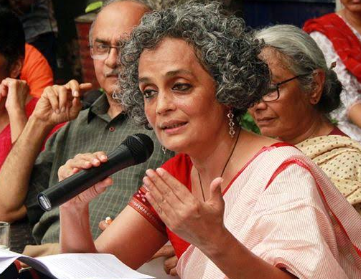
New Delhi: Booker Prize-winning Indian author Arundhati Roy has strongly criticised the BJP-led Indian government’s proposed delimitation Bill, describing it as a long-term plan to establish “forever fascism” and warning that it could deal a severe blow to democracy.
According to Kashmir Media Service, Roy made the remarks while speaking at the National Conclave of Writers, Artists and Cultural Practitioners at Jawahar Bhawan in New Delhi. Her comments came after the Indian Cabinet cleared a fresh delimitation Bill on Friday, reportedly proposing a 50 per cent increase in Lok Sabha seats across all states while retaining their existing relative share, based on the 1971 Census, until 2051.
“Delimitation will break the back of democracy. Do not let them fool you into believing that it is just about increasing the number of constituencies and the number of MPs. Do not believe that the women’s bill has anything to do with women’s rights. This has to do with redrawing the map of constituencies to consolidate the divisions of caste, religion and community,” she said.

The Modi government has convened a four-day special sitting of Parliament beginning November 30, during which it plans to introduce three bills aimed at implementing 33 per cent reservation for women in the Lok Sabha and state assemblies before the 2029 parliamentary elections. The proposed legislation also envisages a 50 per cent increase in the number of seats in each state.
Warning of democratic backsliding
Roy described the prevailing political situation in India as “democratic fascism, in which fascists are trying to murder the meaning of democracy”.
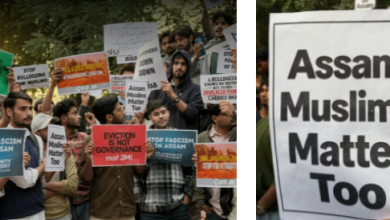
“If you have any doubts about their intention, please study the redrawn constituencies in Assam and Kashmir. This is about consolidating fascism. The Nazis, Germany’s fascists, call themselves national socialists. With this, they murdered the meaning of socialism,” she said.
She also criticised writers and artists who, she said, continued to compromise their dignity by participating in government-sponsored festivals. Roy argued that India remained one of the world’s most unequal societies, where the rule of law was applied differently depending on a person’s caste, class, religion and ethnicity.
Surveillance and repression
Roy further criticised the government’s use of surveillance technology, saying that it was acquiring software from Israel, which she said was continuing its genocide in Gaza, and now the Modi government was deploying such technology against young protesters in India.
“Our government is importing it to use illegally on us. It used facial recognition technology during the Cockroach Janta Party protests. It normalised the fact that it just identified some thousands of repeat offenders. It didn’t tell us how they defined repeat offenders,” she said.
She warned that the scale of repression being planned was “incredible”, adding that the delimitation Bill was intended to streamline and consolidate the government’s broader efforts to tighten control.
“It’s a long-term plan for forever fascism,” she said.
Roy likened the proposed delimitation exercise to the government’s earlier attempts “to ambush the people of India”, citing demonetisation in 2016, the revocation of the special status of Indian illegally occupied Jammu and Kashmir in 2019, and the nationwide lockdown announced in 2020 with only four hours’ notice.
She said the government believed it had secured enough MPs through pressure and inducements to pass the delimitation and women’s reservation bills.
“If this bill passes in Parliament, delimitation will do to democracy what demonetisation did to the economy,” Roy said.
She argued that demonetisation had severely harmed India’s poor, leaving many dependent on government assistance, while demonetisation and electoral bonds had helped turn the BJP into the world’s richest political party.
Roy further said that the ruling party had used its financial resources and influence to capture institutions meant to provide checks and balances in a functioning democracy.