India’s top army brass’s 2-day meet reflects Pakistan’s preparedness for Delhi misadventure
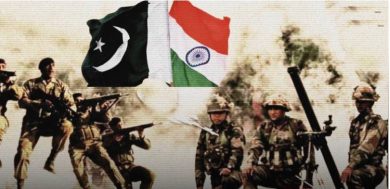 New Delhi: India’s top army commanders’ two-day conference, which began in New Delhi, is being viewed as a reflection of Pakistan’s robust military preparedness and its credible deterrence against any potential Indian misadventure along the Line of Control (LoC) or elsewhere.
According to Kashmir Media Service, the conference, chaired by Indian Army Chief General Upendra Dwivedi, reviewed operational readiness amid rising border tensions and growing internal unrest in occupied Jammu and Kashmir and Ladakh.
The two-day conclave—attended by all Army Commanders, Principal Staff Officers, and senior Ministry of Defence officials—deliberated on strengthening India’s border posture vis-à-vis Pakistan and China, enhancing cyber and space capabilities, and integrating artificial intelligence and big data into future combat operations. The Army’s leadership also reviewed the status of ongoing modernization projects under the Atmanirbhar Bharat initiative, including the induction of next-generation weapon systems and upgraded platforms.
Sources within the defence establishment confirmed that the meeting placed strong emphasis on the evolving strategic landscape, particularly in the wake of New Delhi’s recent decision to suspend the Indus Waters Treaty with Pakistan following the April 22 Pahalgam attack. The conference reportedly discussed “Operation Sindoor” and its broader implications for India’s regional security calculus. Commanders were also briefed on possible Pakistani responses and the potential fallout of India’s coercive measures.

Defence observers believe that such high-level meetings—held twice a year—have increasingly assumed a political dimension under the Modi-led government. The rhetoric of “future readiness” and “Atmanirbhar defence capability” is often projected to reinforce the image of a muscular India, both domestically and internationally. However, the heightened tempo of military preparedness, coupled with hostile posturing toward Pakistan and China, reflects New Delhi’s growing insecurity and internal political compulsions rather than a genuine pursuit of peace.
Analysts point out that India’s expanding militarization, aggressive border policies, and attempts to rewrite regional treaties under the pretext of “national interest” risk further destabilizing South Asia. Instead of pursuing dialogue and confidence-building measures, New Delhi appears to be relying on military projection to divert public attention from domestic challenges and unrest in occupied territories, particularly Jammu and Kashmir.
The commanders’ conference, therefore, underscores not only India’s strategic anxieties but also its increasing militarization of policy—a trend that could have far-reaching implications for regional stability and peace.