In the wake of the April 22, 2025 Pahalgam attack, in which 26 Indian civilians and one Nepali national were killed, New Delhi moved instantly into a familiar choreography: blame Pakistan first and ask questions later. Pakistan rejected the allegation and described the episode as a false-flag operation. The pattern is now too consistent to ignore. India’s rapid escalation, its media alignment, and its refusal to allow third-party verification indicate not spontaneous outrage but a rehearsed political strategy.
According to the Council on Foreign Relations’ South Asia Conflict Tracker, India’s reaction after Pahalgam fit an established escalation cycle: military alert, narrative dominance, and pre-emptive accusation, all launched before forensic confirmation. That is not investigative diplomacy. It is pre-scripted political theatre.


The pattern continued in early May with Operation Sindoor, when India launched cross-border strikes into Pakistan. The operation did not produce the strategic dividend New Delhi had anticipated. Pakistan not only absorbed the attack but gained diplomatic ground, including at the UN Security Council, where India struggled to present credible evidence or proportional justification. Pakistan’s restraint undermined India’s attempt to project itself as a wronged party seeking justified retribution.
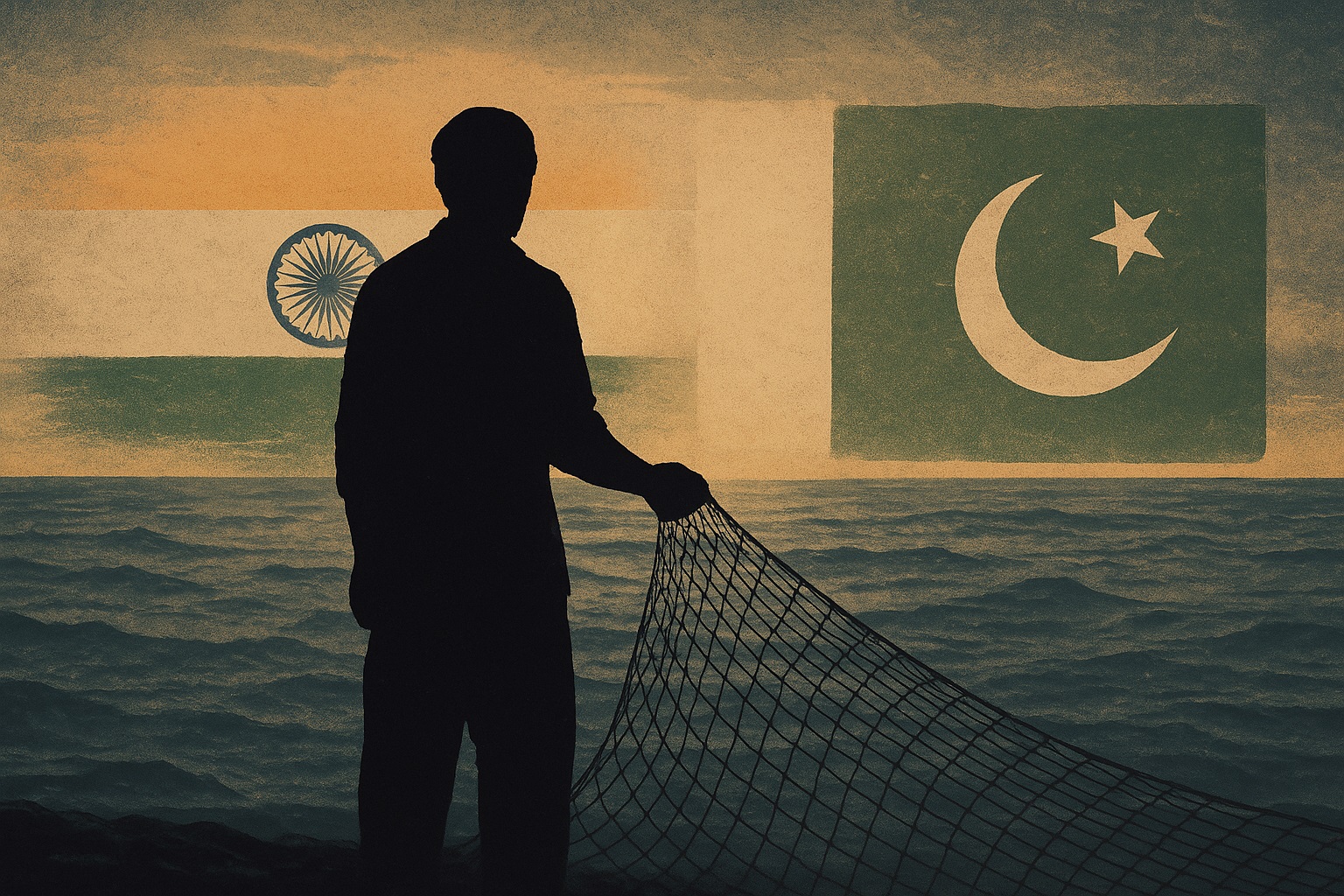
It is in this context that the latest allegation from Islamabad becomes significant. Pakistan’s Information Minister Atta Tarar disclosed on November 1, 2025 that Indian authorities had detained a Pakistani fisherman, Ijaz Mallah, and coerced him into espionage tasks as part of what Islamabad described as an attempted false-flag operation. This incident, does not represent a one-off abuse, but a continuation of a strategy: when real evidence fails, construct a substitute.
The timing is politically useful for India. With the Bihar state elections approaching on November 11, 2025, analysts quoted by Policy Wire, on April 30, 2025 have repeatedly observed how domestic electoral cycles in India often coincide with spikes in national-security narratives. Nationalism polls well in Bihar, and a fresh Pakistan-linked “threat” polls even better.
A Council on Foreign Relations panel discussion on May 15, 2025, featuring former U.S. Ambassador to India Kenneth Juster, warned that India’s Pakistan policy is increasingly shaped by domestic political incentives rather than military necessity. In a nuclear-armed region, the panel cautioned, manufacturing crises for electoral benefit is not merely reckless, it is destabilizing.
The same conclusion appears in an April 29, 2025 study by the Institute of Strategic Studies Islamabad, which describes Indian false-flag operations as a routine component of hybrid warfare. When a coerced civilian becomes a tool in statecraft, the traditional boundary between intelligence and propaganda collapses.
India continues to present itself as a stable democratic counterweight in the region, yet the record shows a state increasingly reliant on narrative engineering, not evidence, to sustain legitimacy. The ISSI study notes that such escalations often coincide with internal political stress, economic stagnation, or electoral vulnerability. Blame Pakistan, avoid accountability.
South Asia does not need one more manufactured crisis. If India believes its accusations are valid, it should welcome independent investigations, share verifiable intelligence, and submit to neutral scrutiny. Its refusal signals the opposite.
Until that changes, one conclusion holds: the greatest danger to regional stability is not accidental war. It is deliberate narrative warfare.