India cannot unilaterally stop or divert Pakistan’s share of water under IWT: Expert
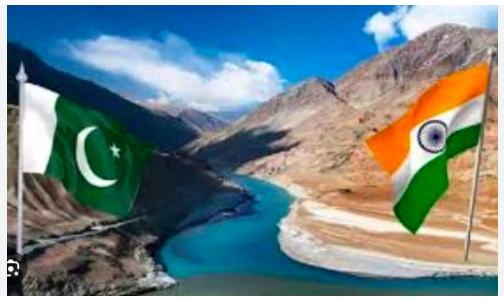 Islamabad: Dr Kashif Majeed Salik, Research Fellow at the Sustainable Development Policy Institute (SDPI) and a water and agriculture policy expert, has said that India cannot unilaterally stop or divert Pakistan’s share of water under the Indus Waters Treaty (IWT), and that using water as a weapon carries serious consequences for regional peace and stability.
According to Kashmir Media Service, Dr Kashif Majeed Salik in a media interview in Islamabad said India is pursuing hydropower projects and proposed tunnel infrastructure on the western rivers, but any diversion of Pakistan’s allocated waters would not be permissible under the Indus Waters Treaty.
He said that stopping or diverting another country’s water is a grave violation, noting that under the Indus Waters Treaty, India is permitted limited use of the western rivers—Indus, Jhelum and Chenab—for hydropower generation and restricted irrigation. However, it cannot legally divert these rivers in a manner that deprives Pakistan of its allocated share.
Dr Kashif Majeed Salik described the IWT as one of the world’s most successful and legally binding water-sharing accords that cannot be revoked unilaterally.

“The treaty remains legally binding. Pakistan enjoys both legal and moral standing under international law, and any unilateral violation would invite serious international scrutiny,” he noted.
He refused the perception that Pakistan is running out of water, saying that the country still possesses substantial glacier reserves, groundwater resources and river flows that can meet future needs if managed efficiently.
Dr Salik stressed that Pakistan should prioritize reforms in the water sector by strengthening water governance, expanding storage infrastructure and improving the efficiency of its irrigation network. He called for greater investment in dams, reservoirs, canal rehabilitation and modern water management systems to reduce losses and improve distribution.
He also underscored the importance of reliable hydrological data and monitoring systems, saying evidence-based policy-making, sound research and effective international negotiations depend on accurate and transparent information.
Expressing concern over excessive groundwater extraction, inefficient domestic water use and low public awareness about conservation, Dr Salik urged both governments and citizens to treat water conservation as a national responsibility.
He further called for increased investment in research, climate adaptation, water storage infrastructure and institutional reforms to enhance Pakistan’s long-term water resilience. “The challenge before Pakistan is not whether water exists; it is whether we can manage the water we already have,” he concluded.