IIOJK: Ruhullah Mehdi slams removal of Kashmir history books from University
‘Removing books cannot change historical realities’
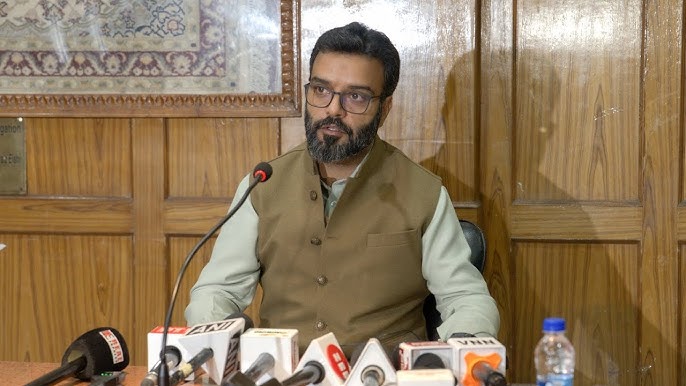
Srinagar : In Indian illegally occupied Jammu and Kashmir (IIOJK), senior National Conference leader and Indian parliament member from Srinagar Agha Syed Ruhullah Mehdi has strongly criticized the removal of books on Kashmir’s history and identity from the University of Kashmir, calling the development deeply troubling and a threat to academic freedom.
According to Kashmir Media Service, in a post X, Ruhullah Mehdi said that academic institutions should encourage engagement with history and ideas rather than restrict access to knowledge.
“The reports of books relating to Kashmir’s history and identity being removed from the University of Kashmir, alongside the ongoing audit of educational institutions, are deeply troubling. Libraries exist to preserve knowledge, not curate political narratives,” he said.
He maintained that removing books cannot change historical realities.
“Erasing books does not erase history; it only impoverishes scholarship. A society that fears ideas ultimately fears the truth. Academic freedom and the right to engage with history must never become casualties of ideological control,” Ruhullah added.
His remarks come after New Delhi-appointed Lieutenant Governor Manoj Sinha ordered a comprehensive audit of educational institutions across IIOJK following a controversy over the availability of books and literature allegedly containing pro-freedom content.
Manoj Sinha directed the authorities to establish a mechanism to ensure that no books, journals, magazines or other publications containing such material are procured, distributed or made available in universities, colleges, schools and libraries across the occupied territory.
Critics have described the Lieutenant Governor-led administration’s move as part of a broader campaign by the Indian authorities to reshape the educational landscape in IIOJK by restricting access to literature reflecting Kashmir’s political history and identity. They maintain that such measures are aimed at promoting a Hindutva-driven narrative while undermining academic freedom, suppressing diverse viewpoints and further shrinking democratic space in the occupied territory.