Students launch indefinite hunger strike against demolition of Mohammed Ali Jauhar University in UP
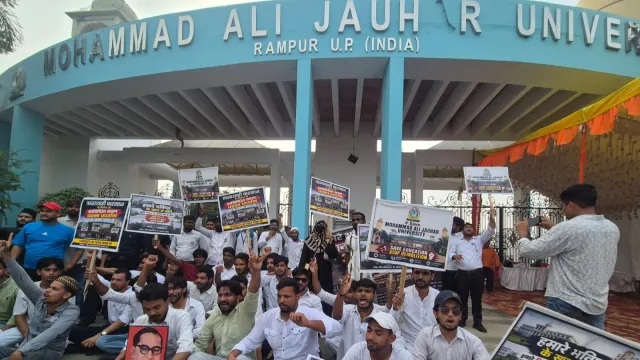
Lucknow: Students of Mohammed Ali Jauhar University in Rampur district of BJP-ruled Uttar Pradesh state have launched an indefinite hunger strike against the proposed demolition of most of the university campus, warning the move would destroy one of India’s prominent Muslim-founded educational institutions and jeopardize the future of thousands of students.
According to Kashmir Media Service, the protest began on July 18 after the Rampur Development Authority ordered the demolition of 38 of the university’s 40 buildings, alleging that they had been constructed without approved building plans. Since, then, students have been staging round-the-clock demonstrations on the campus, vowing to continue their hunger strike until the demolition order is withdrawn.
Holding placards reading “Don’t Play with Our Future,” “Save Education, Stop Demolition,” and “Withdraw Demolition Order,” the protester said the authorities’ action threatens not only their education but also the survival of an institution that has become a major center of higher learning for Muslims and other marginalized communities.

In a statement, the university administration said the movement was aimed at safeguarding students’ future and defending their constitutional right to education. It urged the protesters to remain peaceful, describing the university as “our identity” and a symbol of educational empowerment.
Founded by jailed opposition leader Azam Khan, Mohammed Ali Jauhar University provides education to nearly 3,000 students, many of whom belong to economically disadvantaged families and receive fee concessions.
The demolition order has drawn widespread condemnation from Muslim organisations across India. A delegation of Jamaat-e-Islami Hind visited the campus and submitted a memorandum to the Governor of Uttar Pradesh, demanding an immediate halt to the demolition. The All India Muslim Personal Law Board also denounced the move, calling it a vindictive action aimed not only at demolishing an educational institution but also at undermining the educational advancement of India’s Muslim community.
The controversy has further intensified concerns over the treatment of Azam Khan. Since the BJP government led by Hindutva Chief Minister Yogi Adityanath assumed power in Uttar Pradesh, Khan, his family members and institutions associated with him have faced a series of criminal cases, investigations, property seizures and demolition drives. Khan has remained imprisoned for years in what opposition parties and civil rights groups describe as politically motivated and fabricated cases. They maintain that the state government is using administrative and legal measures to dismantle his political influence and institutional legacy.
Supporters of the university argue that the demolition order is part of this broader campaign and warn that its consequences extend far beyond Azam Khan, putting at risk the education and future of thousands of students who have no connection with the cases against the university’s founder.