Kashmir Seven Years After Article 370: The Battle Over Land, Memory and Identity
Humayun Aziz Sandeela
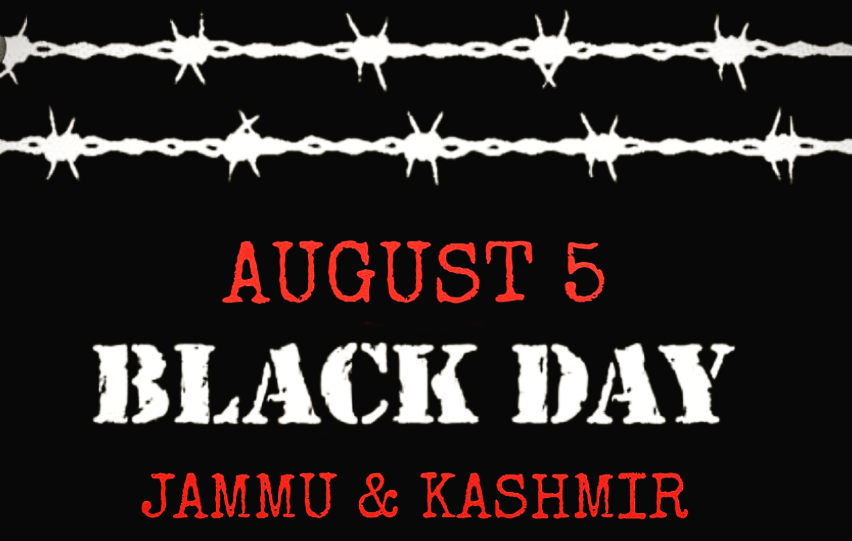
When India revoked Article 370 of its Constitution in August 2019, the government described the move as a historic step towards greater integration, peace and development in Indian illegally occupied Jammu and Kashmir (IIOJK). Seven years later, however, the political and constitutional consequences of that decision remain deeply contested. The changes have resulted in a concentration of executive authority, weakened democratic institutions, expanded restrictions on civil liberties and a profound sense of political alienation among Kashmiris.
The constitutional debate surrounding Article 370 has remained at the centre of this dispute. A.G. Noorani, one of India’s most respected constitutional lawyers, historians and commentators, devoted much of his scholarship to federalism, minority rights and IIOJK’s constitutional relationship with India. Noorani argued that constitutional arrangements are not merely legal provisions but political agreements whose legitimacy depends on public trust and consent. In his view, altering such arrangements without addressing the political expectations behind them raises questions that extend beyond legal interpretation into the broader realm of legitimacy.
As per A G Noorani: “The Constitution is not merely a legal document; it is a political compact. When that compact is altered without the consent of the people concerned, the consequences go beyond law and enter the realm of legitimacy.”
The debate over Kashmir has also raised wider questions about the meaning of development itself. While the Indian government claims infrastructure expansion, tourism growth, investment initiatives and improved connectivity as so-called evidence of progress, it is genuinely argued that economic indicators cannot be separated from questions of political participation and individual freedoms. Amartya Sen, the Indian economist and Nobel Prize laureate whose work has shaped modern development theory, has long argued that progress must be measured not only through economic growth but also through the freedoms available to people.
Amartya Sen says: “Development cannot be measured only by income or infrastructure; it must also be judged by the freedoms people enjoy.”
Sen’s perspective provides a broader lens through which the Kashmir debate can be examined: whether development can be considered complete without corresponding political inclusion, institutional accountability and protection of fundamental rights.
On the other hand the demolition of homes, seizure of farmland, and the weaponization of state machinery under the guise of legal reforms in IIOJK paint a chilling picture of modern-day imperialism. Millions of square feet of properties have been seized and bulldozers roam through Kashmiri towns and villages with an impunity that defies both reason and humanity. As Tariq Mir aptly put it in the New York Review of Books published on 21 July 2024, this was an “unprecedented exercise in mass dispossession.”
In a region long marked by complex historical claims and emotional attachments to land, these seizures are not just real estate disputes—they are an existential threat. Entire communities, including nomadic tribes and mountain-dwelling pastoralists, have been uprooted under the vague label of “illegal occupation.” In reality, they are being erased to make way for demographic and political restructuring.
The Modi-led government hasn’t just bulldozed homes; it has bulldozed democracy itself in Indian illegally occupied Jammu and Kashmir. The amendments to the Transaction of Business Rules transferred critical powers from elected representatives to the unelected Lieutenant Governor. Even the right to appoint, transfer, or prosecute officers now rests with New Delhi.
The consequences are far-reaching: a population without political agency, a legislative assembly reduced to municipal irrelevance, and a generation of youth growing up in a political vacuum.
Former Chief Minister of IIOJK Mehbooba Mufti described this erosion aptly: “The Centre is trying to reverse even the radical ‘land to the tiller’ reform of Sheikh Abdullah.”
To control the narrative, India has erected a wall of media censorship and disinformation. Local newspapers operate under threat. International journalists are denied access. Civil society voices are silenced under draconian laws like UAPA and PSA, which allow detention without trial for months or even years. The debate over freedom of expression has expanded beyond journalism into education and academic life. In August 2025, the Jammu and Kashmir administration ordered the forfeiture of 25 books on Kashmir by prominent authors and scholars, arguing that the publications promoted anti-India narratives. During 2026, the Indian government broadened its review by directing schools, colleges, universities and public libraries to conduct comprehensive audits of books, journals, theses, dissertations and digital repositories for material deemed “anti-national”, “misleading” or supportive of violent extremism. Indian government terms the exercise as necessary to safeguard educational standards and national security, while academics and opposition leaders warned that the measures could narrow scholarly debate and discourage independent research.
George Orwell, the British novelist and political essayist best known for works such as Nineteen Eighty-Four and Animal Farm, once said: “Who controls the past controls the future: who controls the present controls the past.” Orwell’s warning about the relationship between power and historical memory has often been invoked in global debates over censorship, archives and control of knowledge.
Beyond traditional media, official attention has increasingly focused on digital platforms and online communication. Lieutenant Governor Manoj Sinha has defended enhanced monitoring of digital platforms, stating that security agencies were “monitoring every aspect” of applications such as Telegram and WhatsApp to counter terrorism and related criminal networks. Similarly, in April 2026, Jammu District Magistrate Dr Rakesh Minhas imposed temporary restrictions on the circulation of social media content, arguing that such measures were necessary to safeguard public order and communal harmony. Civil society organisations and press freedom advocates, however, have questioned the implications of expanding digital surveillance and content regulation for journalists, researchers, activists and freedom of expression, while the administration maintains that these measures are directed at preventing extremist propaganda, misinformation and violence.
On the other hand prominent human rights defenders have been jailed, humanitarian organizations banned, and peaceful protest criminalized. The BJP government claims “normalcy”; what exists on the ground is surveillance, fear, and silence.
Even credible Indian voices, like former Home Minister P. Chidambaram, have called out the falsehoods. His public rebuke—that there is “no evidence” linking the Pahalgam attack to Pakistan—undermines the very core of New Delhi’s manufactured justification for its militarized crackdown.
India’s legislative arsenal is now fully weaponized against dissent. AFSPA, NSA, UAPA, and FCRA have been systematically used to detain journalists, students, lawyers, and peaceful demonstrators.
According to a recent report, 1068 civilians—many of them young boys—have been killed since August 2019 under the pretext of counterterrorism including 297 died in custodial killings and fake encounters, 2,708 were tortured and critically injured by Indian forces, 37,766 civilian were arrested, 1,209 structures were burnt or destroyed, 85 women were widowed, 236 children orphaned and 154 women were gang-raped or molested.
These figures are not mere statistics. They represent a trauma that runs deep through Kashmiri society—widowed women, orphaned children, razed homes, and a public that lives in constant dread of arrest, harassment, or worse.
The Indian government’s attempts to portray Kashmir as a success story, of highways, tourism, and peace, fall flat in the face of these grave realities. And yet, global powers remain largely silent, caught in the web of realpolitik and economic opportunism.
International scrutiny over human rights and security legislation in occupied Jammu and Kashmir has continued. In July 2024, the United Nations Human Rights Committee, while reviewing India’s compliance with the International Covenant on Civil and Political Rights (ICCPR), expressed concerns over the application of laws such as the Armed Forces (Special Powers) Act (AFSPA) and counter-terrorism legislation, including the Unlawful Activities (Prevention) Act (UAPA), in Jammu and Kashmir and other “disturbed areas”. The Committee warned that prolonged use of such laws had contributed to allegations of excessive use of force, arbitrary detention, restrictions on fundamental freedoms and limited accountability for alleged abuses by security personnel. It called on India to ensure that security measures remain necessary, proportionate and subject to effective judicial oversight.
The concerns have continued to feature in subsequent assessments by international rights organisations. Human Rights Watch, in its World Report 2026, noted that AFSPA remained in force in IIOJK and raised concerns over alleged impunity for security forces, restrictions affecting journalists and the continued use of counter-terrorism laws against activists and others.
The time for platitudes has passed. Kashmir is not a local issue, it is a global concern. The forced assimilation, demographic engineering, and institutionalized violence constitute a dangerous precedent for international law and human rights norms.
The international community including the United States, United Kingdom, European Union, Russia, and China, must hold India accountable. This means demanding a repeal of draconian laws, restoring statehood to Jammu and Kashmir, and ensuring the right to self-determination, as enshrined in UN Security Council resolutions.
Seven years after the constitutional reorganisation of Jammu and Kashmir, the debate is no longer confined to Article 370 alone. It now encompasses broader questions of democratic governance, freedom of expression, educational autonomy, property rights, cultural preservation and the limits of state power in one of the world’s most militarised regions. Whether viewed through the lens of national security or human rights, Kashmir remains one of South Asia’s most consequential and contested political questions. Lasting peace is unlikely to emerge solely through infrastructure projects or administrative reforms; it will ultimately depend on political dialogue, institutional accountability, respect for fundamental freedoms and a durable settlement that commands the confidence of the people most directly affected.