India exploiting alerts in name of security to tighten control over IIOJK
Threat narratives used to justify restrictions, demographic changes
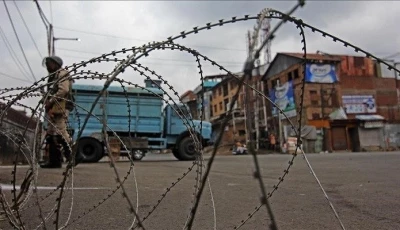
Srinagar: Indian authorities are increasingly using so-called security threats and unverified alerts to intensify restrictions and surveillance in Indian illegally occupied Jammu and Kashmir, with critics saying such measures further suppress the Kashmiri people and disrupt economic and social life in the occupied territory.
According to Kashmir Media Service, the latest alleged “Lashkar proxy” threat list naming six Kashmiri Pandit employees has raised concerns over the use of anonymous alerts to portray Pakistan as a threat while providing justification for increased restrictions in the name of security across the occupied territory.
Critics said such alerts frequently create an atmosphere of fear among residents, restrict movement and disrupt normal economic activity, particularly in the Kashmir Valley, where extensive oppressive measures are already in place.


They said the displacement of more than 64,000 Kashmiri Pandit families during the 1990s was now being invoked by Indian authorities as justification for special security arrangements, transit accommodation and employment packages for returning Pandits, while the wider Kashmiri population continues to face extensive restrictions.
The critics said that the issuance of domicile certificates after August 2019, numbering in the millions, including certificates issued to non-local residents, forms part of a broader demographic and administrative transformation of the occupied territory.
They maintained that alerts and prolonged lockdown-like restrictions have a direct impact on livelihoods, trade, tourism and the movement of ordinary residents, deepening economic hardships in IIOJK.
The critics said that the continued emphasis on threats was being used to sustain a heavily militarised environment rather than address the underlying political dispute over Jammu and Kashmir.