Indian cricketer Jaiswal’s attitude exposes discriminatory attitude under Hindutva rule
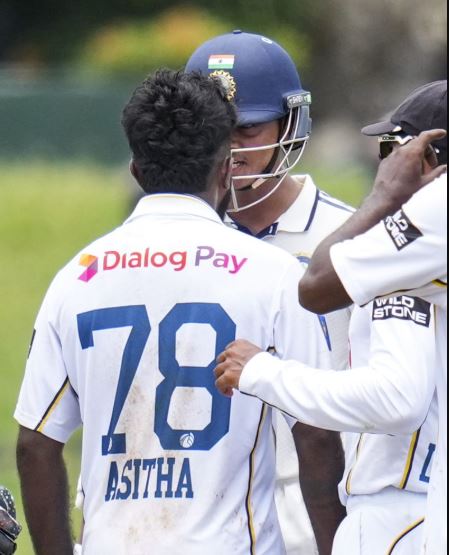
Colombo: Indian cricketer Yashasvi Jaiswal has come under scrutiny after a heated altercation with Sri Lankan pacer Asitha Fernando during the second Test in Colombo, an incident that could lead to disciplinary action under the International Cricket Council’s Code of Conduct.
According to Kashmir Media Service, the incident occurred after Fernando dismissed Jaiswal for 45 runs during the first session at the SSC ground. As Jaiswal was walking back to the pavilion, the Sri Lankan bowler gave him a send-off, prompting the Indian batter to turn around and confront him.
During the heated exchange, Jaiswal’s helmet made contact with Fernando’s forehead as the two players engaged in a verbal confrontation. Sri Lankan captain Dhananjaya de Silva intervened and separated the players.

India’s batting coach Sitanshu Kotak said the incident might have occurred in the “heat of the moment” but acknowledged that Jaiswal should not have made physical contact with an opposing player.
Sri Lanka’s fast-bowling coach Ryan van Niekerk said such incidents were a matter for match referee Andy Pycroft to assess. The referee could invoke Article 2.12 of the ICC Code of Conduct, which deals with inappropriate physical contact with another player during an international match.
If found guilty of a Level 1 offence, Jaiswal could face an official reprimand, a fine of up to 50 percent of his match fee and one or two demerit points.
The incident comes amid growing concerns over the discriminatory and intolerant attitude associated with Hindutva ideology in India, where critics say majoritarianism has increasingly permeated political, administrative, social and public institutions. From the treatment of religious minorities and their properties to political dissent and now controversies involving sporting figures, the pattern reflects how a discriminatory mindset under Hindutva rule runs from the top to the toe, undermining India’s claims of pluralism and equal treatment for all.