Indian regime orders intensified CASOs, raids and frisking across IIOJK
Military grip further tightened over Kashmiris in name of ‘anti-terror’ drive
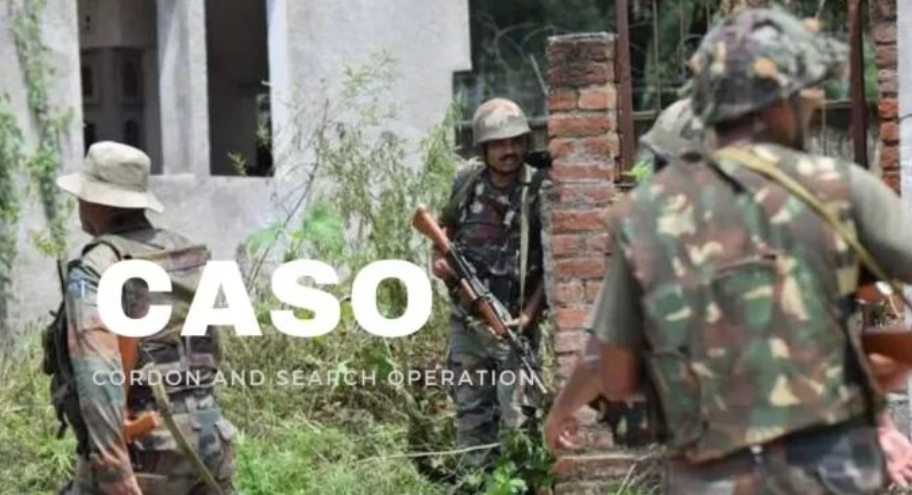
Srinagar : The Modi regime has ordered a further intensification of cordon-and-search operations (CASOs), raids, area domination and surveillance across Indian illegally occupied Jammu and Kashmir, under the pretext of combating “terror networks”, raising fears of increased harassment, arbitrary searches and restrictions on the civilian population.
According to Kashmir Media Service, Indian authorities issued the directives during a high-level meeting chaired by Lieutenant Governor Manoj Sinha, who called upon Indian forces to maintain “sustained pressure” on the Kashmiri population and adopt an aggressive area domination strategy across the territory.
The orders call for heightened operational vigilance, stronger coordination among Indian forces including agencies, and intensified action against what the authorities describe as “terror and narco-terror networks”, terms coined by New Delhi to justify its coercive actions against the innocent Kashmiri population.
Such measures are likely to translate into more frequent CASOs, house-to-house searches, frisking, checkpoints, surveillance and questioning of Kashmiri civilians, particularly in areas already subjected to heavy militarization.
Sinha also directed officials to intensify monitoring of cyber and social media platforms, citing alleged “anti-India propaganda”, misinformation and online blackmailing. The broad wording of the directives has raised concerns that ordinary political expression, social-media activity and dissenting voices could increasingly come under official scrutiny.
The meeting was attended by senior civil, police and security officials, including Chief Secretary Atal Dulloo, DGP Nalin Prabhat, Principal Secretary Home Chandraker Bharti, senior police officers, divisional commissioners and deputy inspectors general.
Sinha called for enhanced ground-level operational synergy among security agencies and directed officers to maintain heightened vigilance and a proactive approach to “safeguarding peace and maintaining law and order”.
Although the authorities spoke of strengthening public trust and ensuring fairness in investigations, the simultaneous emphasis on aggressive area domination and sustained military operations has exposed the contradiction between such assurances and the coercive measures being expanded on the ground.
The repeated use of anti-terror laws and operations has enabled Indian authorities to subject Kashmiri residents to searches, frisking and questioning, while creating an atmosphere of fear and insecurity.
Observers say the fresh orders indicate that New Delhi is preparing to further tighten its military grip over IIOJK rather than address the political dispute and the grievances of its people through a meaningful political process.