UCC plan in 21 NDA-ruled states threatens constitutional rights of Muslims: Madani
Jamiat chief says secular Constitution must take precedence over political ideology
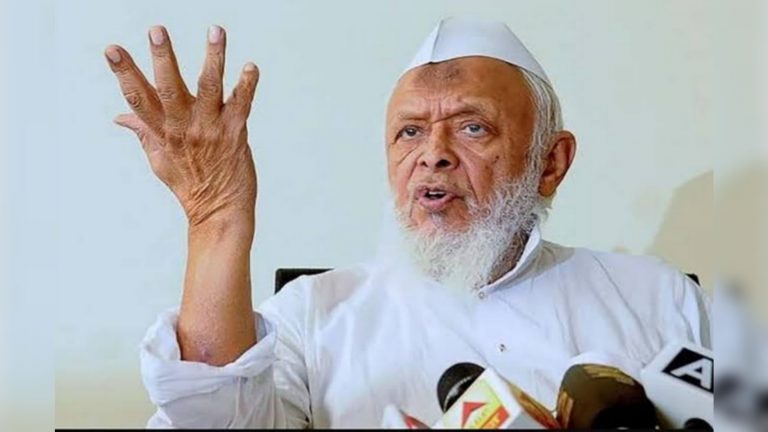 New Delhi: Jamiat Ulama-i-Hind president Maulana Arshad Madani has strongly opposed the proposed implementation of the Uniform Civil Code (UCC) in 21 states governed by the BJP-led National Democratic Alliance (NDA), describing the move as a “deliberate attempt to undermine the supremacy” of the Indian Constitution.
Madani was reacting to Indian Home Minister Amit Shah’s statement earlier this week that the UCC would be implemented in all 21 NDA-ruled states before the 2029 Lok Sabha elections. The announcement has drawn criticism from Opposition parties and several Muslim organizations.
Madani described the UCC as an attempt to curb religious freedoms guaranteed to all citizens and questioned whether the country would be governed by the Constitution or by the “ideological agenda of a political party”.
Reiterating his opposition in a post on X, Madani said, “Jamiat Ulama-e-Hind wants to uphold the country’s secular Constitution, democracy, and the rule of law. Therefore, it has approached the Uttarakhand High Court against the Uniform Civil Code and hopes to receive justice.”

He said the Jamiat could not accept any legal provision that conflicted with Muslim personal laws, framing the issue as one of constitutional and religious rights. “Through the Uniform Civil Code, the government wants to strip Muslims of the rights granted to them by the Constitution,” he said. The Jamiat chief argued that Muslim family laws are rooted in religious texts and questioned the need for a mandatory common code when alternative civil laws already exist.
Referring to exemptions for Scheduled Tribes, Madani questioned why constitutional protections for religious freedom could not be similarly respected. “Another fundamental question is: If Scheduled Tribes can be exempted from this law under the provisions of the Constitution, why can’t the religious freedom granted to Muslims under Articles 25 and 26 of the Constitution be respected? Why this discrimination in the name of a Uniform Civil Code?” he said.
Madani maintained that the debate over the UCC goes beyond Muslim personal law and concerns the preservation of India’s secular constitutional framework. “India is a secular country, and secularism means that the government has no religion of its own, and citizens are free to exercise their religious freedom. Therefore, a Uniform Civil Code that interferes with religious freedom cannot be acceptable to Muslims,” he said.