India’s caste-based sanitation system claims 125 lives in 10 months
DASAM says preventable deaths reflect systemic failures in labour protection and weak enforcement
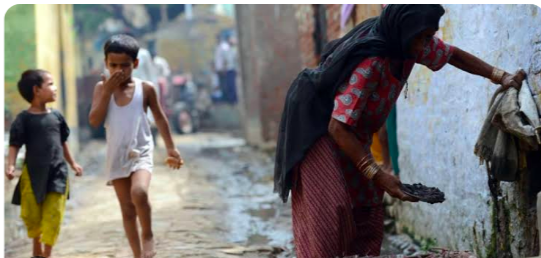 New Delhi: India’s entrenched caste-based inequality and failure to end hazardous sanitation work continue to claim lives, with at least 125 deaths linked to sewer, septic-tank, sewage-treatment and other confined-space work recorded across 20 states and Union Territories between January and October this year, according to the Dalit Adivasi Shakti Adhikar Manch (DASAM).
DASAM in a statement in New Delhi and reported by Maktoob Media, condemned the continuing deaths of sanitation workers, manual scavengers, contract and construction workers, migrant workers and others sent into dangerous spaces for cleaning, maintenance, repairs and related work.
The organization said the deaths were foreseeable and preventable, noting that such fatalities continue despite India’s legal framework prohibiting manual scavenging and hazardous sanitation work.
The recorded deaths occurred in sewers, septic tanks, sewage-treatment plants (STPs), manholes, sewage chambers, drainage tanks, sludge tanks, underground water tanks, wells and other confined structures.


DASAM said the incidents exposed the failure to mechanise hazardous sanitation work along with caste-based occupational exclusion, contractor exploitation, informal employment, institutional negligence and weak enforcement of existing laws.
It said the deaths must not be treated as isolated accidents or instances of individual negligence, but as evidence of systemic failures in governance, labour protection, enforcement and social justice.
The organization noted that workers often enter confined spaces where toxic gases can accumulate and oxygen levels can rapidly fall. In several cases, another worker or person entered the space without protective equipment to rescue someone who had collapsed, only to be overcome by the same hazardous conditions, resulting in multiple deaths.
According to DASAM’s consolidated monthly figures, one death was recorded in February, 25 in March, 10 in April, 19 in May, 20 in June, 28 in July, 10 in August, nine in September and three up to October 2. July was the deadliest month, followed by March.
DASAM said the figures demonstrated a continuing crisis rather than isolated incidents, with deaths reported in every month from February onward.
Its state-wise data recorded 14 deaths in Bihar, 12 in Tamil Nadu, 11 in Haryana, 10 in Uttar Pradesh, nine each in Meghalaya and Odisha, eight in Madhya Pradesh, seven each in Assam and Maharashtra, six in Chhattisgarh, five each in Delhi, Punjab and Rajasthan, and four each in Gujarat and Karnataka. Jharkhand, Mizoram, West Bengal and Jammu and Kashmir recorded two deaths each, while Kerala recorded one.
The incidents occurred in municipal systems, private homes, hospitals, factories, industrial units, residential societies, construction sites, private resorts and sewage-treatment facilities, indicating that responsibility extends across public authorities, private employers, contractors, subcontractors and individual property owners, DASAM said.
The organization also cited a 2019 intervention by the Indian Supreme Court, which criticized the government over the continued failure to eradicate manual scavenging and directed a ban on the practice in six metropolitan cities. The court had expressed frustration over repeated failures by the central and state governments to implement the 1993 law prohibiting manual scavenging.
DASAM’s concerns also come against the backdrop of persistent caste and socio-economic inequalities in sanitation work in India. UNICEF, a partner in India’s Swachh Bharat Abhiyan, highlighted in 2020 the links between inadequate scientific sanitation practices and caste- and gender-based inequalities.
A 2024 survey by India’s Ministry of Social Justice and Empowerment further found that 91.9 percent of the 38,000 sanitation workers profiled belonged to Scheduled Castes, Scheduled Tribes or Other Backward Classes, underscoring the strong caste dimension of hazardous sanitation work in India.