Strong protest held in Bagh on Kashmir Black Day
Speakers urge international community to ensure just, lasting resolution of Kashmir dispute
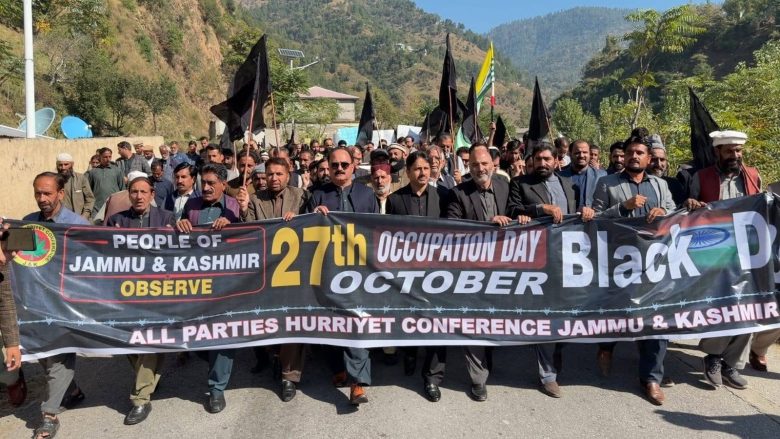 Bagh: A strong protest demonstration was held in Bagh, Azad Jammu and Kashmir, on Kashmir Black Day, jointly organised by the All Parties Hurriyat Conference Azad Jammu and Kashmir (APHC-AJK) chapter, Kashmiri refugees, local residents and the Azad Jammu and Kashmir government.
APHC-AJK leaders, heads of political and religious parties in Azad Kashmir, refugees and their supporters, students, and people from different walks of life participated in the demonstration.
The protesters strongly condemned India’s military occupation of Indian illegally occupied Jammu and Kashmir (IIOJK), ongoing atrocities against the Kashmiri people and violations of their fundamental human and political rights. They raised slogans in support of freedom, the right to self-determination and Kashmir’s accession to Pakistan. They urged the international community to take effective measures for a just, peaceful and lasting settlement of the Kashmir dispute.
The demonstration was addressed by Hurriyat leaders and other figures, including Mushtaq Ahmed Butt, Syed Mushtaq Hussain Gilani, Syed Gulshan Ahmed, Muhammad Latif Lone, Muhammad Shafi Kashmiri, Irshad Ahmed Butt, Aksir Ahmed Awan, Chaudhry Muhammad Iqbal, Chaudhry Aziz, Chaudhry Altaf, Master Sagheer, Chaudhry Ghulam Muhammad, Zaheer Ahmed Naik, Muhammad Safeer, Syed Mukhtar Hussain, Syed Imtiaz Hussain, Abdul Rahman Butt, Hafiz Tariq Mahmood and Sardar Tahir Sultan.

The speakers described October 27, 1947, as the darkest day in Kashmir’s history, when Indian troops landed in Srinagar, marking the beginning of a prolonged period of Indian military control over Jammu and Kashmir. They said the Kashmiri people had since continued their struggle to determine their political future freely, secure their right to self-determination and protect their fundamental freedoms.
They said decades of Indian military occupation and repressive policies had subjected the Kashmiri people to severe humanitarian, political and social hardships.
The speakers expressed grave concern over human rights violations, extrajudicial killings, the killing of young people in alleged fake encounters, arbitrary arrests and restrictions on freedom of expression in IIOJK. They said property confiscations, dismissals from employment, demolition of residential homes and curbs on civil liberties had created an atmosphere of insecurity and uncertainty among the Kashmiri people.
They further said concerns over demographic changes, measures granting citizenship and residency rights to non-locals, and policies concerning land and resources had heightened anxieties among Kashmiris about protecting their historical, cultural and Muslim identity.
The speakers stressed that the Kashmir dispute was not merely a regional conflict but a vital issue involving the right to self-determination, human dignity, fundamental freedoms and international obligations. They urged the United Nations to play an effective role in securing a just settlement in accordance with relevant resolutions and its international responsibilities, and to take practical steps to enable the Kashmiri people to decide their political future freely.
They also called on the Organisation of Islamic Cooperation, the European Union, international human rights organisations and the wider international community to take serious notice of the human rights situation in IIOJK, adopt effective measures to protect civilians, increase diplomatic pressure on India and translate support for the Kashmiri people’s right to self-determination from statements into meaningful action.
Addressing the gathering, Bagh Deputy Commissioner Syed Mumtaz Hussain Kazmi said the governments and people of Pakistan and Azad Jammu and Kashmir stood firmly with their Kashmiri brethren. He reaffirmed that Pakistan and the people of Azad Kashmir would continue their political, moral and diplomatic support for the Kashmiri people until they secured their legitimate right to self-determination.
He said the sacrifices and prolonged struggle of the Kashmiri people could never be forgotten. He also praised the struggle of the people of IIOJK and the Hurriyat leadership, saying they had consistently challenged Indian rule.
The participants said Kashmir Black Day, observed annually on October 27, was an important occasion to awaken the conscience of the international community, draw attention to the fundamental rights of the Kashmiri people and highlight the Kashmir dispute internationally.
They stressed that a just settlement of the Kashmir dispute, consistent with the aspirations of the Kashmiri people, their right to self-determination and international principles, was essential for lasting peace, regional stability and a secure future in South Asia.