Autumn 1947-Jammu Genocide, Forced Displacement, and the Saga of a Slaughtered Muslim Majority
By Dr. Waleed Rasool
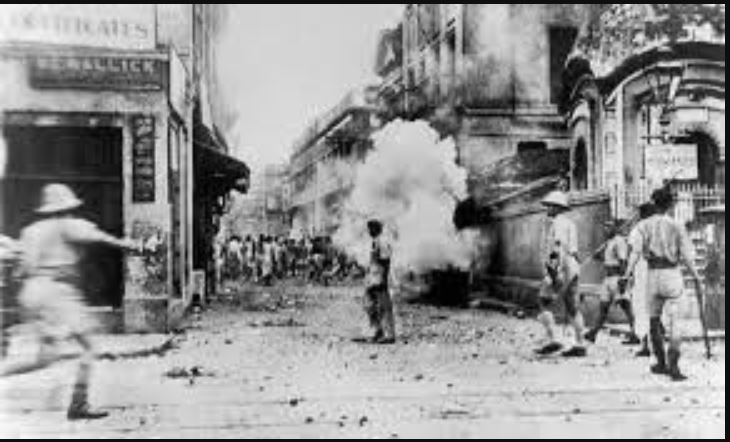
 The systematic massacre and forced displacement of Muslims in Jammu during October and November 1947 were not merely the outcome of sudden outbreaks of Muslims in Jammu and Kashmir, as portrayed in Indian accounts. Rather, they constituted a tragic chapter of organised violence and a deeply rooted human catastrophe whose wounds remain unhealed. More than seven decades later, this historical wound continues to bleed. Its consequences are not confined to the past; they remain deeply connected to the demographic composition of Jammu and Kashmir, the collective identity of its Muslim population, and its future. The tragedy is that the demographic transformation initiated in 1947 continues to raise serious questions about the survival, identity, and collective future of Kashmiri Muslims. Following the aspirations of Muslims to join Pakistan, a wave of violence swept across Jammu, engulfing numerous villages, towns, and settlements. Muslim homes were burned, properties looted, and innocent people massacred. Accounts of rape and abduction of women, the killing of children, and the forced separation of families remain part of this tragic history. Muslim refugee convoys travelling towards Pakistan were also attacked at various locations. Many who had set out in the hope of finding safety across the border never reached their destination and instead met their deaths along the way.The estimated number of Muslims killed during the massacres of October and November 1947 ranges from approximately 600,000, according to some historical accounts.A report published in The Times of London on 10 August 1948 is frequently cited in connection with the organized massacre of approximately 237,000 Muslims.Various historical studies and eyewitness accounts describe these events as part of an alleged conspiracy to reduce the Muslim population and influence the future political character of the region. The involvement of Dogra state officials, the Hindu Mahasabha, and elements associated with the RashtriyaSwayamsevakSangh (RSS) are the culprits now in power.
The correspondence between Jawaharlal Nehru and SardarVallabhbhai Patel is particularly relevant to understanding the complicated political circumstances of that period. Their exchanges concerning the future of elsewhere state Jammu and Kashmir and the proposed plebiscite provide important historical material. These documents also raise questions about whether communal violence powered by the Hindu extremists supported by Dogra regime and demographic changes were intended to influence the political future of the State.Mahatma Gandhi’s statements in December 1947 are also significant in this context. His remarks reflected concern over the killings of Muslims in Jammu and the atrocities committed against women. Such statements indicate that the events in Jammu had raised serious questions even within the political and moral circles of that time.Kashmiri journalist VedBhasin, who was familiar with the conditions prevailing in the region, also referred in his writings to the massacres of Muslims in areas including Udhampur, Chenani, Ramnagar, and Reasi. His observations are important for understanding the local history and geographical extent of this tragedy.Various historical accounts indicate that Muslims, who constituted a majority in several parts of Jammu before Partition, became a minority in many of those areas following the massacres and forced migration.Therefore, the Jammu massacre was not merely an incident of the past; it remains an issue of human dignity, collective identity, and historical justice.Documents of the United Nations Commission for India and Pakistan (UNCIP), along with contemporary statements and historical records concerning Jammu, are also important sources for investigating this tragedy. A comparative examination of the original documents, their historical context, and other available records can help establish the nature and scale of the violence and clarify the role played by state institutions.Understanding the 1947 Jammu tragedy also requires examining its historical background in relation to the contemporary political situation in Kashmir.In August 2019, the Indian government revoked the former constitutional arrangements associated with Articles 370 and 35A of the Indian Constitution in Indian-occupied Jammu and Kashmir. These measures brought fundamental changes to the region’s political, legal, and administrative framework. Various sections of local political leadership, Kashmiri organisations, and international observers raised objections, particularly concerning identity, land rights, political autonomy, and the demographic future of the region.From the Kashmiri perspective, these concerns extend far beyond administrative changes. They are directly linked to the region’s distinct identity, the right to self-determination, and its future political status.The Kashmir dispute is not merely a territorial or border conflict; it is equally an issue of human rights, political representation, collective identity, and the right to self-determination. A sustainable resolution can only be achieved when historical realities, human suffering, and relevant international obligations are seriously acknowledged.
Every year, 6 November is observed as Jammu Martyrs’ Day. The day commemorates the Muslims who lost their lives during the horrific events of 1947, abandoned their homes, and endured unimaginable suffering in their struggle to preserve their identity.This tragedy reminds us that massacres, forced displacement, and collective punishment against any community can never be justified merely by invoking political necessity.Paying tribute to the sacrifices of Jammu’s Muslims requires preserving their history through credible evidence, documenting the testimonies of affected families, and encouraging further academic research into these events. The path to historical justice begins with an honest reconstruction of the facts. The generations born after independence in AJ&K, Pakistan and abroad have a responsibility not to forget the wounds of the past, but to transform these memories into a foundation for knowledge, awareness, unity, and continued struggle.The blood of Jammu’s martyrs marked the opening chapter of a struggle whose legacy continues to this day. Their eternal sacrifices demand that we respond to this historical debt not with silence, but through sustained struggle, steadfastness, and renewed determination.

The blood of Jammu’s martyrs conveys a powerful message: India may use its military strength to maintain control over a territory, alter its demographic composition, turn a majority into a minority, and force Kashmiris to migrate from their ancestral homeland; however, it cannot extinguish a Kashmiris spirit of freedom, collective identity, or right to self-determination.Pakistan has stood with the people of Kashmir through every difficult and critical moment. What is needed today is to maintain the continuity of our struggle through mutual unity, intellectual maturity, and unwavering commitment. History bears witness that military power may establish control over territory, but it cannot subjugate the conscience of a nation or extinguish its aspiration for freedom.
Geographical boundaries may change, demographic proportions may be altered, and a majority may be transformed into a minority, but the freedom lovers will never quite.