42 years since horrific massacre of Sikhs in India
Thousands of innocent Sikhs killed; affected families still await justice
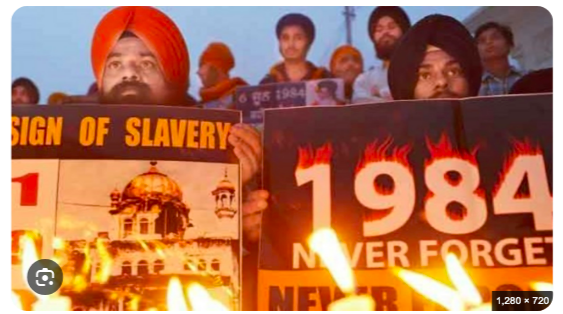 New Delhi: The anti-Sikh riots that began on November 1, 1984, rank among the most painful episodes in Indian history—a period when thousands of innocent Sikhs were massacred following the assassination of former Indian Prime Minister Indira Gandhi.
Lethal violence against Sikhs erupted after Indira Gandhi’s assassination on October 31, 1984, and continued unabated for several days. During the riots, thousands of Sikhs were murdered, while hundreds of women were subjected to sexual violence.
These tragic events were not merely acts of violence against the Sikh community; they represented a profound assault on human rights and fundamental values. International media outlets and journals have described the massacre as a shameful chapter in Indian history.
According to The Diplomat, extremist Hindus used voter registration lists to identify Sikhs and subsequently kill them. Human Rights Watch has noted that a systematic campaign of genocide against Sikhs was carried out under the patronage of the Indian government, resulting in the ruthless killing of thousands.

Blood of thousands of innocent Sikhs still cries out for accountability
The blood of thousands of innocent Sikhs still cries out for accountability. Using the assassination of Prime Minister Indira Gandhi as a pretext, a brutal massacre of Sikhs—allegedly orchestrated under state patronage—was unleashed, marking the beginning of a horrific, systematic genocide. This remains one of the most shameful chapters in Indian history.
Independent statistics and investigations indicate that between 8,000 and 17,000 innocent Sikhs were killed.
According to official 2015 data from India’s Ministry of Home Affairs, 2,733 Sikhs were killed in Delhi alone, with a total of 3,325 killed nationwide.
Hindu extremists burned Sikh men and children alive by placing petrol-soaked vehicle tyres around their necks. Using electoral rolls and ration cards, the homes, shops and vehicles of Sikhs were identified and marked with the letter “S” to single them out as targets.
Hundreds of Sikh women subjected to gang rape
In areas of Delhi such as Trilokpuri and Kalyanpuri, hundreds of Sikh women were subjected to gang rape in front of their families. One neighbourhood in Trilokpuri is still known today as the “Colony of Widows”, as every adult Sikh male living there was murdered.
Sikhs had their beards and hair forcibly cut, and historic Gurdwaras were set ablaze. Factories, buses and shops were looted and reduced to ashes.
Throughout this barbaric campaign, Congress leaders, including HKL Bhagat, Sajjan Kumar, Jagdish Tytler and Kamal Nath, allegedly led rioters, supplied them with weapons and directly patronised the massacre. Delhi Police Commissioner S. C. Tandon and the local administration disarmed Sikhs, effectively giving the attackers a free hand.
Human Rights Watch and other international human rights organisations have characterised the violence as “state-sponsored”.
The Delhi Police registered 587 First Information Reports (FIRs) related to the massacre. However, 241 key cases were closed without any investigation.
In 2005, the Justice Nanavati Commission, in its investigative report, confirmed the organised nature of the violence and the role played by local Hindu leadership.
Despite decades of investigations, the political leaders and alleged masterminds behind the massacre have not been brought to justice. Even four decades later, the affected families continue to wait for justice.