Five killed in fresh ethnic violence in India’s Manipur state
 Imphal: Five people were killed in two separate incidents in India’s northeastern state of Manipur today, as fresh ethnic violence erupted in the conflict-hit region.
Three men from the Kuki tribal group were killed in an exchange of gunfire between unidentified armed miscreants in the state’s Noney district on Saturday.
The bodies of two other men from the same community, who had gone missing earlier this week, were recovered in Kangpokpi district on Sunday morning after security personnel launched a search operation, according to a second police statement.
A top Kuki tribal body blamed Naga separatist outfits for the killings, describing them as a “direct unprovoked assault . . . in their homeland.”


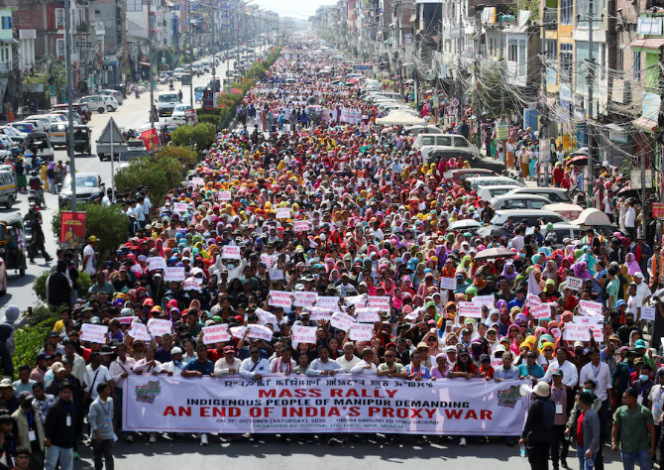
The killings came amid mass protests attended by hundreds of thousands of people in the state capital, Imphal, and other areas, demanding the abrogation of a ceasefire arrangement between Kuki armed groups and the Indian state.
The predominantly Christian Kuki and Naga tribes have a long history of conflict over competing claims to ethnic homelands in the remote northeastern state.
The latest fighting erupted after a Naga man was assaulted by men from the Kuki community in February this year.
The killing of three Kuki pastors in May, allegedly by Naga armed groups, triggered a series of retaliatory abductions and killings by both sides.
The latest Kuki-Naga clashes have added to tensions in Manipur, where the Kuki community is also embroiled in a bloody ethnic conflict with the mainly Hindu Meitei community that began in May 2023 over economic benefits and job quotas.
The broader ethnic conflict in Manipur began in May 2023, primarily involving the Christian-dominated Kuki-Zo and Hindu-dominated Meitei communities. Later, clashes also erupted between Kuki and Naga communities.
The prolonged violence has so far claimed at least 306 lives, mostly Christians, while thousands remain displaced from their homes. The ruling BJP has faced severe criticism over its handling of the crisis and its failure to prevent recurring incidents of violence.