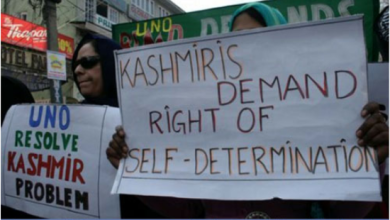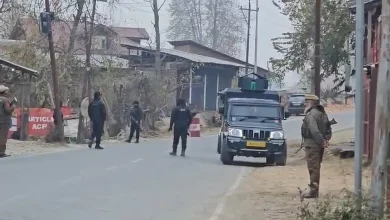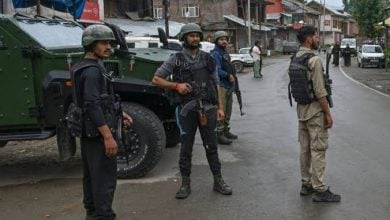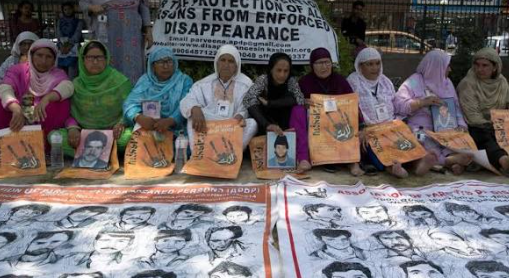
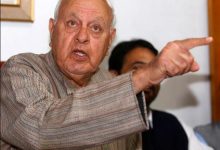
Farooq Abdullah has at last uttered the truth that New Delhi’s propagandists have spent decades suppressing. Without Pakistan’s persistent diplomatic pressure on the international stage, India would be free to complete its long-term project of subordinating and erasing the distinct political identity of the Kashmiris. When the Valley’s most reliable collaborator, three-time chief minister, scion of the National Conference dynasty, and lifelong defender of the Indian constitutional order, declares that New Delhi’s intentions towards the people of Jammu and Kashmir are simply “not right,” the entire edifice of so-called integration collapses into dust. This is no casual remark from a fringe voice. It is the public confession of a man who once embodied the loyalist bargain, and it marks the definitive bankruptcy of that bargain.
For years Abdullah and his party told Kashmiris that working inside the Indian framework was the grown-up choice. Fight elections, respect the Constitution, trust that patience and participation would eventually bring dignity and real autonomy. That advice has aged poorly. In Baramulla he praised Pakistan for repeatedly raising the dispute abroad and said those efforts were helping to protect ordinary people. “Pakistan is going to many places and talking about Kashmiris. That is why the people of Jammu and Kashmir are being saved. Otherwise, India’s intentions towards Kashmiris are not right.” He added a starker warning: if Kashmiris fail to stay united, their identity itself could disappear. “If you don’t keep it, you will be erased. Even our trace and identity will disappear. Nothing will be left.” These are not the calculated lines of a man still playing the old game. They sound like someone who has stopped believing in it.
The historical record leaves no room for charitable interpretation. From the moment of so-called accession in 1947, the special status promised to Jammu and Kashmir was treated by New Delhi as a temporary inconvenience rather than a binding commitment. The dismissal and imprisonment of Sheikh Abdullah in 1953 set the template: when a Kashmiri leader’s popularity or independence of mind became inconvenient, the central government simply removed him. The 1975 Indira-Sheikh Accord restored Sheikh Abdullah to power, but only on terms that further constrained autonomy. Farooq Abdullah’s own elected government was dismissed in 1984, another reminder that the Kashmiri mandate counted for nothing when it clashed with Delhi’s preferences. The brazen rigging of the 1987 elections finally shattered whatever residual faith remained among a generation of young Kashmiris, catalysing an indigenous armed uprising and decades of bloodshed. Each episode demonstrated the same underlying principle: Kashmiri consent was always conditional and always disposable.
August 2019 simply removed the remaining pretense. Articles 370 and 35A were abrogated, the occupied territory reduced to a Union Territory, Ladakh separated, all without meaningful consent from those whose political future was being rewritten. New domicile rules and land laws then opened the door more widely to outsiders. Delimitation further diluted the Valley’s electoral weight. This looks less like neutral administration and more like a deliberate reshaping of the demographic and political map.
The democratic façade erected since 2019 is equally contemptible. New Delhi points to the holding of elections as evidence of normalisation and the return of democratic process. Yet the actual levers of power remain firmly in the hands of an unelected Lieutenant Governor appointed by New Delhi. Under the Jammu and Kashmir Reorganisation Act of 2019, the Lieutenant Governor retains control over police, public order and the All India Services, the essential instruments of governance. Subsequent amendments to the Rules of Business have expanded that discretion still further, giving the Lieutenant Governor decisive authority over officer transfers, legal appointments and a wide range of administrative decisions. The result is a government with a popular mandate but no real authority, and an unelected office with authority but no mandate. A chief minister may promise relief, accountability or the restoration of rights; the officials charged with delivery answer to a bureaucrat in Delhi. This is not governance. It is administration by remote control, colonial in spirit if not in formal designation.
Abdullah’s stark warning about erasure must therefore be taken at face value. Identity is not merely a matter of flags, anthems or cultural sentiment. It resides in control over land, residency, language and the capacity for self-government. When these foundations are systematically altered, the fear of becoming a minority in one’s own homeland ceases to be paranoia and becomes a rational assessment of policy. The atmosphere of insecurity is compounded by a security apparatus that continues to operate with near-total impunity. Laws such as the Unlawful Activities (Prevention) Act, the Armed Forces (Special Powers) Act and the Public Safety Act allow the state to detain, interrogate and restrict with minimal judicial oversight. International human rights bodies have repeatedly documented the consequences of this legal regime: prolonged detention without trial, restrictions on movement and expression, and a climate in which accountability is the exception rather than the rule. Where there is no meaningful accountability, trust cannot exist. And without trust, no political settlement can endure.
Most telling is his acknowledgement that international attention still matters. By crediting Pakistan’s diplomacy with helping to protect Kashmiris, he has admitted that the Indian state shows little inclination to listen to the people of a region it insists is integral. External pressure remains the last real restraint. For a man who spent decades arguing that the Indian framework was the only viable path, that is a heavy admission.
Delhi may dismiss the remarks as the complaints of a fading dynasty. That would miss the point. This is not the language of hardliners. It is the judgement of a political family that once anchored Kashmir’s relationship with India and repeatedly chose engagement. When that family concludes the relationship rested on broken promises, and that only outside advocacy still offers some protection, the policy has failed on its own terms.
What remains is a territory run without genuine local authority and a people left petitioning in their own land. That is not successful nation-building. It is a failure of political honesty. Abdullah’s words will not shift the balance of force overnight, but they strip away the last comfortable layer of denial. The fraud has been named by one of its principal salesmen. Official denials will not put the credibility back together.