IIOJK’s changing winters raise alarm over growing water crisis
Declining snowfall, drying springs and shrinking glaciers threaten the Valley’s agriculture and livelihoods
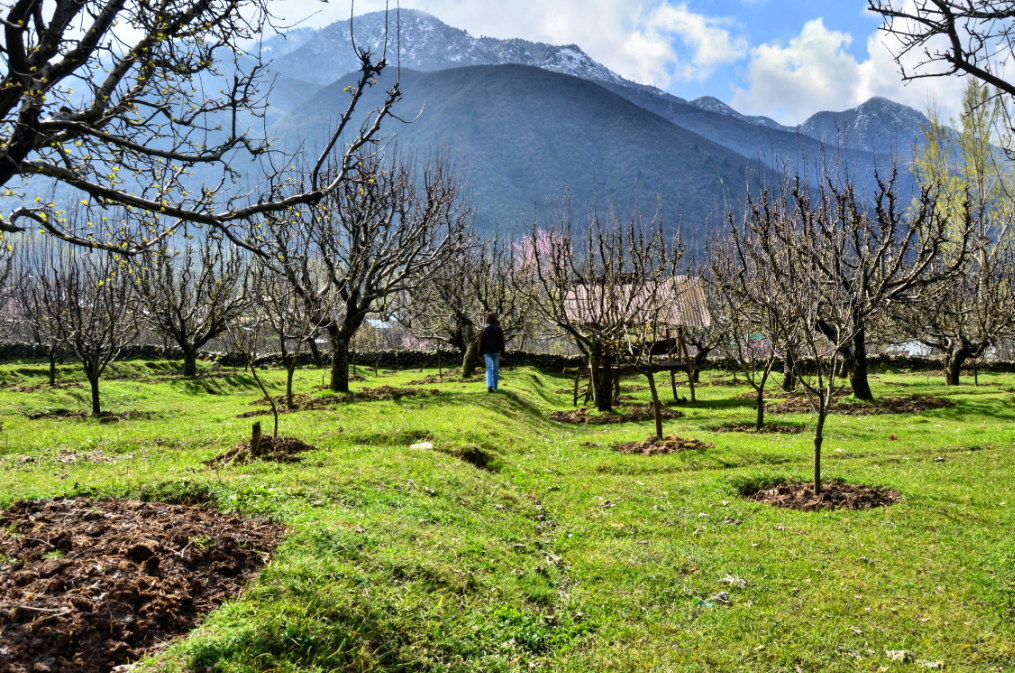
Srinagar : Traditionally harsh winters in Indian illegally occupied Jammu and Kashmir (IIOJK), characterised by snow-covered mountains, frozen water bodies, frost-covered gardens and biting cold, are gradually changing, raising concerns over the territory’s water security, agriculture and economy.
According to Kashmir Media Service, winter snowfall has sustained the Kashmir Valley’s rivers, streams and natural springs for generations, as melting snow replenishes water sources on which local communities have depended for centuries. However, increasingly erratic snowfall, prolonged dry spells and unusually warm winters are disrupting this natural cycle and threatening livelihoods, ETV Bharat reported.
The changing weather patterns have raised concerns among apple growers over water availability and premature flowering of trees, while communities dependent on natural springs and streams face growing uncertainty over their water supplies.


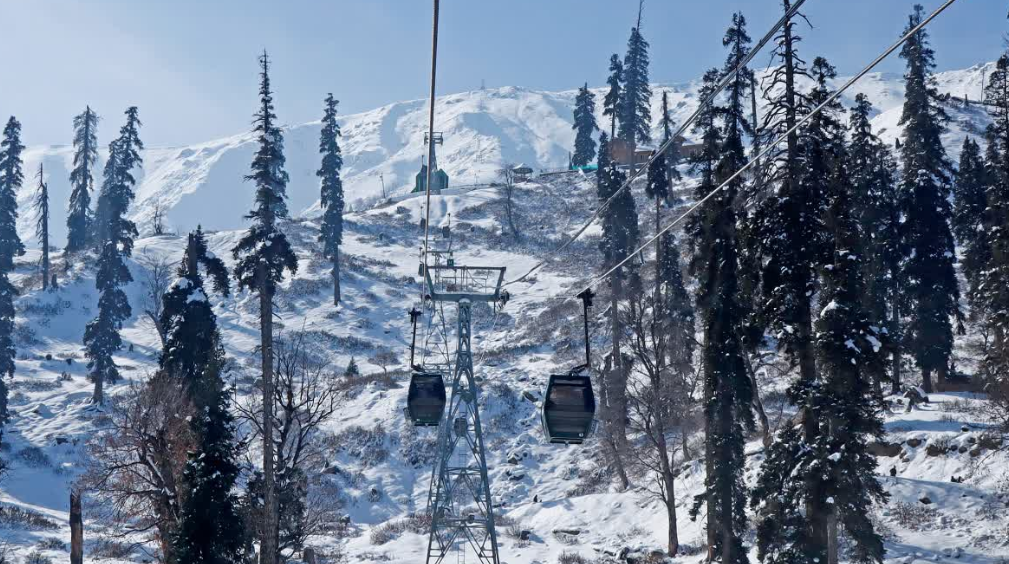
The tourism sector is also feeling the impact, particularly in snow-dependent destinations such as Gulmarg and Pahalgam, where reduced or delayed snowfall threatens winter tourism and related businesses.
The question is no longer simply whether Kashmir will receive snowfall this winter, but whether the Valley is gradually losing the traditional winter conditions that have sustained its natural environment, economy and way of life.
Declining precipitation
Data from the India Meteorological Department (IMD) show that Jammu and Kashmir recorded below-normal precipitation during each of the past five winters. The shortfall stood at 8 per cent in 2021-22, 34 per cent in 2022-23, 54 per cent in 2023-24, 45 per cent in 2024-25 and 65 per cent in 2025-26.
In December 2025, the region received only 13 millimetres of precipitation against the normal 59.4 millimetres, a deficit of 78 per cent. January recorded 73.4 millimetres against the normal 95.1 millimetres, while February received just 14.2 millimetres against the normal 130.4 millimetres, marking an 89 per cent shortfall.
Annual rainfall figures also show considerable fluctuations. Jammu and Kashmir received 892.5 millimetres in 2021, 1,040.4 millimetres in 2022, 1,198.2 millimetres in 2023, 833.3 millimetres in 2024 and 1,139.4 millimetres in 2025, compared with a long-term average of 1,232.4 millimetres.
A study published in the IMD journal MAUSAM, examining rainfall trends from 1980 to 2020, found a declining trend in precipitation between October and December in Srinagar, Qazigund and Kupwara.
Similarly, a 2023 study by researchers at University of Agricultural Sciences and Technology of Kashmir projected a significant rise in temperatures in central Kashmir under future climate scenarios.
Natural springs drying up
Residents in several parts of the Valley are already experiencing changes in water availability. The historic Achabal spring in south Kashmir’s Islamabad district is one such example.
Local resident Shabir Ahmad expressed concern over the spring drying up, telling ETV Bharat: “For the first time in history, I have seen this spring drying up like this, with its water flow coming to a complete halt. This is a matter of great concern for me.”
He said nearby communities depended on the spring for drinking water and irrigation, while local trout farms also relied on its water.
Many settlements, particularly in Kashmir’s mountainous areas, depend on natural springs. Their flow is influenced by rainfall, snowmelt, groundwater recharge, geological conditions and changes in land use.
A 2024 study of groundwater-fed springs in the Sindh basin of the Kashmir Himalayas found that spring discharge had declined over the past two decades, with some springs drying up completely. While the drying of an individual spring cannot be attributed solely to climate change, the findings point to mounting pressure on traditional water sources.
Apple growers face growing challenges
Winter is a crucial part of the Kashmir Valley’s apple-growing cycle. Apple trees require a specific period of low temperatures to meet their chilling requirements and ensure healthy bud development and flowering.
Warmer-than-usual winters can disrupt this process, causing trees to flower prematurely. Early flowering increases the risk of damage from spring frost, which can affect blossoms and reduce crop yields.
Apple grower Mohammad Ashraf Mir from Sopore also expressed concern over declining water availability, saying the water level in the Jhelum River had fallen to exceptionally low levels on several occasions this year.
“Kashmir’s lifeline, the Jhelum River, reached historically low levels on several occasions this year,” he told ETV Bharat, adding that prolonged dry spells had also raised concerns about the condition of glaciers.
His experience reflects the concerns of many growers whose orchards depend on a steady and reliable supply of water.
A study published in the International Journal of Biometeorology in 2022 examined the impact of weather conditions on 25 apple varieties in Kashmir. Comparing the relatively normal winter of 2017 with the unusually warm winter of 2018, researchers found that initial flowering in 2018 began 10.43 days earlier, while the full-bloom stage occurred 9.70 days earlier.
The shift increased the exposure of different apple varieties to the risk of spring frost.
Reduced winter rainfall and snowfall can also affect water availability for irrigation during warmer months, forcing growers to rely more heavily on borewells and other sources. The additional irrigation costs can place a considerable financial burden on small orchard owners.
Shrinking glaciers
The changing condition of Kashmir’s glaciers has further intensified concerns over the territory’s water security.
Environmental expert and Earth Sciences professor Shakeel Ahmad Romshoo has warned that declining snowfall and rising spring temperatures are causing seasonal snow and glaciers to melt earlier than before.
Speaking to ETV Bharat, Romshoo said these changes were disrupting the natural timing of snowmelt and affecting water availability. Snowmelt plays a vital role in sustaining rivers, springs and groundwater reserves.
Earlier snowmelt and reduced winter snow accumulation can upset the seasonal balance of water supplies, leaving less water available during periods of greater demand.
A satellite-based study published in the journal Environmental Monitoring and Assessment examined 147 glaciers in the Kashmir Himalayas between 1980 and 2018. It found that their combined area had shrunk from approximately 101.73 square kilometres to 72.41 square kilometres, representing a decline of around 28.82 per cent.
Another study of the Kolahoi Glacier found that direct observations between 2014 and 2019 recorded an average annual loss of 0.83 metres of water equivalent in its volume.
These findings are particularly significant for a region where rivers, springs and agriculture depend heavily on seasonal snowmelt and glacier-fed water.
The 2026 Snow Update Report of the International Centre for Integrated Mountain Development (ICIMOD) also reported that snow cover across the Hindu Kush Himalaya remained 27.8 per cent below the long-term average between November 2025 and March 2026, marking the lowest snow extent in more than two decades.
Winter tourism under threat
Winter tourism in Kashmir relies heavily on snowfall. Gulmarg, a popular destination for skiing and other snow-based activities, attracts visitors from across India and abroad.
However, delayed or insufficient snowfall creates uncertainty for hotel owners, ski operators, transport providers and others whose livelihoods depend on winter tourism.
A study published in Environmental Monitoring and Assessment, titled “Future of Winter Tourism in the Kashmir Himalaya under a Changing Climate”, identified rising winter temperatures and changing snowfall patterns as major threats to snow-dependent tourism.
Kashmir’s winter season is traditionally associated with the 40-day period of Chillai Kalan, which begins on December 21 and ends on the intervening night of January 29 and 30. Traditionally regarded as the coldest phase of winter, it is also known as the “King of Winter” and is expected to bring the heaviest snowfall.
However, delayed snowfall and unusually warm conditions are disrupting not only household and office routines but also traditional agricultural practices. Some farmers are now having to irrigate their orchards even during winter, a practice that was previously uncommon.
Older residents, in particular, are noticing the change. They recall winters marked by heavy snowfall and prolonged spells of severe cold, whereas several consecutive days of sunshine and relatively mild temperatures have become increasingly common.
What lies ahead this winter?
The winter of 2026-27 is already under close observation. Director of the Meteorological Department in Srinagar, Dr Mukhtar Ahmad, has indicated that Jammu and Kashmir may experience a relatively warmer and drier winter this year.
However, he cautioned that one or two active Western Disturbances could significantly alter the overall rainfall and snowfall pattern.
“One or two active Western Disturbances can change the entire rainfall and snowfall scenario,” he said.
Meteorologist Sonam Lotus has also cautioned against drawing firm conclusions about the coming winter solely on the basis of El Niño. He said atmospheric circulation and the frequency and intensity of Western Disturbances would also play an important role.
Lotus said Jammu and Kashmir and Ladakh could experience above-normal temperatures, but added that it was too early to conclude that the winter would definitely be warmer.
He explained that the number and intensity of Western Disturbances, jet stream conditions and other atmospheric changes would determine the amount of rainfall and snowfall during the season.
Dr Riaz Ahmad Mir, a groundwater expert associated with the Western Himalayan Regional Centre of the National Institute of Hydrology in Jammu, also warned that El Niño could contribute to relatively warmer and drier conditions. However, he said individual Western Disturbances could still bring intense rainfall and snowfall.
The coming winter will therefore be crucial in determining whether Kashmir receives enough snowfall to replenish its water resources and sustain its agriculture and winter tourism, or faces another season of mounting water stress.