Kulgam operation was a cover, youth Umar martyred in fake encounter: Locals
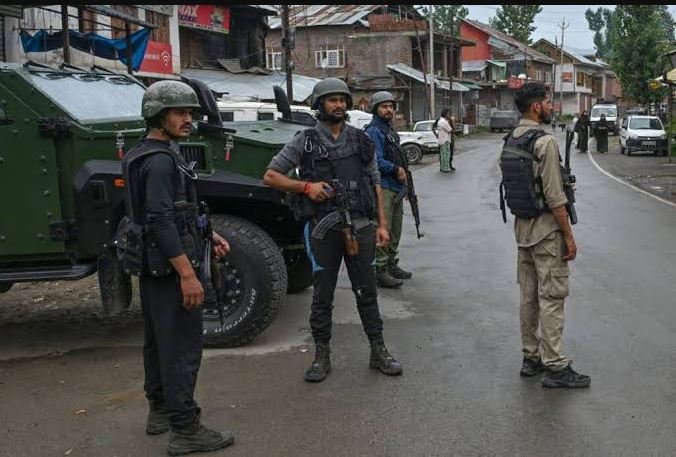
Srinagar: Claims by the Indian army establishment and Godi media about a major operation in Kulgam district of Indian illegally occupied Jammu and Kashmir have come under serious question after the killing of an alleged top militant turned out to be false, while a local youth was martyred in custody in a staged encounter.
A week has passed since Indian forces launched a massive operation in over twenty villages of Kulgam, but the alleged militant commander, Latif Butt, whom Indian media had immediately blamed for the firing incident in Kulgam, remains untraced. Despite tall claims, Indian forces have failed to produce any evidence of his presence or killing.
Anti-Pakistan narrative deflated

Indian media had, without any solid evidence, linked Latif Butt and the so-called foreign militants to the Kulgam firing and also tried unsuccessfully to connect Pakistan with the incident.
On November 16, the Indian Army, Police and Central Reserve Police Force cordoned off the area near Laroo Bypass in Kulgam and launched a search operation. Throughout the day, Indian Godi media kept presenting the killing of Latif Butt and alleged foreign militants as breaking news.
However, according to facts emerging from the ground, the claim of killing Latif Butt and foreign militants proved false. Instead, Indian forces arrested and killed a father of two kids, Umar Nisar, a resident of Ariya village of Kulgam. Locals said that Umar was already in the Indian forces’ custody and was killed in the staged encounter in the guise of the operation.
Locals say the fact is there was no encounter in Kulgam at all.
Death in custody
They say Umar Dar was picked up and killed in custody, and later presented as killed in an encounter. His only past “crime”, according to family members, was stone-pelting as an expression of anger against the Indian Army.
People in Kulgam have expressed deep concern over the growing pattern of custodial killings in the name of encounters. They hold DSP SOG Rajat Chib responsible for the incident. Locals say that although Chib was recently transferred from Kulgam to Srinagar, he was again given authority for the operation in Kulgam and was directly involved in the killing of the innocent youth.
Residents further state that the same officer is responsible for over 600 arrests in the district and for a series of fake encounters aimed at creating a security threat narrative and justifying the crackdown on the local population.
Mehbooba’s take on operation
Meanwhile, PDP chief and former Chief Minister Mehbooba Mufti said Akhran Nowpora in Kulgam has virtually been turned into a cantonment.
In a post on X, she said reports emerging from the area are extremely distressing. “Punishing an entire population for security lapses is deeply unjust and unacceptable. Collective punishment only breeds alienation and resentment. Innocent people must not be made to suffer,” she said.
Congress sticks to stand on SPOs killing
In a related development, the Congress IIOJK chapter on Monday accused the BJP of indulging in “cheap and petty politics” over the killing of two SPOs in Kishtwar, with party leader Suhail Bukhari defending party president Tariq Karra’s demand for a thorough probe into the killing of SPOs by Indian forces. He said that in the absence of any official sequence of events from police or administration, families deserve the truth, accountability must go up to Indian Home Minister Amit Shah and Lieutenant Governor Manoj Sinha, and the BJP.
Locals say the entire area has been under siege, with door-to-door searches, harassment, and mass detentions continuing for days.
Civil society says India is fabricating a security threat narrative through so-called encounters and mass killings of Kashmiris. They say on November 11, Indian forces also killed two innocent Kashmiri police personnel in firing in the forests of Kishtwar and placed blame on militants.
India has deployed nearly one million troops in occupied Kashmir in the name of security in a failed attempt to suppress the Kashmiris’ struggle for freedom, while extrajudicial killings have become a routine tool of repression.
APHC demands UN probe
The All Parties Hurriyat Conference has repeatedly condemned the killing of Kashmiri youth in staged encounters and called for independent United Nations investigations into human rights abuses in Indian occupied Jammu and Kashmir. APHC spokespersons and leaders — including Advocate Abdul Rashid Minhas and APHC-AJK Convener Ghulam Muhammad Safi — frequently issue statements denouncing cordon-and-search operations, arbitrary detentions, and fatal encounters involving Kashmiri youth.
The organization urges the United Nations and international human rights bodies to investigate extrajudicial killings, monitor the conditions of political detainees, and facilitate a resolution to the Kashmir dispute in line with UN Security Council resolutions. APHC characterizes these incidents as systematic state repression and extrajudicial killings, echoing past recommendations from the Office of the United Nations High Commissioner for Human Rights (OHCHR) to establish an independent Commission of Inquiry.
CASOs reflect disturbing pattern
The killing of Kashmiri youth in staged encounters, the continued cordon-and-search operations, door-to-door searches, arbitrary arrests, harassment, and intimidation of young people in Kulgam and Kishtwar districts of Indian-occupied Jammu and Kashmir (IIOJK) reflect a deeply disturbing pattern of crackdown operations that has created an atmosphere of fear and uncertainty among the local population.
These actions are viewed by Kashmiris as part of a broader policy driven by political pressure from the BJP government in New Delhi, particularly Home Minister Amit Shah, and the ideological influence of the RSS and its affiliated study groups. There are growing concerns that such operations are intended not merely to maintain security but also to suppress Kashmiri political expression, silence demands for the right to self-determination, and discourage the peaceful expression of the people’s aspirations for Azaadi (freedom).
The continued militarisation, frequent search operations, detentions, and targeting of Kashmiri youth raise serious questions about the Indian government’s claims of peace and normalcy in the region and the experiences reported by people living under these conditions.
There are also concerns that Indian forces institutions, including the army, paramilitary forces, and police, are being used to advance a political and ideological agenda associated with the RSS, while projecting an image of peace, development, and normalcy to the international community.
Peace cannot be established through fear, intimidation, arbitrary detention, or the silencing of political voices. Genuine peace requires justice, accountability, respect for fundamental human rights, protection of civilian lives, and recognition of the political aspirations of the Kashmiri people.
The international community, particularly the United Nations and international human rights organisations, must closely monitor the situation in IIOJK, seek independent investigations into reported killings and such staged encounters, and demand accountability for human rights violations. The voices, dignity, and fundamental rights of the Kashmiri people must not be ignored or suppressed behind official narratives of normalcy.








