The killing of young people in Indian occupied Kashmir is increasingly becoming part of a disturbing cycle in which a security incident is followed by sweeping arrests, military searches, public accusations and, too often, unanswered questions about the circumstances in which lives are lost. The latest developments in Kulgam have brought this pattern into sharp focus, with two young Kashmiris killed in separate encounters within three days as Indian forces pursued an extensive operation across the district.
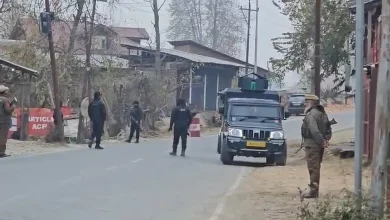
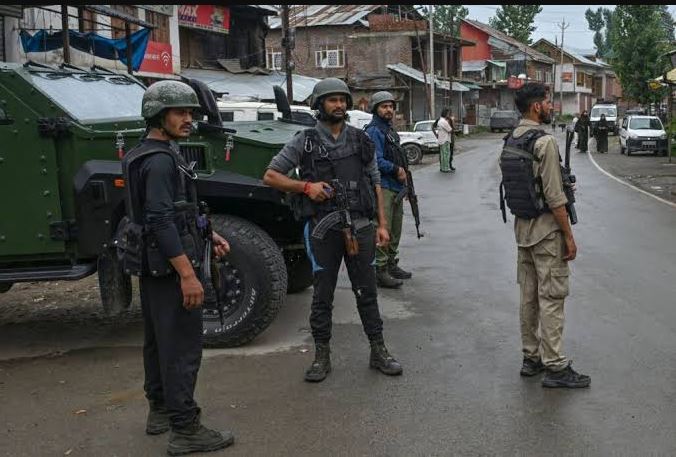
Following the November 11 attack on a Central Reserve Police Force (CRPF) checkpoint in Kulgam, in which three personnel were injured, Indian forces launched an extensive crackdown across the occupied Valley. Hundreds of young men were detained or questioned, villages were subjected to cordon-and-search operations, roads were barricaded and ordinary residents once again found themselves living under intensified surveillance. More than 500 people were reportedly questioned during the ensuing security operation.
The operation’s most consequential developments unfolded on November 16 and 18. On Monday, Indian forces killed Umar Nisar Dar near Laroo Bypass in Kulgam, describing the incident as an encounter. Prominent Kashmiri activist, Muhammad Lateef Butt, however, escaped and became the focus of an intensified manhunt. On Wednesday, the forces finally claimed to have tracked Butt to Zangalpora village, where an eight-day cordon-and-search operation culminated in his killing during an exchange of fire inside or near a mosque, according to Indian media reports.

The circumstances surrounding both deaths deserve scrutiny beyond the competing claims issued by Indian security agencies. Umar’s family and local residents have disputed the official account of his martyrdom, maintaining that he had already been taken into custody before he was shot dead. They have questioned the portrayal of the incident as a conventional gunfight and demanded answers about what happened to him while in the forces’ custody. Umar, a father of two from Ariya village, has left behind a family seeking explanations that an official statement cannot provide. These allegations require an independent investigation rather than a conclusion dictated by India’s security establishment.
The killing of Muhammad Lateef Butt on Wednesday has brought the prolonged operation to an end, but it has also raised fresh questions about the conduct and consequences of the crackdown. According to the police account, he was located inside a mosque in Zangalpora, repeatedly urged to surrender, but Lateef refused to surrender before the tyrannical forces and preferred martyrdom. The two killings cannot be viewed in isolation from the wider atmosphere created by the prolonged security offensive. Door-to-door searches, questioning of hundreds of residents, barricades and the cordoning off of villages have once again brought ordinary Kashmiris under collective suspicion. Former chief minister Mehbooba Mufti had earlier criticised the transformation of Akhran Nowpora into a virtual cantonment, warning against making an entire population suffer for security lapses. Her criticism reflects a fundamental concern: Indian froces’ operations directed against suspected militants must not become instruments of collective punishment against civilians.
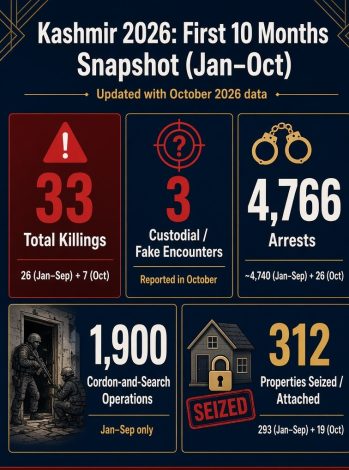
This is not merely a question of whether a particular operation succeeds or fails. It concerns a wider pattern in which arrests, searches, property seizures and prolonged detention have become recurring features of life in Indian illegally occupied Jammu and Kashmir (IIOJK). In the first ten months of 2026 alone 33 Kashmiris were killed, nearly 4,766 arrested and more than 1,900 cordon-and-search operations, point to the scale of the security response. Political leaders and activists remain in prolonged detention. Young men continue to disappear into the machinery of raids and emerge, if at all, as statistics in the next press release.
The larger question is why the youth of Kashmir continue to find themselves at the centre of an increasingly militarised response to a political dispute. A young man accused of militancy is immediately reduced to a security designation, while the circumstances that shaped his life, his political environment and the grievances surrounding the conflict rarely receive comparable attention. It does underline the danger of treating every expression of political alienation as a security problem and every death in an encounter as proof of operational success.
The political context cannot be separated from this pattern. Across mainland India, the Election Commission has faced mounting criticism over the Special Intensive Revision of electoral rolls, with opposition parties challenging the exclusion of millions of names and demanding accountability from Chief Election Commissioner Gyanesh Kumar. Reuters reported on November 16 that approximately 130 million people had been excluded from an initial draft electoral roll and would have to establish their eligibility. The controversy, alongside protests against the election authorities, has placed institutional accountability firmly in the national debate. The timing is rarely accidental, a dramatic “success” in IIOJK, redirects national attention. Externalising blame and producing bodies allows India to project resolve while the deeper questions of political aspiration and accountability are postponed.
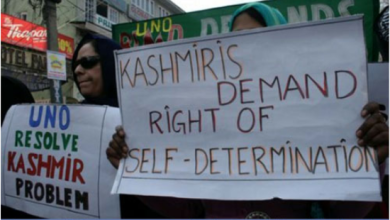
The fundamental issue is that Kashmiris’ political aspirations cannot be reduced to a law-and-order problem. Their demand for freedom and the internationally recognised right to self-determination through a free and impartial plebiscite under relevant United Nations resolutions cannot be addressed through military deployments, mass detentions or the criminalisation of political dissent.
The martyrdom of Umar Nisar Dar and Muhammad Lateef Butt within three days have given the Kulgam operation its official conclusion, but they have not resolved the questions surrounding it. Two families have lost their sons, children have been orphaned, and residents have once again witnessed their neighbourhoods transformed into security zones. Whether the Indian government describes the operation as a major success is ultimately less important than whether it is prepared to submit its most contentious aspects to independent scrutiny.
A security operation can eliminate individuals, but it cannot extinguish the political grievances that sustain a prolonged conflict. Nor can the repeated announcement of operational victories substitute for justice, accountability and a political settlement. Until the circumstances of these deaths are transparently investigated and Kashmiris are allowed to pursue their political aspirations without fear of collective reprisal, Kulgam’s orchards will continue to bear witness to the human cost of a conflict that military force alone cannot resolve.