 Once revered as the “Paradise on Earth,” Kashmir has become one of the most heavily militarized and repressed regions in the world. The Indian government’s unilateral revocation of Article 370 in August 2019 marked a watershed moment in the region’s long and painful history. Without the consent of the Kashmiri people, India stripped the region of its autonomy through a presidential order, triggering an era of intensified militarization, communication blackouts, mass detentions, and widespread human rights violations.
More than four years later, the situation remains dire. The region operates in a state of de facto emergency, where political dissent is criminalized, civil liberties are suppressed, and democratic institutions have been rendered ineffective. What was once a political dispute is now enforced through armed repression, surveillance, and the systematic silencing of local voices. This article examines how a constitutional betrayal has led to Kashmir being placed under constant siege.

The Betrayal of the Constitution
Article 370 of the Indian Constitution granted Jammu and Kashmir special status, allowing it autonomy in all matters except communications, foreign affairs, and defense. It was a foundational element of the political agreement under which the region acceded to India in 1947, designed to preserve Kashmir’s distinct identity.
On August 5, 2019, the BJP-led Indian Parliament unilaterally revoked Article 370 and bifurcated the state into two Union Territories—Jammu & Kashmir and Ladakh—without consulting the region’s elected representatives, many of whom were either jailed or silenced. This move:
Abrogated constitutional autonomy
Scrapped Article 35A, which controlled land ownership and residency
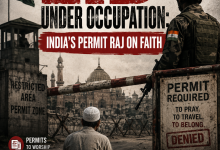
Paved the way for demographic changes in the Muslim-majority region
A complete communications blackout was imposed. Landlines, mobile networks, and the internet were shut down. Journalistic access was blocked. Thousands of activists, lawyers, political leaders, and even minors were detained under harsh laws like the Unlawful Activities (Prevention) Act (UAPA) and the Public Safety Act (PSA), often without charges.
Militarized Silence
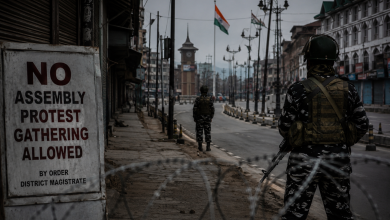
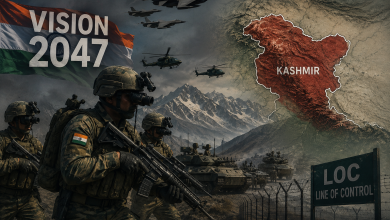
With an estimated 600,000 to 800,000 Indian troops deployed across a region of just over 12 million people, Kashmir is among the most militarized zones globally. Soldiers are stationed in civilian neighborhoods, schools, hospitals, and even places of worship—normalizing a pervasive culture of fear.
• Mass arrests continue without charges or fair trials
• Surveillance technologies track civilian movement and dissent
• Journalists face harassment, threats, and imprisonment
The Modi administration had claimed that the abrogation of Article 370 would bring development and peace. In reality, it has led to collective punishment—marked by curfews, lockdowns, internet bans, and daily humiliation at military checkpoints.
Human Rights Under Attack
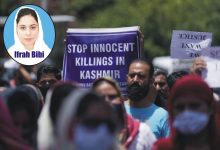
International and domestic rights organizations have consistently reported egregious violations in Kashmir. Since 2019, access has been denied to foreign journalists and UN special rapporteurs, while repression has only intensified. According to credible reports from Human Rights Watch, Amnesty International, and the UN:
• Torture and custodial killings by security forces
• Enforced disappearances
• Blinding of civilians by pellet guns
• Arbitrary house raids and surveillance
• Detention of children as young as nine
The PSA allows detention without trial for up to two years and has been widely used against peaceful activists, students, and social media users. A 2018 UN report urged an international investigation, which India rejected as “false,” and global powers have since remained largely silent.
Silencing the Press
A free press is essential in any democracy, but in Kashmir, it is treated as a threat. Journalists such as Sajad Gul, Aasif Sultan, and Fahad Shah have been arrested under vague charges like “glorifying terrorism.” Media offices have been raided, equipment seized, and publications shut down.
State authorities monitor press credentials and censor “anti-national” narratives. In this climate of fear, self-censorship has become the norm, preventing the rest of India—and the world—from understanding everyday life in Kashmir.
Psychological and Economic Impact
Beyond physical repression, the psychological toll on Kashmiris is profound. Generations have grown up under the shadow of gunfire, checkpoints, and funeral processions.
• Kashmir has the highest unemployment rate in India, exacerbated by frequent internet shutdowns and surveillance
• Key sectors like tourism and agriculture have been devastated by instability
• Mental health issues such as PTSD, anxiety, and depression are widespread, yet facilities remain inadequate
Despite government claims, real economic development remains elusive. With no political representation or participatory governance, most Kashmiris feel disenfranchised and alienated.
Global Silence, Strategic Complicity
Despite ample evidence of repression, the international response has been muted. Strategic partnerships, arms deals, and economic interests have taken precedence over human rights. Western democracies remain largely silent, unwilling to jeopardize relations with India.
New Delhi continues to dismiss Kashmir as an “internal matter,” ignoring UN Security Council resolutions that recognize it as a disputed territory and call for a plebiscite. For Kashmiris, the lack of global action feels like a betrayal.
Conclusion: A Silenced Land
The situation in Kashmir is not merely a security operation or a legal reform—it is a long-term project of political and cultural erasure. The revocation of Article 370 was not just a constitutional maneuver but a declaration that the identity, voice, and rights of Kashmiris can be overridden at will.
As India promotes an image of normalcy, the reality on the ground remains one of occupation and fear. Lasting peace in Kashmir cannot be achieved through military might—it requires the restoration of political rights, open dialogue, justice, and dignity. Until then, democracy will remain a broken promise, and the cry for peace will echo unheard through the silence.







One Comment