India suffering from global isolation after tense relations with US, China: US magazine report
 New York: The American magazine “The New York Times” has said in a report that India has become a victim of global isolation after tense relations with the US and China.
According to Kashmir Media Service, the report said that in 2014, Indian Prime Minister Narendra Modi welcomed Chinese President Xi Jinping with a red carpet, but during this time, Chinese soldiers got involved in a clash with his soldiers on the Indian border, which not only embarrassed Narendra Modi but also forced him to keep the Indian army ready for war in a cold region, which also affected India’s economy.
Years later, the Indian Prime Minister showed warmth in relations with the US and tried to change this relationship quickly by further enhancing his political reputation. Narendra Modi developed such a friendship with President Donald Trump during his first term that he broke protocol and attended his election campaign rally in Houston in a packed stadium.
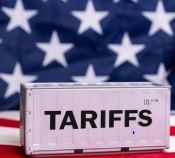
The former Biden administration also continued to expand relations because India is considered a strong ally against China. But President Donald Trump’s recent move to impose a hefty 50 percent tariff has humiliated Narendra Modi.

Donald Trump, citing India’s purchase of Russian oil, imposed a hefty 50 percent tariff and called the Indian economy dead. Donald Trump had already angered India by treating the Pakistani leadership as an equal during his efforts to resolve the Pak-India dispute earlier this year.
All this has put India in a situation where it has to look at its strength. Despite having a large and growing economy, Modi acknowledged this week that he may have to pay a political price for the trade dispute.
India is trying to mend ties with Beijing, and Modi is due to visit China later this month for the first time in seven years, but relations remain strained by a border clash and China’s support for Pakistan during recent tensions with Pakistan.
On the other hand, Modi said that he is looking forward to hosting Russian President Putin in India later this year. But beyond this race and stubbornness, India’s desire to consolidate its rise as an economic and diplomatic power seems to be fading due to the uncertainty.
There is a growing sense among Indian officials and experts that the country must return to its long-tested policy of strategic autonomy.
Former Indian ambassador to Beijing and Washington Nirupama Rao said that Trump’s tough actions have upended the strategic logic of a very important partnership, which was painstakingly cultivated over more than 2 decades. New Delhi will have to make very practical strategic adjustments to protect its interests.
After Trump’s announcement of heavy tariffs this week, Modi had said in a rally that India will never compromise on the interests of its farmers and fishermen. He said, “I know that I will have to pay a heavy price personally and I am ready for it.”
The American journal’s report says that in fact, these relations had already begun to deteriorate before, when Trump focused on Russian oil.
According to officials and analysts, the deterioration of relations is related to a personal resentment of President Donald Trump.
In May this year, when Pak-India tensions turned into cross-border clashes, President Donald Trump announced that he had pressured both sides to achieve a ceasefire. Pakistani officials welcomed this and nominated Trump’s name for the Nobel Peace Prize but Indian officials denied the US President’s claim and took a stand against Trump’s position, which he has repeated dozens of times.
Indian officials tried to portray Modi as a strong leader who had used his military might to force Pakistan to request a ceasefire. “We now have an American president who is very egotistical and has a personal style of leadership, and an Indian prime minister who is also egotistical and has a personal style of leadership,” said Sanjaya Baru, an adviser to former Indian Prime Minister Manmohan Singh.
“When you have two leaders who fundamentally turn a relationship between countries into a relationship between individuals, I think that is the price we are probably paying,” he added.