 Muhammad Hamza
The ban of 25 scholarly books recently imposed by the Indian government in occupied Jammu and Kashmir is not just a case of censorship, but a coordinated effort to suppress the academic debate and to manipulate past reality. The ban issued on August 5, 2025, the anniversary of six years since the Indian government abrogated the constitutional autonomy of Kashmir unilaterally includes works by internationally-known scholars such as those by Arundhati Roy (Azadi), Hafsa Kanjwal (Colonizing Kashmir), and Anuradha Bhasin (A Dismantled State). The Indian government defended the action by claiming that each of these texts spreads “false narratives”, “glorifies terrorism” and incites “secessionism” and misguides the young while fostering a culture of grievance. But, in reality, these books are scholarly works, thoroughly researched and published by leading international academic presses and winning academic honors.
Kanjwal’s Colonizing Kashmir, for instance, recently won the Bernard Cohn Prize for its innovative analysis of Indian state-building in the region—a work grounded in archival evidence, not polemic. The ban reveals a state-sponsored attempt to conflate critical academia with sedition, criminalize scholarly intervention in the contentious political history of Kashmir.
This crackdown comes in the midst of stark contradictions. Even as police raided bookshops in Srinagar, Handwara, and Islamabad—confiscating texts and threatening vendors with imprisonment under India’s new criminal code—the state-sponsored Chinar Book Festival promoted state-approved literature on Dal Lake’s shores. Kanjwal is quite appropriate in framing this duality as settler-colonial logic: “This system of erasure of memory, history, and identity coincided with a historical project on the part of the Indian state to obliterate the past of Kashmir as well as replace it with one that justifies its occupation and rule”. The fact that the government has on the one hand been glorifying literature and on the other hand suffocating freedom of speech is an indication of how jittery the government is about narratives that undermine the India territorial claims.
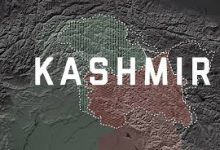

Historian Siddiq Wahid emphasizes the absurdity of banning works by institutions “whose reputations depend on evidence and logic,” asking whether constitutional freedoms of speech retain any meaning.
The juridical framework allowing this repression is also frightening. The prohibition appeals to Section 98 of the Bharatiya Nagarik Suraksha Sanhita (BNSS)–a 2023 law that replaces colonial-era penal codes–which permits authorities to pronounce publications as seditious without being subject to any due process, judicial oversight, or any substantiation whatsoever. Having outlawed books means that scholars are now criminals with three years to life prison sentences simply overnight. Veteran editor Anuradha Bhasin, whose book is banned, exploring life in post-2019 Kashmir, exclaims that the move is straight out of a fascist playbook: the state made a deliberate effort to equate the criticism with terrorism: “nowhere in my book do I glorify terrorism, but I do criticize the state.” Authorities want to blur that distinction”. The BNSS arms itself with the ambiguous concepts of such words as the false narrative to criminalize critical speech and this typifies what anthropologist Mona Bhan describes as the characteristic of fascist regimes that are afraid of the truth.
This ban is not a singularity, but forms part of a strategic effort to suppress Kashmiri expression that India has been practicing since its annexation in 2019. As journalist networks were decimated by arrests, internet blackouts, and passport confiscations—including Pulitzer winner Sanna Irshad Mattoo barred from traveling to accept her award—the state now targets academia. The ban, according to scholar Angana Chatterji, reinflicts psychological operations to intimidate and isolate Kashmiris, solidifying a regime of epistemic ide that deletes history of and resistance to state violence. Oral historian Sabir Rashid laments the gutting of Kashmir’s literary canon: “If we remove these books, we are left with nothing. Research becomes lopsided, obscuring lived experiences of conflict”. The parallel effort by the state to erase the demographic balance including issuance of domicile certificates to non-Kashmiris and gerrymandering of electoral constituencies serves increasingly to demonstrate its intention to strip Kashmiris of their sense of history.
Ultimately, India’s ban on critical scholarship signifies more than censorship; it is a necropolitical tool to annihilate collective memory. The state is trying to capture texts of massacres, such as Kunan Poshpora, the legal history of the Kashmir dispute and ethnographies of resistance and produce a compliant discourse in which occupation has no weight in history. However, as Mirwaiz Umar Farooq, senior APHC leader, affirms; “The force will never be able to suppress the historical facts and lived memories”. The grotesque effect of the ban, publicizing these texts as some kind of carefully vetted reading list on the political history of Kashmir, illustrates the fragility of the Indian settler-colonial effort. By making knowledge into crime, the state is admitting its darkest secret: that scholarship, like resistance, is finally unconquerable.
 The author graduated in Peace and Conflict Studies from the University of Peshawar and completed an internship at the Kashmir Institute of International Relations (KIIR) in 2022.







One Comment