Delhi bends to Kuki demands, exposing cracks in Indian grip
Manipur deal hailed as psychological win for oppressed communities
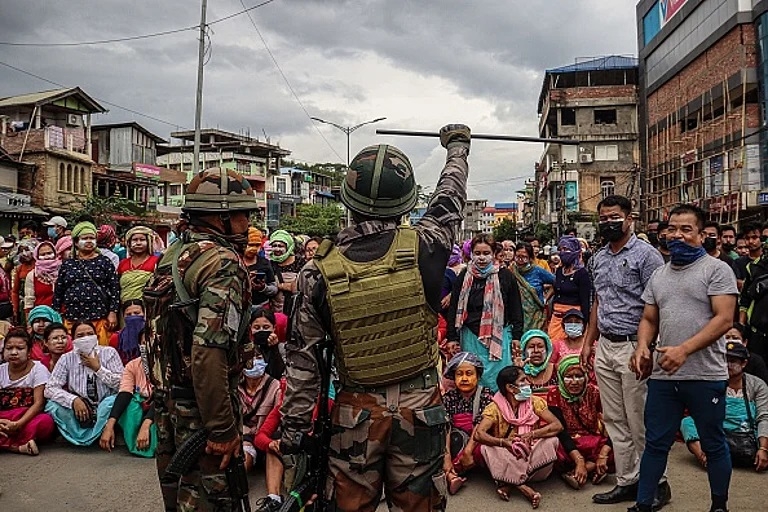
New Delhi : In a major development that has sent ripples across freedom movements in India, the Manipur government has signed a deal with Kuki armed groups, marking the first time New Delhi is seen conceding to militant demands.
According to Kashmir Media Service, the agreement includes the reopening of National Highway-2 — a key lifeline connecting Assam and Mizoram — and the relocation of seven Kuki camps away from volatile zones, besides joint security efforts with Indian forces to protect vital trade routes. Observers say the concessions prove that India’s grip on the Northeast is slipping and that organized resistance works where silence has failed.
Political analysts described the accord as a “psychological victory” for oppressed minorities. They said the Kukis demonstrated that they were not forced into surrender but compelled Delhi to listen, adjust and compromise on their terms. “This is more than a truce, it is a recognition of dignity for communities scarred by decades of state-backed violence,” they added.

The violence in Manipur has already displaced over 60,000 people, razed entire villages, and destroyed churches, leaving families shattered. For many, this agreement is a moment of hope and an admission of India’s failures, after decades in which draconian laws gave soldiers total impunity and denied justice to victims.
Commentators stressed that the deal carries lessons for other resistance movements. From Kashmir to Punjab to Nagaland, minorities have long faced neglect and repression, but the Manipur breakthrough shows that when communities stand firm together, New Delhi has no choice but to come to the table.
They said the concessions also underscore India’s internal fragility: “To the world, India projects strength, but inside it is quietly making compromises to survive. The gap between image and reality is now exposed.”
Analysts further pointed out that the Kukis’ historic struggle — from the Anglo-Kuki revolt of 1917 to the present day — continues with renewed momentum, as control over NH-2 gives them not just territory but economic leverage. The deal, they said, has widened the space for minorities across India to demand autonomy, rights, and recognition.