Retired Delhi HC judge rips into Indian SC’s bias against Muslims
Babri Masjid, Ayodhya verdicts expose judiciary’s majoritarian tilt, says Muralidhar
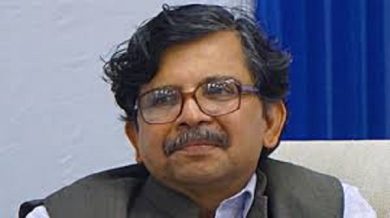 Delhi: Senior Indian advocate and retired Delhi High Court judge S. Muralidhar has delivered a sharp indictment of the Indian judiciary’s handling of sensitive religious disputes, particularly those involving Muslims, warning that the courts have failed to uphold constitutional values in the wake of Babri Masjid demolition.
According to Kashmir Media Service, delivering the A.G. Noorani Memorial Lecture at the India Islamic and Cultural Centre in Delhi, Muralidhar described the Supreme Court’s conduct as an instance of “unforgivable institutional amnesia”.
Muralidhar cited the SC’s inaction on the suo motu contempt petition against former Uttar Pradesh chief minister Kalyan Singh, filed after the Babri Masjid was demolished in 1992. “It was not taken up for 22 years”, he said. When the matter eventually came before Justice Sanjay Kaul, he noted, it was dismissed as a closed chapter with the judge saying, “Why flog a dead horse.” “This is institutional amnesia, which in my view is unforgivable, of an act which the Supreme Court found was an egregious crime,” he said.
He also cited the Ayodhya judgment of 2019, arguing that the Court went beyond the scope of the suits before it. “No one had asked for the construction of a temple,” he said. The ruling, he added, “was completely outside the realm of the suits” and its fallout continues to affect the courts. He said the directions issued under Article 142 had neither a legal foundation nor any request from the Indian government or Hindu parties, and the temple construction question was never part of the original dispute.

Despite the Places of Worship Act, litigation over religious sites has multiplied, Muralidhar warned. “We have had suits emerging everywhere,” he noted.
The retired judge also criticised television media for framing national debates in terms of “Hindu-Muslim questions”. “We tend to forget that ours is a composite culture,” he said.”
Referring indirectly to former Chief Justice of India D.Y. Chandrachud, widely regarded as the Ayodhya verdict’s author, he observed that the decision was officially issued without attribution, yet the author had later said he had “consulted the deity” before delivering it.