No ‘selectivity’ on principles like self-determination, Pakistan tells UNSC, raising Kashmir
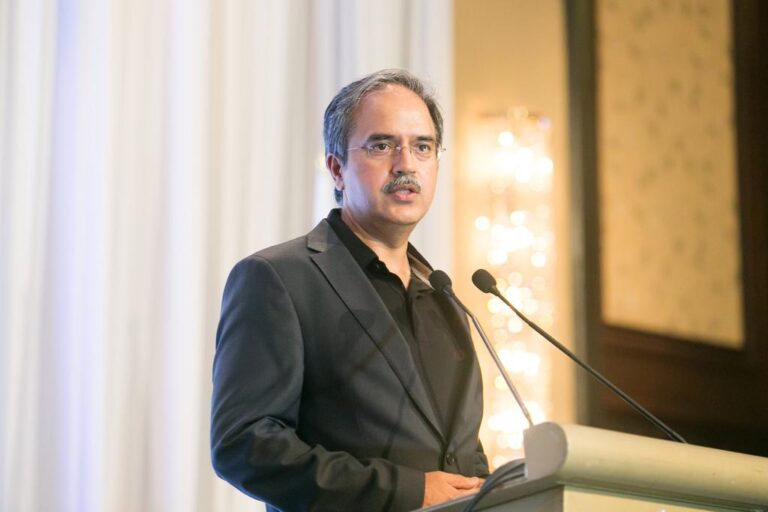 United Nations: Pakistan ha smade a clarion call for upholding the U.N. Charter principles — right of self-determination, sovereign equality, non-use of force, non-interference in internal affairs, territorial integrity, disputes settlement — emphasizing they must not be subjected to “political expediency or selectivity”.
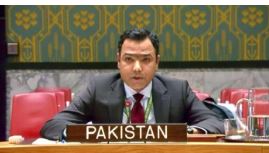
“Nowhere is selective application more glaring than in the denial of justice to the peoples of Palestine and Kashmir,” Ambassador Asim Iftikhar Ahmad, permanent representative of Pakistan to the United Nations, told the UN Security Council at a special session held to mark 80 years since the organization’s founding.
“The Jammu & Kashmir dispute, among the longest-standing items on this Council’s agenda, remains unresolved despite numerous Security Council resolutions guaranteeing the Kashmiri people’s right to self-determination through a UN-supervised plebiscite,” the Pakistani envoy said, as the decades-old dispute reverberated in the 15-member body’s iconic Chamber on Friday.
“The Kashmiris rightfully look up to the international community and particularly this Council to deliver what was promised to them over the decades ago,” he added.
In this regard, Ambassador Asim Ahmad said that under Article 25 of the Charter, member states are obliged to implement Council decisions. “Yet, their continued disregard erodes trust in the multilateral system.”
The ambassador’s remarks on Kashmir dispute, drew a response from his Indian counterpart Parvathaneni Harish, who claimed that the disputed state was an integral part of India. Pakistani delegate Gul Qaiser Sarwani immediately countered the Indian claim, saying Kashmir was an internationally recognized disputed territory.
In his remarks at the UN anniversary meeting, Ambassador Asim Ahmad said, “Over the past eight decades, the United Nations has served as an indispensable pillar in advancing our shared aspirations for peace and security, human rights and development.
“From enshrining the inalienable right of peoples to self-determination and supporting struggles against colonialism and foreign occupation, to affirming the dignity and worth of every individual, the UN has left an indelible imprint across virtually every dimension of international affairs.”
Amid deepening inequalities, erosion of international law, growing economic fragility, and rising mistrust among major powers, the Pakistani envoy said climate threats, pandemics, cyber vulnerabilities, and the emergence of artificial intelligence and new technologies are reshaping the global landscape.
“Yet,” he added, “multilateralism is under stress, when in fact international cooperation is most urgently needed to tackle the common challenges confronting humanity.”
“The best measure of our commitment to multilateralism is to strengthen the role of the UN,” the Pakistani envoy opined. Pakistan, he said. firmly believes that the United Nations, as the most representative international organization and the quintessential expression of multilateralism, is the premier platform to address multifaceted global issues.
Ambassador Asim Ahmad also highlighted the prolonged suffering of Palestinian people, saying it remains a stark reminder of the urgent need for a just and lasting solution.
Pakistan, he said hopes that the Two-States Solution Conference complemented by the ongoing peace efforts led by the U.S. and Arab-Islamic countries will lead to a credible political process aimed at achieving an independent, viable, and contiguous State of Palestine, with Al-Quds Al-Sharif as its capital, based on pre-1967 borders, in accordance with UN resolutions and international legitimacy.
“The UN Charter provides a full spectrum of peaceful dispute resolution tools under Chapter VI – negotiation, inquiry, mediation, conciliation, arbitration, and judicial settlement”, he said, stressing that the United Nations must remain fit for purpose and accountable, as well as more representative.