UNHRC intervention sought against intensified surveillance in IIOJK
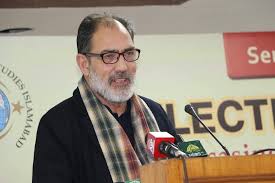
Islamabad: Chairman of the Kashmir Institute of International Relations (KIIR), Altaf Hussain Wani, has sought urgent attention of the UN Human Rights Council towards the intensified surveillance mechanisms targeting the local population in Indian illegally occupied Jammu and Kashmir.
According to Kashmir Media Service, in a letter to Dr. Ana Brian Nougrères, Special Rapporteur on the right to privacy, Wani highlighted that GPS-enabled monitors, digital surveillance, and intrusive biometric data collection of undertrial detainees in Kashmir have become tools of intrusion, undermining the presumption of innocence and eroding fundamental freedoms.
Wani cited the case of Mukhtar Ahmed, son of Mohammad Rashid from Karmara, Poonch, as a disturbing example.


Following his bail on November 15, 2025, by the Court of Principal District & Sessions Judge, Udhampur, a GPS-enabled tracking anklet was mandated, continuously monitoring his movements and placing him under perpetual state surveillance.
Referring to these practices, Wani said, “These measures collectively constitute a systematic erosion of privacy, a fundamental human right enshrined under international law,” emphasizing that misuse of such instruments transforms legal liberty into a perpetual state of control.
He urged the UN Human Rights Council to immediately halt these practices and mandate an independent investigation into digital surveillance in occupied Kashmir, calling for remedial measures that are necessary, proportionate, and respectful of human dignity.
Highlighting international law, Wani pointed to Article 17 of the International Covenant on Civil and Political Rights (ICCPR), which guarantees that no individual shall be subjected to arbitrary or unlawful interference with privacy, family, home, or correspondence. He added, “Privacy is not a privilege; it is a cornerstone of human dignity, civil liberty, and the rule of law. Immediate action is essential to prevent further abuse and to reaffirm that no individual should live under constant, state-imposed intrusion.”