Indian civil society group warns of rising alienation and anger across IIOJK
Says democracy nominal as authority remains with Delhi-appointed LG
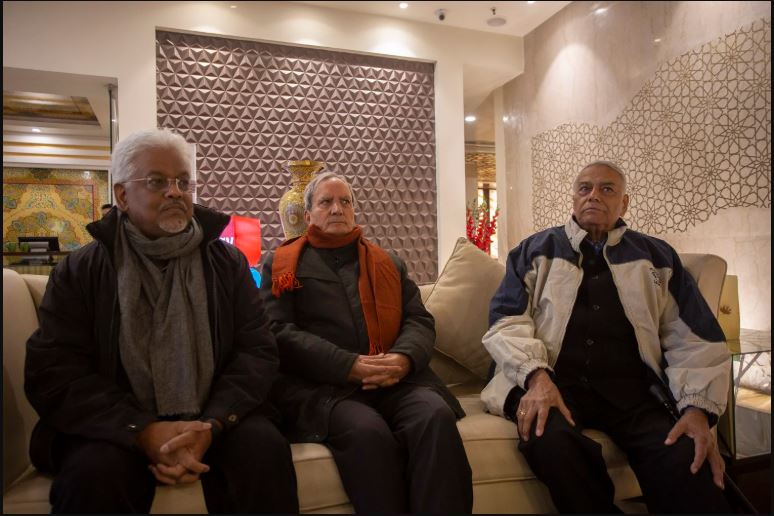
New Delhi: A group of Indian civil society leaders, led by former External Affairs Minister Yashwant Sinha, has warned of deepening alienation and resentment across Indian illegally occupied Jammu and Kashmir (IIOJK), saying the situation on the ground is “much further from the truth” that presented by the Indian government or its media.
According to Kashmir Media Service, the Concerned Citizens Group (CCG), which also included Sushobha Barve, retired Air Vice Marshal Kapil Kak, and journalist Bharat Bhushan, toured both Kashmir and Jammu divisions of IIOJK from October 28–31, 2025 to assess political, social, and economic conditions.
The report paints a stark picture: Kashmir is “sullen and silent,” dissent is dangerous, alienation is deeper than at any point since 2019, and anger is rising in Jammu as well. It found that anti-India sentiment has grown. The group said the most overwhelming sentiment in the territory was fear, while public frustration is fueled by the continued denial of statehood, the concentration of authority in the Lieutenant Governor’s office, and the erosion of local identity.

One senior Srinagar-based doctor told the CCG, “We have been silenced. But the eerie silence does not mean all is hunky-dory….. the volcano of suppressed anger and frustration bordering on hatred could erupt any time.” A senior editor told the group: “This silence of the Kashmiri society is unsustainable. It has to explode… and when it does, it would be dangerous.” Others echoed concerns about identity erosion, saying there was “no protection for Kashmiri identity today” alongside a growing sense of economic dispossession. Others described being abused and stereotyped. Many Kashmiris told the CCG that losses since August 2019 still feel raw. People spoke of the “loss of identity, honour and dignity” following the abrogation of Article 370 and 35A and the breakup of IIOJK into two Union Territories.
The report says democracy remains nominal in IIOJK. It noted that Omar Abdullah’s government remains powerless, with key decisions on postings, administration, and law enforcement controlled by New Delhi. This has bred enormous public frustration. “People are resentful that hardly any Kashmiri officers are posted as administrative heads at the districts and are effectively sidelined,” the report said, adding officers from outside the territory “neither understand the language nor the local situation,” deepening mistrust.
Students and citizens raised concerns over the new reservation policy, which they described as a “time bomb” threatening educational and job opportunities for locals.
Journalists reported ongoing censorship, intimidation, and surveillance, with local media restricted in reporting government events and covering operations like Operation Sindoor. Economic distress was highlighted, with tourism devastated after the Pahalgam attack and apple farmers suffering losses due to landslides that blocked the Srinagar-Jammu highway for over 20 days.
The CCG found that alienation in Jammu has also grown sharply. Polarisation has increased in the plains; reports of social boycotts of Muslims have emerged. A Jammu public intellectual told the team, “We in Jammu also feel like an occupied colony.”
The report emphasized that the continued denial of statehood unites Kashmir and Jammu in resentment. A senior political leader told the group the root cause was simple: “Elections happened but the results were not to the expectations of the BJP government at the Centre. They could not get a BJP-led or BJP-dependent government in Srinagar… the Centre has not been able to digest it.”
The CCG’s report ends on a warning: unless political dialogue, restoration of statehood, administrative reforms, and economic safeguards begin quickly, the silence blanketing Jammu and Kashmir will not last much longer.