Gig workers across India protest against exploitation, demand fair wages and safe working conditions
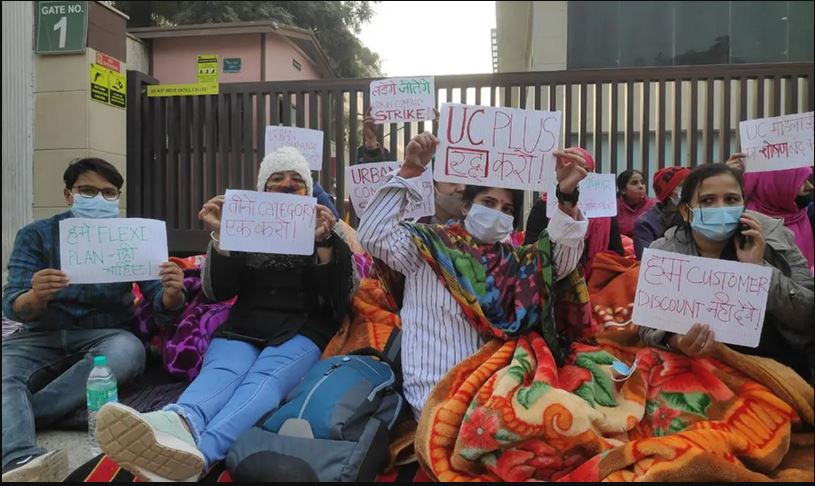
New Delhi: In a coordinated flash strike across multiple Indian cities, gig and platform workers have raised their voices against worsening working conditions, declining pay, and a lack of protection in the app-based economy.
According to Kashmir Media Service, the protest, organized by the Indian Federation of App-Based Transport Workers (IFAT), underscores the growing discontent among India’s rapidly expanding gig workforce, despite the Indian government’s claims of promoting flexible job opportunities.
Workers from major food delivery and e-commerce platforms such as Swiggy, Zomato, Blinkit, Zepto, Amazon, and Flipkart participated in the protests, which took place in cities including Delhi, Mumbai, Bengaluru, and Hyderabad. These demonstrations, ranging from work stoppages to public gatherings, have exposed the severe exploitation faced by gig workers in Modi’s India.


In Hyderabad, hundreds of delivery workers took out a two-wheeler rally, raising slogans against declining pay rates and increasingly unsafe delivery expectations. Similar protest actions were carried out in other cities through temporary log-offs and public gatherings.
Unions representing gig workers said incomes have steadily fallen even as platforms impose longer working hours, strict delivery timelines and algorithm-driven penalties. Workers complained of arbitrary suspension of IDs, lack of transparency in work allocation, and the absence of any form of job security or social protection. A major concern raised during the strike was the push for ultra-fast delivery models, which workers said expose them to accidents and mental stress while placing the entire risk burden on individuals rather than companies.
The strike has spotlighted the stark contrast between the government’s promises of economic growth and the reality faced by workers in the gig economy, who are subjected to exploitative conditions with no safety net. Despite India’s so-called economic expansion under Narendra Modi, gig workers remain largely unprotected, struggling to make ends meet.
Shaik Salauddin, a prominent gig workers’ union leader, said the protest was meant to draw attention to “systemic exploitation masked as flexibility.”
Unions have put forward a set of demands aimed at improving their working conditions. They have called on the Modi government and state authorities to recognize gig workers as full-fledged workers under labor laws. They are demanding the right to unionize and collectively bargain, which would give them the ability to fight for their rights in a legal framework that offers them protection.