Officials bow to Hindutva pressure: Madhya Pradesh mosque declared ‘illegal’ despite valid papers
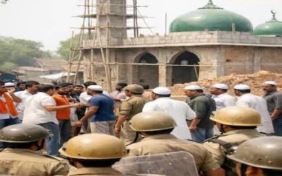
Bhopal: The Madhya Pradesh administration has declared Rahmat Masjid in Kokta Anandnagar, Bhopal, an illegal structure, following a complaint from a Hindutva organization, despite the mosque committee presenting documents proving its legality. The move has caused fear and anger among local Muslims, who describe the action as unfair and targeted.
According to Kashmir Media Service, officials, citing an order issued by the tehsildar, claimed the mosque was built on government land and warned that it should be removed within seven days or the administration would act and recover costs from the mosque committee.
The mosque committee produced documents dating back to 1976, reportedly issued by a local panchayat sarpanch, to prove the mosque’s legal status. Officials, however, rejected the papers as “fake”.

A member of the mosque committee, speaking on condition of anonymity, said, “We showed all the papers we had, but no one was ready to listen. It feels like the decision was already made.”
The action followed a complaint from the Vishva Hindu Parishad (VHP). Its state coordinator, Jitendra Singh Chauhan, claimed that government land was being encroached upon. “A mafia is grabbing government land. The administration has accepted what we said,” he claimed.
Local Muslim residents rejected the claim, arguing that the language used by Hindutva groups has created a hostile atmosphere. “Calling a place of prayer a mafia project hurts our dignity,” said one resident. “Why are only Muslim religious places picked up like this? We do not see the same action elsewhere.”
Community leaders have urged the government to intervene and stop the selective action. “Indian Muslims already live under pressure,” said a senior community figure. “Such steps add to fear and make people feel they are second-class citizens.”
The issue has become another flashpoint in a state where Muslim groups say their religious sites are increasingly questioned after complaints from Hindu organisations, raising serious concerns about equality, justice, and trust in public institutions.