Modi’s Israel visit before Tehran strikes raises questions over India’s ‘moral high ground’
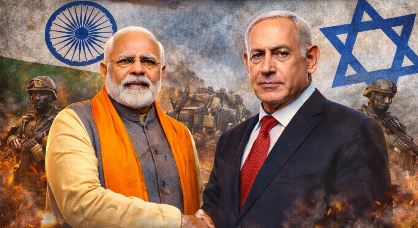
Srinagar: The timing of Indian Prime Minister Narendra Modi’s “State Visit” to Israel on February 25–26, 2026 — just 48 hours before the US-Israeli strikes on Tehran — has sparked debate and speculation among political observers regarding India’s possible tacit approval of the military action against Iran.
According to Kashmir Media Service, analysts argue that the visit, hosted by Israeli Prime Minister Benjamin Netanyahu, provided Tel Aviv with the optics of diplomatic backing from a prominent Global South country at a critical juncture. Critics suggest that the high-profile engagement may have been strategically timed to signal broader international normalization before the launch of a regional military escalation.
Adding to this are claims circulating on social media referencing remarks attributed to former US defense advisor Douglas Macgregor, alleging that Indian ports are being used as logistical hubs for US naval operations targeting Iran. The claims have fueled concerns about India’s evolving strategic alignment and its implications for regional stability.
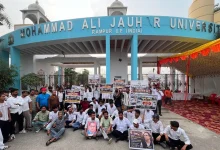
Observers note that India has historically projected itself as maintaining balanced ties in West Asia, particularly with Iran. However, the recent developments have prompted questions about whether New Delhi’s growing strategic convergence with Washington and Tel Aviv is reshaping that posture. Political commentators argue that if substantiated, such alignments could undermine India’s long-claimed “moral high ground” in foreign policy and complicate its relations with Iran and other regional actors.
International media outlets have also questioned the optics and timing of the visit, describing it as diplomatically risky and potentially damaging to India’s global standing. Reports suggest that Modi’s presence in Israel shortly before the Tehran strikes embarrassed New Delhi internationally and appeared to lend political support to Netanyahu at a sensitive moment. Some commentators alleged that the visit effectively positioned Modi as a political prop for the Israeli leadership, while raising doubts about whether India had prior knowledge of impending military developments.
Meanwhile, opposition leaders in India have termed the visit a departure from the country’s traditional foreign policy of strategic balance. Critics from the Congress and Left parties, along with civil society voices, accused the Modi government of compromising national dignity and prioritizing political or business interests over diplomatic prudence. Questions have also been raised about whether commercial considerations linked to Indian investments in Israeli and Iranian ports influenced New Delhi’s stance. This has intensified domestic debate, with observers warning that such decisions risk portraying India as an unreliable partner in the region.