Rising hate crimes during Ramadan raise alarm over targeting of Muslims in India
New Delhi: Several incidents of hate crimes reported from different states across India in recent weeks have raised serious concerns among rights activists, who say the attacks reflect a disturbing pattern of targeted violence against Muslims in the country.
According to Kashmir Media Service, in Bihar’s Madhubani district, a Muslim woman identified as Roshan Khatoon was beaten to death by a Hindu mob after she approached a village head seeking help in a dispute. Reportedly, she was tied to a pole, assaulted by a group of people, and forced to drink cow urine and alcohol before succumbing to her injuries.
In Rajasthan’s Bhiwadi, 28-year-old truck driver Aamir Khan was shot dead in the early hours of March 2 while transporting fruit to Delhi. His family said that cow vigilantes attacked him while he was waiting near a mosque with his vehicle.
Communal tensions were also reported in parts of Uttar Pradesh, including Shahjahanpur, where clashes broke out after Holi colours were thrown on Muslim residents, leading to stone-pelting and injuries on both sides.
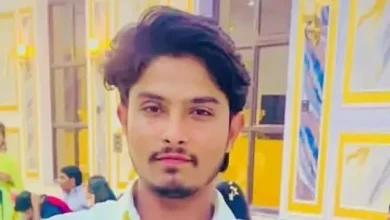
Most recently, a 13-year-old, Unaiz Khan, in Uttar Pradesh’s Lucknow, was shot while he was fasting. The accused is said to be the nephew of BJP leader Brajesh Pathak. In another incident, a 65-year-old man, Abdul Salam, in Bihar’s Darbhanga district, was lynched to death for merely trying to stop some young radicalised Hindu men from using Islamophobic slurs. He was attacked with an iron rod, killing him on the spot.
Rights groups say such incidents reflect a broader trend in which local disputes escalate into anti-Muslim violence, with victims targeted because of their religious identity. “Ramadan should be a time of peace and spiritual reflection, but for many Muslims it increasingly brings anxiety about safety,” said Aasif Mujtaba, Muslim activist, researcher and founder of Miles2Smile.
Miles2Smile has been rehabilitating people affected by anti-Muslim violence, hate crimes, lynchings, and targeted attacks for more than five years.
Mujtaba said many Muslims feel that justice often appears distant when those accused of violence are linked to Hindutva mobs. “When such incidents repeatedly occur without accountability, one question inevitably arises: Is there really one law for everyone in this country, or are some lives simply worth less than others?” he said.
Another civil rights activist, Nadeem Khan, national secretary of the Association for Protection of Civil Rights, said the pattern of violence reflects deeper social divisions. “Mob lynchings and hate crimes are not isolated events. They are part of a climate where Muslims are frequently portrayed as suspects or outsiders.”
Khan added that every incident of lynching or hate crime erodes public faith in justice and deepens communal divisions. “During Holi, mosques are covered with tarpaulin to prevent damage from colours. Why can’t the authorities ensure security during Ramadan as well? Why can’t Hindutva mobs be kept in check so Muslims can peacefully observe their holy month?” he asked.