South Asia region may go up in flames due to Kashmir dispute
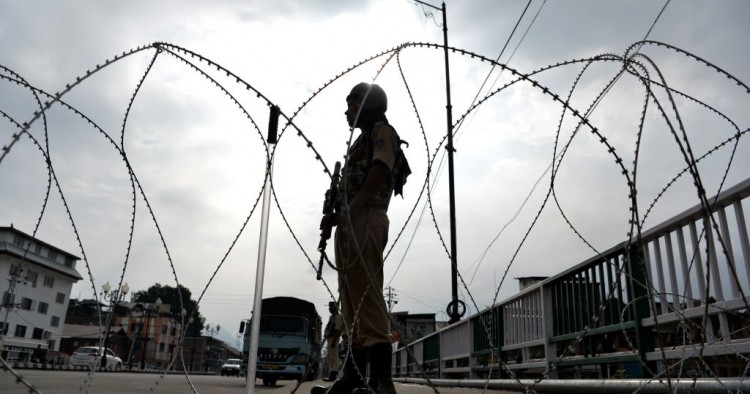
Srinagar: The “beautiful prison” of Indian illegally occupied Jammu and Kashmir, set ablaze by the Indian BJP regime, threatens to push the entire South Asian region towards conflict if the dispute continues to remain unaddressed.
According to a research report released by Kashmir Media Service today, state repression has increased manifold in scale and intensity since the revocation of the special status in August 2019. The region has witnessed heightened militarization, with thousands of additional Indian troops deployed, making it one of the most heavily militarized areas in the world.
The report stated that over three thousand Hurriyat leaders, activists, youth, students, and human rights defenders, including APHC Chairman Masarrat Aalam Butt, Muhammad Yasin Malik, Shabbir Ahmad Shah, Aasiya Andrabi, and Advocate Mian Abdul Qayoom, have been detained in far-off jails in India. Simultaneously, the structural disempowerment of the Kashmiri people continues, resulting in institutional breakdown in the occupied territory.

Kashmir is frequently described by international media and human rights organizations as one of the world’s most militarized zones—a characterization rooted in decades of conflict, heavy troop presence, and widespread restrictions. Despite its natural beauty, the region has often been termed a “beautiful prison” due to the pervasive presence of Indian forces empowered by draconian laws, arbitrary detentions, checkpoints, restrictions, cordon-and-search operations, and house raids, particularly in the Kashmir Valley and Muslim-majority areas of the Jammu region.
Residents describe living in a “living hell” marked by fear, anger, and restricted movement, alongside persistent harassment and reported excesses by Indian forces monitoring the local population.
Meanwhile, the All Parties Hurriyat Conference (APHC), while demanding the immediate withdrawal of Indian forces from the territory, said the prolonged dispute must be resolved in accordance with the aspirations of the Kashmiri people.
It said that the political future of Jammu and Kashmir was linked with Pakistan under the Two-Nation Theory, but India militarily occupied the region, altered its demographic composition, and kept its people under siege.
The APHC further stated that India has turned Kashmir into a vast prison by deploying over one million troops and has given its forces a free hand in actions against civilians.
The APHC said the Indian BJP regime and its forces are trampling humanity in the occupied territory, adding that the killing of more than four lakh Kashmiris since 1947, destruction of over one and a half lakh buildings, and reported cases of violence against Kashmiri women since 1989 reflect the extent of Indian repression.
The APHC also said that by issuing domiciles to non-Kashmiris, allocating land, and implementing what it called anti-Kashmir laws, the intentions of the RSS and BJP leadership have become evident, aimed at altering the region’s identity, culture, and demography.
The APHC urged the international community to play its role in resolving the Kashmir dispute in accordance with the will of the Kashmiri people so that lasting peace can be ensured in South Asia.