China officially renames its ‘integral part’ Arunachal Pradesh as ‘Zangnan’
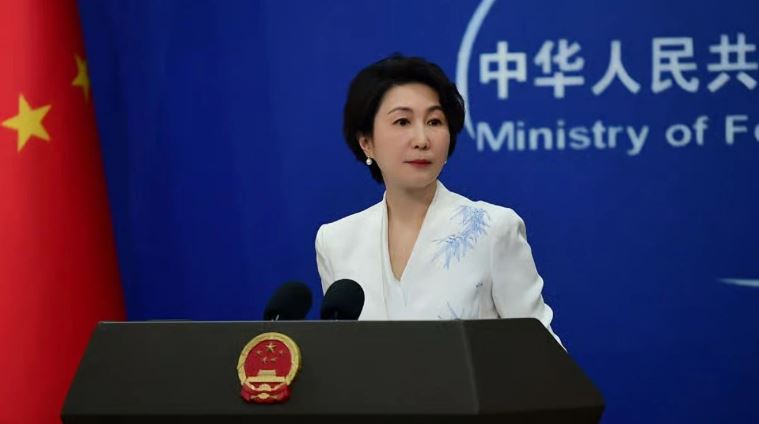
Beijing: China has once again asserted its territorial claims over Arunachal Pradesh by officially renaming it as “Zangnan” or South Tibet, declaring it an integral part of its territory.
According to Kashmir Media Service, the Chinese Ministry of Civil Affairs has released a fresh list of 27 “standardized” names in Mandarin, Tibetan, and Pinyin for various geographical features in Arunachal Pradesh, including 15 mountains, five residential areas, four mountain passes, two rivers, and one lake.
This is the fifth such exercise by China, following earlier lists issued in 2017, 2021, and 2023. With the latest additions, the total number of renamed sites has exceeded 80, reflecting what analysts describe as a calculated attempt by Beijing to reinforce its territorial claims over the region.

China has consistently maintained that Arunachal Pradesh is part of southern Tibet and has repeatedly emphasized this position through symbolic measures such as renaming locations. China continues to press ahead with its narrative.
Analysts note that such developments highlight a significant geopolitical challenge for India, yet the response from New Delhi has remained largely limited to routine diplomatic statements without any substantial countermeasures.
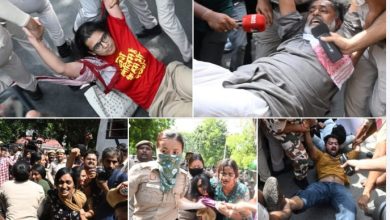
Observers draw a contrast between India’s restrained posture on external territorial assertions and its aggressive use of state machinery in Indian illegally occupied Jammu and Kashmir. They argue that while India appears cautious in confronting powerful states like China, it continues to employ coercive measures, including heavy militarization, arbitrary detentions, and suppression of dissent, to stifle the legitimate freedom movement in Kashmir.
Experts say this dual approach reflects a broader policy inconsistency, where external pressures are met with silence or symbolic protest, whereas internal political issues, particularly in IIOJK, are addressed through force and restrictive laws.
They maintain that such a strategy not only exposes India’s vulnerabilities on the international stage but also raises serious questions about its commitment to democratic principles and the right to self-determination in disputed regions.