India exploiting security narratives to target minorities, regional rivals: Analysts
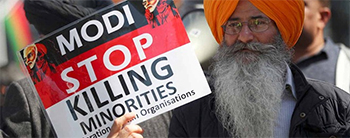
New Delhi: Analysts and political observers have accused India of manipulating security narratives to target Muslim minorities and regional rivals, warning that such tactics are contributing to communal polarization and regional instability.
According to Kashmir Media Service, the concerns gained traction after an Indian social media activist raised alarm over the alleged presence of Rohingya and Bangladeshi migrants, along with suspected extremist sympathizers, near sensitive military installations, airports, and strategic facilities, including space and defense establishments.
Observers said the claims were presented as a grave national security crisis requiring urgent action, with reference to an incident in Rajasthan cited as justification. However, analysts described the narrative as a familiar pattern of amplifying unverified threats to legitimize crackdowns on vulnerable communities.


They noted that the Hindu nationalist government has repeatedly labeled Rohingya refugees as a “national security threat” without substantiated evidence, often linking them to extremism or foreign actors while overlooking the humanitarian context of their displacement from Myanmar.
Analysts warned that such rhetoric fuels hate speech, arbitrary detentions, and deportations, serving domestic political objectives by scapegoating Muslims under the pretext of national security.
Meanwhile, the observers also pointed to what they termed India’s destabilizing activities in the region, including alleged espionage and cyber operations targeting neighboring countries. They cited the case of Kulbhushan Jadhav, convicted in Pakistan on charges of espionage and supporting insurgent activities, as well as reported cyber intrusions linked to Indian networks in countries such as Pakistan, Bangladesh, and Sri Lanka.
Experts said India’s security discourse is increasingly shaped by overlapping concerns related to migration, militancy, cyber activity, and regional intelligence competition. They added that official and security-linked narratives frequently portray undocumented migrants as potential threats, particularly when residing near sensitive installations.
Such framing, analysts cautioned, risks further securitizing migration and intensifying scrutiny of minority communities, raising serious concerns about the politicization of security policy and its broader implications for regional peace and stability.