Kashmir faces worsening environmental crisis; Dal Lake shrinks, glaciers disappearing
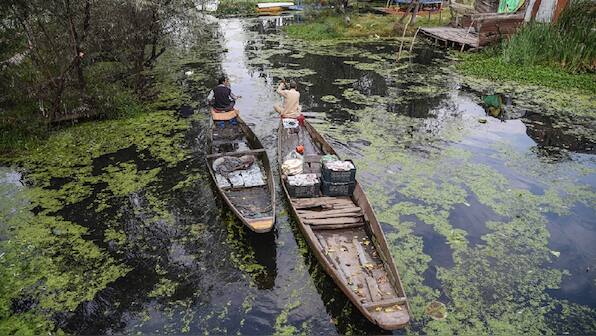
Srinagar: A scientific study released on the occasion of World Environment Day has raised serious concerns over the worsening environmental situation in Indian illegally occupied Jammu and Kashmir (IIOJK), warning that if current trends continue, the Kashmir Valley may face severe water shortages, escalating air pollution, rapid glacier loss and the degradation of vital natural water resources in the coming years.
According to Kashmir Media Service, the research paper published by scholars at the Model Institute of Engineering and Technology, Jammu, said that Kashmir’s natural resources are under immense pressure, while serious gaps remain in the effective implementation of environmental protection laws despite their existence.
The study revealed that the Kolahoi Glacier, the largest glacier in Kashmir, has lost more than 25 percent of its area over the past six decades. Experts noted that the glacier is retreating at an estimated rate of around 35 metres annually, while its thickness is decreasing by approximately one metre each year. The report warned that this rapid decline poses a serious threat to the long-term stability of major water systems, including the Jhelum, Lidder and Chenab rivers.


The report further highlighted the deteriorating condition of Srinagar’s iconic Dal Lake, stating that its area has shrunk from about 22 square kilometres in the past to nearly 18 square kilometers at the present.
It is pertinent to mention that India has deployed more than one million troops in occupied Jammu and Kashmir to maintain its illegal occupation, making it the most heavily militarized regions in the world. Environmental observers note that the extensive presence of Indian military installations and training facilities across IIOJK, along with continued exploitation of forests and natural resources, is contributing to ecological degradation.
The annual influx of millions of Hindu pilgrims during the Amarnath Yatra in the Kashmir Valley places additional pressure on the fragile ecosystem and further strains the Valley’s environmental balance.
World Environment Day is observed globally on June 5 each year.