IIOJK regime orders seizure of 2,000 Kanals of farmers’ land in Pulwama
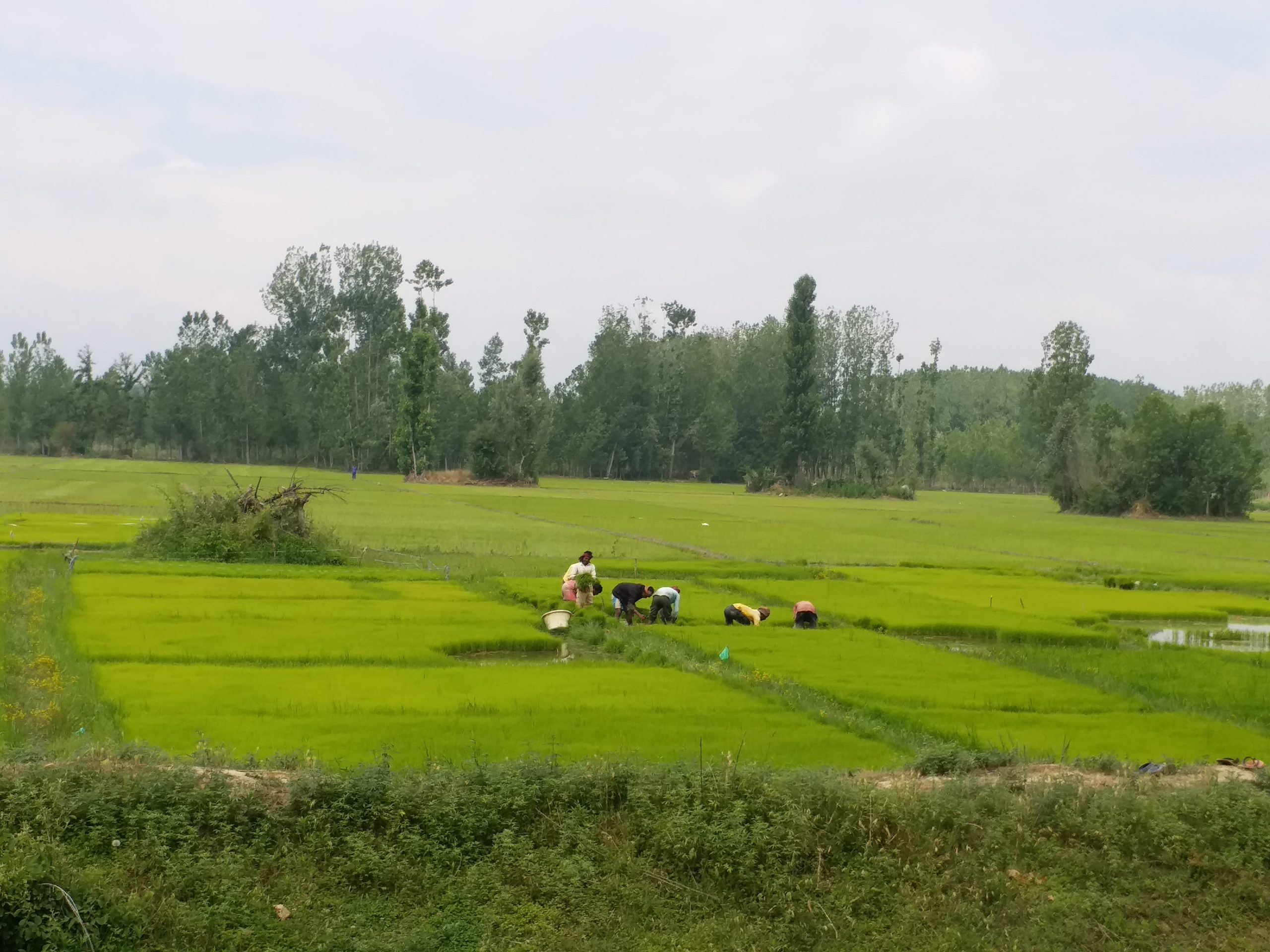
Srinagar: Farmers in the Padgampora-Dangarpora area of Pulwama district in Indian illegally occupied Jammu and Kashmir have raised alarm after the IIOJK administration ordered the seizure of 2,000 kanals of fertile agricultural land, leaving them fearing the loss of their only source of livelihood that has sustained generations of their families.
According to Kashmir Media Service, the issue triggered a rare show of unity among rival political parties, as leaders of the Peoples Democratic Party (PDP) and the National Conference (NC) joined local farmers in paddy transplantation to demonstrate solidarity with families facing uncertainty over the future of their agricultural land.
The farmers said revenue authorities recently informed them that the land they have cultivated for decades is government property and that farming activities would no longer be permitted.
The development has generated widespread anxiety among residents, who fear that thousands of kanals of fertile agricultural land could be taken away from them.
PDP legislator Waheed Ur Rehman Parra, who participated in the farming activity alongside local residents, said families that have depended on the land for generations are now being threatened with dispossession. He warned that the continued conversion of agricultural land for non-agricultural purposes would have serious economic and social consequences for the local population.
National Conference leader Mukhtar Ahmad Bandh also voiced support for the farmers, saying fertile farmland should be protected and that developmental projects should instead be shifted to barren areas. He stressed that the issue concerns the livelihood and survival of ordinary people rather than political interests.
PDP leader Iltija Mufti said that the administration was attempting to take control of nearly 2,000 kanals of productive agricultural land in Dangerpora. She said families who have cultivated the fields for centuries now face the prospect of becoming landless. She further claimed that police were threatening protesting farmers with detention under the draconian Public Safety Act.
Observers say the controversy has heightened concerns over the future of agricultural land in the occupied territory, with many residents fearing that policies pursued by the authorities could gradually deprive local communities of their ancestral lands and economic security.