Pakistan’s strength lies in national unity, technological advancement: Masood Khan
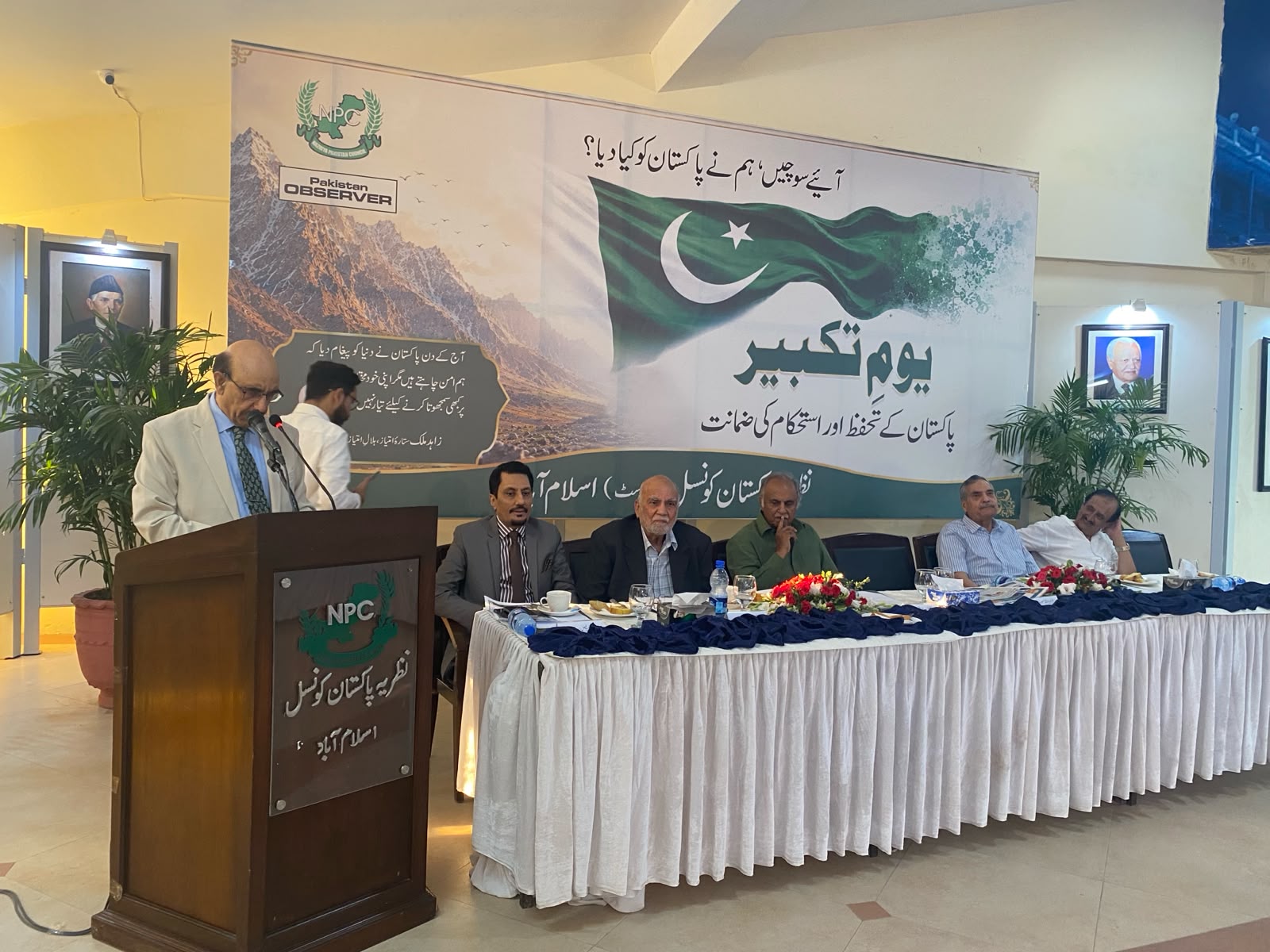 Islamabad:Former president of Azad Jammu and Kashmir Sardar Masood Khan has said that Pakistan’s security, stability, and future prosperity depend not only on its strategic capabilities but also on national cohesion, technological innovation, economic resilience, and investment in education and human development.
According to Kashmir Media Service, Sardar Masood Khan addressing a gathering Nazar-e-Pakistan Council, said Pakistan’s defence capability has evolved through decades of national effort, scientific achievement, and strategic foresight. He noted that Pakistan’s deterrence framework emerged from difficult regional circumstances and has contributed significantly to maintaining strategic stability in South Asia.
He observed that changing regional security dynamics, including evolving military doctrines and emerging technologies, have reinforced the importance of maintaining a credible deterrence posture. Pakistan, he said, has consistently demonstrated the capacity to safeguard its sovereignty while exercising restraint and responsibility in matters of national security.
Highlighting the role of scientists, engineers, policymakers, and national leadership, he paid tribute to the generations that contributed to Pakistan’s strategic and technological advancement. He emphasized that major national achievements are rarely the result of individual effort alone but rather the product of collective vision, institutional commitment, and national resolve.

Sardar Masood Khan stated that modern security is no longer confined to conventional military strength. The future, he said, will increasingly be shaped by technological superiority, innovation, cyber capabilities, artificial intelligence, advanced manufacturing, and indigenous research. Nations that invest in knowledge, science, and technology today will emerge as the leaders of tomorrow.
He warned that alongside traditional security challenges, Pakistan faces new threats in the information domain. The spread of misinformation, disinformation, deepfakes, and digital manipulation, he said, poses serious challenges to national cohesion and public trust. Addressing these threats requires informed citizens, strong institutions, and a commitment to truth and responsible communication.
Emphasizing the centrality of education, Sardar Masood Khan said that universities, research institutions, and schools must become engines of innovation and national development. He stressed the need to strengthen the linkage between academia, industry, and government so that knowledge generated within educational institutions translates into economic growth, technological advancement, and social progress.
He further noted that economic strength remains the foundation of sustainable national power. A strong economy, industrial growth, technological self-reliance, and skilled human resources are essential for supporting both national development and security objectives.
Concluding his remarks, Sardar Masood Khan said Pakistan’s greatest asset is its people. He urged the younger generation to embrace education, innovation, and public service while remaining committed to the principles upon which the country was founded.
He emphasized that the path forward lies in strengthening national unity, investing in human capital, fostering technological excellence, and building an inclusive and prosperous Pakistan capable of meeting the challenges of the twenty-first century with confidence and determination.