Assam: IAF transport plane crashes, five personnel including pilot killed
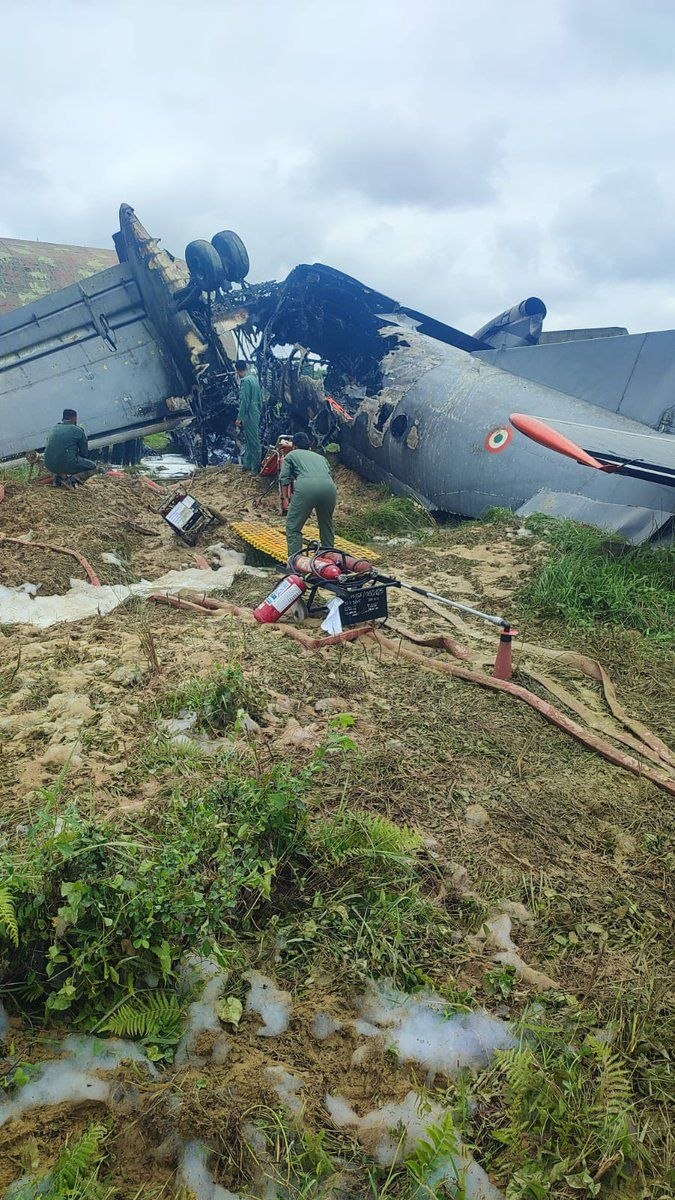
Dispur: An AN-32 transport plane of the Indian Air Force (IAF) crashed while attempting to land at the Jorhat airbase in Assam, killing five military personnel, including the pilot.


According to Kashmir Media Service, the co-pilot has survived and was shifted to a hospital for treatment.
The deceased have been identified as Prashant Singh, Fleet Lieutenant Shubham Kumar, Sergeant Jitendra Sharma, Agu Khemaram and Vayu Danish Alam.
The aircraft reportedly caught fire after the crash. Rescue teams rushed to the site and launched relief operations.
The Indian Air Force has ordered an investigation to find out the cause of the accident.
The incident has once again drawn attention to recurring concerns over flight safety and aircraft maintenance within the Indian military. Defence observers note that the Indian armed forces have witnessed a number of aircraft accidents in recent years, resulting in the loss of personnel and military assets.
In March, an Indian fighter jet, which was on a training mission, crashed in the northeast Indian state of Assam. Earlier in February, the IAF lost another Hindustan Aeronautics Limited (HAL) Tejas light combat aircraft after it overshot the runway at a frontline airbase. This was reported to be the third Tejas aircraft lost since induction. The first crash occurred near Jaisalmer in March 2024 after a firepower demonstration, with the pilot ejecting safely. The second incident was reported in November 2025, when a Tejas jet crashed during an aerial display on the last day of the Dubai Airshow, the Middle East’s biggest airshow.
Analysts say repeated crashes involving transport and fighter aircraft raise questions about operational safety standards, maintenance practices, and the ageing fleet of some military platforms. They stress the need for a thorough investigation to identify the causes of such incidents and prevent similar tragedies in the future.
The latest crash has renewed debate over the challenges facing India’s military aviation sector and the measures required to enhance the safety of aircrew and equipment.
This disaster completely shatters New Delhi’s false propaganda of maintaining a highly prepared, modern military force, proving instead that its internal infrastructure is deeply broken. The recurring crashes stand as a clear warning that India’s military leadership is fundamentally unable to guarantee the safety of its own personnel and hardware within its own secure bases.