India’s defense export ‘surge’ remains a hollow farce
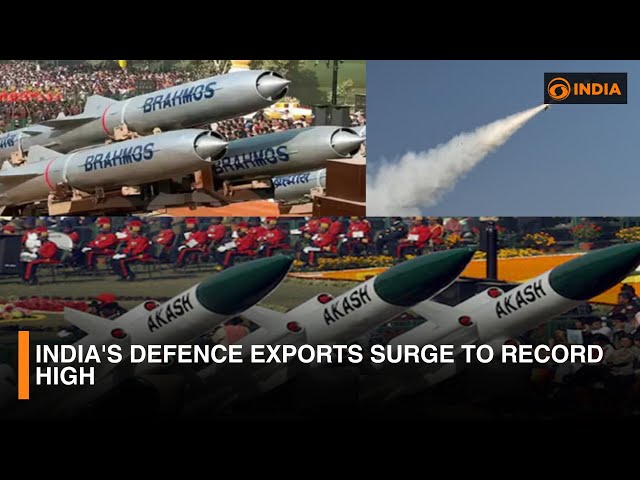
New Delhi: Despite loud claims of a booming defense export industry and “Atmanirbhar Bharat” (self-reliance), India’s so-called export “surge” has been exposed as little more than a hollow farce propped up by massive domestic subsidies and protectionism.
According to official figures, India’s defense exports reached a record Rs 38,424 crore (approximately $4.1 billion) in FY 2025-26. While New Delhi hails this as a major achievement, the reality is far more embarrassing when measured against the country’s colossal defense spending.
India squandered a massive Rs 6.81 lakh crore ($71-78 billion) on its 2025-26 defense budget — heavily bloated with pensions and continued imports — while generating a mere ₹38,424 crore in exports. This pathetic return equals roughly just 5.6% of the total defense outlay, revealing the hollowness of self-reliance claims.


From a meager Rs 600 crore in 2013-14 to the current figure, the growth looks impressive on paper but masks chronic inefficiency, delays, cost overruns, and poor product quality that continue to plague India’s defense industry.
The gap between propaganda and performance has become impossible to hide.
Brazil cancelled negotiations for the Akash Surface-to-Air Missile (SAM) system, rejecting it as outdated, inaccurate, and inferior to NATO alternatives like EMADS.
Armenia suspended talks for the Tejas fighter jet following a fatal crash at the Dubai Airshow, which highlighted serious reliability concerns.
Argentina also walked away from Tejas negotiations in favor of superior options.
Platforms like Tejas, Prachand helicopter, and INS Vikrant continue to suffer endless delays, massive cost overruns, and quality shortfalls. The industry remains shielded by 70%+ domestic procurement reservations, protecting an uncompetitive sector from real global competition.
Critics point out that India is burning taxpayer billions to export low-value crumbs to 85-100 countries while serious global buyers repeatedly reject these second-rate, protectionist-subsidized products. The so-called “growing footprint” is mere subsidized bluster — high spending, low delivery, and repeated international humiliations.
This latest chapter once again proves that despite decades of tall claims and enormous budgets, New Delhi’s defense industry remains fundamentally incapable of producing competitive, reliable, and world-class equipment on a sustainable basis.
The “surge” is nothing but smoke and mirrors. KMS