Third Indian ship attacked in a row exposes India’s maritime failure
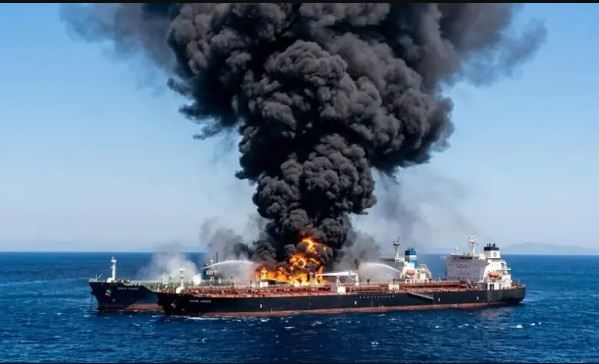
New Delhi: In a damning display of New Delhi’s growing maritime vulnerability, a third Indian-crewed vessel has been attacked in quick succession, further exposing India’s inability to protect its seafarers and ships in high-risk waters.
According to Kashmir Media Service, the latest incident occurred on June 11 when MT Jalveer, reportedly carrying 20 Indian crew members, was struck in the Gulf region. This attack comes just days after two other vessels with Indian crew came under fire, highlighting the repeated failure of Indian maritime risk management and the hollowness of New Delhi’s claims of being a “net security provider” in the Indian Ocean.
On June 8, the Palau-flagged MT Marivex, with 24 Indian nationals onboard, was attacked by US forces in the Gulf of Oman over alleged blockade violations. All crew were rescued by Omani authorities.

Between June 9 and 10, another Palau-flagged tanker, MT Settebello, carrying 24 Indian crew, was hit near Sohar, Oman. Tragically, deck cadet Aditya Sharma and engine fitter Shivanand Chaurasiya lost their lives, while Chief Engineer Patnala Suresh remains missing.
Reports indicate these vessels were carrying Iranian oil.
These incidents follow earlier attacks, including the April 18 firing by Iranian IRGC gunboats on Indian-flagged vessels Sanmar Herald and Jag Arnav in the Strait of Hormuz, and the May 13 sinking of the Indian-flagged livestock carrier MSV/MV Haji Ali off Oman.
Despite summoning envoys and issuing strong-worded condemnations, calling the attacks “unacceptable,” New Delhi has failed to provide any credible protection to Indian seafarers operating in conflict zones. The recurring pattern reveals deep flaws: poor risk assessment, questionable route selections, weak deterrence, and ineffective maritime governance.
While Indian politicians boast of securing the Indian Ocean and positioning India as “Vishva Guru” at sea, Indian-flagged and Indian-crewed vessels continue to be easy targets amid sanctions enforcement, blockades, and regional rivalries. Indian crews are repeatedly forced to rely on foreign forces and regional states for rescue — a stark humiliation for a country claiming maritime leadership.
Critics argue that this string of incidents lays bare the gap between New Delhi’s loud political rhetoric and its fragile operational capabilities. The so-called “net security provider” slogan stands exposed as mere propaganda when Indian citizens remain vulnerable and Indian shipping operators face repeated accountability failures.
New Delhi’s maritime narrative, built on falsehoods and overblown ambitions, is crumbling under the weight of these avoidable tragedies. The latest attacks on Indian-crewed vessels serve as yet another reminder of India’s operational weakness in protecting its own people on the high seas.