Ishaq Dar urges India to resolve disputes through dialogue, warns of ‘very high’ cost for violating IWT
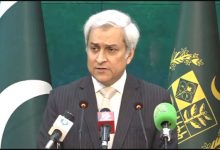
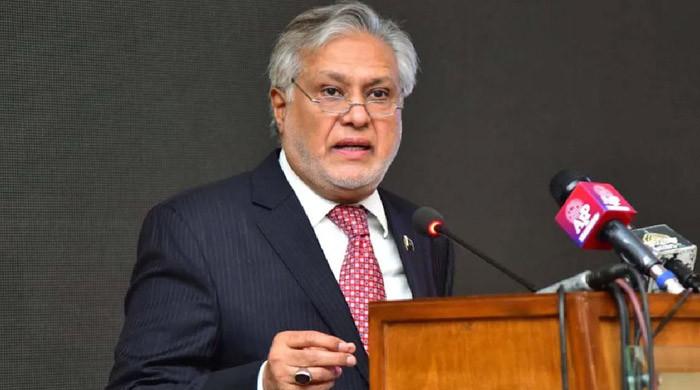 Islamabad: Pakistan’s Deputy Prime Minister and Foreign Minister Ishaq Dar has urged India to “live like good neighbours” and resolve all outstanding issues through dialogue and diplomacy, while warning that any attempt to violate the Indus Waters Treaty (IWT) or divert Pakistan’s share of water would have “very high” consequences.
According to Kashmir Media Service, addressing an international seminar on the Indus Waters Treaty in Islamabad, Dar described the IWT as a landmark instrument of regional peace that has sustained life, economies and civilizations for more than six decades.
“The Indus Waters Treaty is a landmark instrument of regional peace, sustaining life, economies, and civilizations for over 60 years. Brokered by the World Bank in 1960, it remains one of the most successful examples of transboundary water cooperation,” he said.
Reaffirming that the treaty remains valid, binding and fully operative, Dar said India’s unilateral declaration placing the treaty in “abeyance” has no legal standing and constitutes a violation of international law. He warned that any attempt to divert Pakistan’s allocated waters would be treated as an act of war, adding that the cost of sabotaging an international river treaty could be “very high.”

He said the consequences of violating international agreements extend far beyond the two countries concerned.
“Such actions set a dangerous precedent in international relations,” Dar said, adding that violations of international agreements undermine the credibility and reputation of states.
Speaking at the seminar, US author and global policy expert Laurie A. Watkins described the Indus Waters Treaty as a rare success of international diplomacy that has enabled cooperation between adversaries for over six decades.
She said river basin frameworks such as those governing the Danube demonstrate that strong institutions can prevent technical disputes from escalating into political conflicts, while the Mekong experience shows that withholding hydrological data fuels mistrust and heightens regional tensions. Referring to the Nile Basin, she said its legal framework reinforces internationally recognised principles of equitable and reasonable use and the obligation to prevent significant harm.
Watkins also referred to Pakistan’s repeated concerns over variations in the flow of the Chenab River, saying they underscore the need for greater upstream transparency. She stressed that the UN Watercourses Convention, International Court of Justice rulings and arbitral decisions remain legally binding even amid disputes.
Former Foreign Minister of Pakistan Hina Rabbani Khar said India was shifting from a rule-making to a rule-breaking approach by declaring the IWT in “abeyance.”
She said Article 12 of the treaty requires mutual consent for any modification or termination, making India’s position legally untenable. Describing the development as part of a broader erosion of the international rules-based order, Khar warned that India’s actions set a dangerous precedent that undermines treaty-based cooperation and global legal norms. She called the IWT a “gold standard” that had survived wars and urged the international community to defend transboundary water cooperation and climate stability.
Former Ambassador Johar Saleem thanked participants and organizers for the high-level discussion, saying the presence of Deputy Prime Minister Ishaq Dar reflected Pakistan’s strong commitment to water security and regional peace. He also appreciated Bilawal Bhutto Zardari’s remarks and praised experts for highlighting legal, diplomatic, and climate dimensions of the issue.
He stressed the Indus Waters Treaty remains one of the world’s most enduring examples of peaceful transboundary water cooperation and called on India to fully comply with its obligations on transparency, data sharing, and dispute resolution.