Indian forces use tear gas, baton-charge to stop CJP’s Parliament March
Dozens injured as thousands of youths clash with police in New Delhi
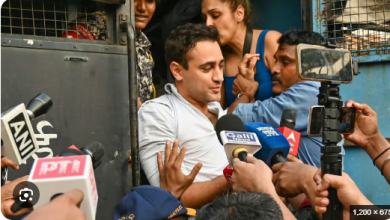
 New Delhi: Thousands of youths, students and supporters who gathered in New Delhi today for the ‘Parliament March’ (Chalo Sansad) called by the Cockroach Janata Party (CJP) were met with a massive deployment of Indian forces, repeated baton charges and tear gas shelling as Delhi Police blocked their march towards Parliament.
According to Kashmir Media Service, dozens of protesters were injured, some of them seriously, as police used force to disperse the demonstrators and prevent them from reaching Parliament House on the opening day of the Monsoon Session.
The protesters had planned to assemble at Jantar Mantar before marching on foot to Parliament in support of demands for accountability over the NEET paper leak, reforms in India’s examination system and the resignation of Indian Education Minister Dharmendra Pradhan.
The Delhi administration enforced a multi-layered security plan to thwart the march. Metro stations around Jantar Mantar were closed, roads were barricaded, and heavy contingents of Delhi Police and paramilitary forces were deployed across the area. Protesters also alleged that mobile internet services around Jantar Mantar were disrupted using signal jammers to restrict communication.


Despite the restrictions, thousands of youths from Delhi and neighboring states, including Uttar Pradesh, Haryana, Punjab and Rajasthan, reached the protest venue. As demonstrators attempted to move towards the Indian parliament, police resorted to repeated baton charges, detained several student leaders and activists, and announced over loudspeakers that prohibitory orders under Section 144 were in force and that no permission had been granted for the march.
The confrontation intensified when protesters advanced towards Patel Chowk after crossing initial barricades. Police responded by firing tear gas shells and pushing the crowd back. Protesters raised slogans and demanded permission to continue the march, while some responded by throwing shoes, water bottles and other objects after the tear gas shelling.
After several hours of clashes, the police succeeded in dispersing the protesters, effectively preventing the Parliament March from reaching Parliament House.
Meanwhile, prominent environmental activist Sonam Wangchuk, who remains admitted to Safdarjung Hospital after being forcibly shifted there by Delhi Police on July 18 following 21 days of hunger strike, said he would continue his fast until student representatives were allowed to meet members of Parliament at Parliament House.
The CJP has been staging a protest at Jantar Mantar for nearly a month against irregularities in competitive examinations, particularly the NEET paper leak, demanding accountability, educational reforms and the resignation of Education Minister Dharmendra Pradhan. Wangchuk had joined the movement in solidarity with the protesting students before his forcible hospitalization.