Global rights groups condemn India’s continued persecution of Kashmiri activists
Ten organizations demand dropping of charges against Khurram Parvez and Irfan Mehraj, call for end to repression in IIOJK
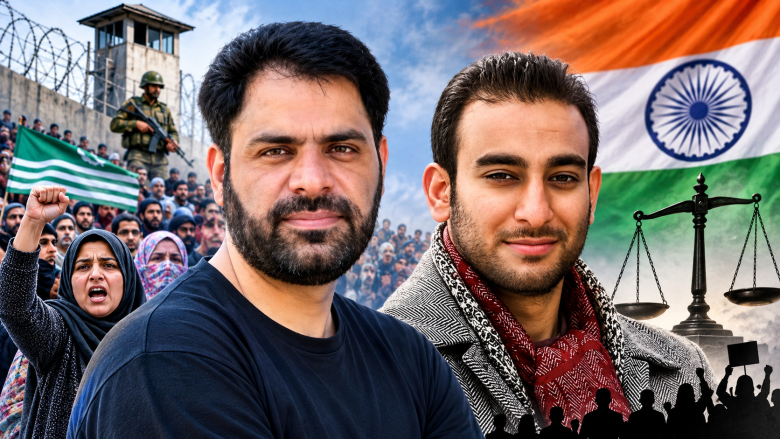
Srinagar: Ten international human rights organizations have strongly condemned BJP-led Indian government’s continued persecution of prominent Kashmiri human rights defender Khurram Parvez and journalist Irfan Mehraj, demanding the unconditional withdrawal of charges against them and an end to the repression of civil society in Indian illegally occupied Jammu and Kashmir (IIOJK).
he organizations issued a joint statement on Thursday (November 20), marking five years since Khurram Parvez’s arrest, expressing solidarity with him and Mehraj and calling on Indian authorities to drop all charges against them. They said the two were being subjected to prolonged prosecution and severe restrictions despite their release on bail after years of imprisonment for their human rights work.
They also demanded an end to the repression and intimidation of Kashmiri civil society and called for “free and unfettered access” for international civil society to IIOJK.

Khurram Parvez is a widely respected human rights defender and Program Coordinator of the Jammu Kashmir Coalition of Civil Society (JKCCS). He has extensively documented human rights violations in Kashmir and elsewhere and cooperated with international human rights mechanisms, including the United Nations.
Rights work criminalized
Indian authorities arrested him on November 22, 2021, on terrorism and other charges that, according to the organisations, criminalise human rights work by portraying it as terrorist activity. He was also charged in a second case concerning the work of JKCCS, which the organisations said sought to criminalise human rights activities in the territory.
Irfan Mehraj, a journalist and former JKCCS researcher, was also arrested in the second case.
Bail without freedom
Parvez and Mehraj were released on bail on July 22, 2026, after spending 1,703 days and 1,219 days, respectively, in pre-trial detention. However, both continue to face terrorism-related prosecutions over their human rights work and remain subject to what the organisations described as extremely restrictive bail conditions.
These conditions include requiring them to remain in New Delhi, around 800 kilometres from their homes and families in IIOJK, and report to the headquarters of India’s National Investigation Agency (NIA) twice a week for an hour. They are also prohibited from engaging in activities similar to those alleged against them, communicating with anyone directly or indirectly involved in such activities, and associating with JKCCS.
The organizations said Parvez and Mehraj were being forced to support themselves far away from their families and communities while facing continued harassment and prosecution and being denied the right to pursue their professional careers.
Civil society under siege
They said the repression was taking place against the backdrop of longstanding and continuing grave human rights violations and restrictions on fundamental freedoms in IIOJK, where independent civil society had been crippled through sustained repression.
Kashmiri civil society, they said, remained cut off from the international community, while international civil society continued to be denied access to the territory.
The organizations strongly condemned India’s widespread use of repressive administrative measures, including preventive detention, and counterterrorism legislation, particularly the Unlawful Activities (Prevention) Act (UAPA), to punish and silence human rights defenders and dissenting voices.
Global call for justice
They urged the Indian government to immediately and unconditionally drop all charges against Parvez and Mehraj, end its repression of other human rights defenders and dissidents, and fulfil its international legal obligations.
They also called on the international community to press New Delhi to honour its international commitments and end the persecution of human rights defenders and dissenting voices, particularly in IIOJK.
The joint statement was signed by the Asia Democracy Network (ADN), Asian Federation Against Involuntary Disappearances (AFAD), Asian Forum for Human Rights and Development (FORUM-ASIA), Asian Human Rights Commission (AHRC), CIVICUS: World Alliance for Citizen Participation, Front Line Defenders, International Federation for Human Rights (FIDH), Kashmir Law and Justice Project, South Asians for Human Rights (SAHR), and World Organisation Against Torture (OMCT).