 History has always been the first casualty when governments seek to monopolize truth. Before ideas are outlawed, they are questioned. Before narratives are erased, books are removed from shelves. The latest measures in Indian illegally occupied Jammu and Kashmir (IIOJK) are not simply a dispute over two publications; they constitute an attempt to redefine what future generations are permitted to know about their own past.
The latest directive issued by the Directorate of School Education Jammu orders a division-wide verification of every educational resource in government schools, recognized private schools and coaching centres. Within seven days, school heads have been instructed to inspect classrooms, libraries, laboratories, offices and staff rooms to ensure that no publication contains material deemed inconsistent with the official position on the status of Jammu and Kashmir. Compliance certificates must move through the administrative hierarchy, from Zonal Education Officers to Chief Education Officers and finally to the Directorate, with disciplinary action threatened for any delay or omission.
This sweeping exercise follows the suspension of eight officials of the School Education Department by the Lieutenant Governor’s administration. Their offence was recommending two books for school libraries: Personalities and Legends of Jammu and Kashmir and Great Personalities of Jammu and Kashmir. The decision was accompanied by the blacklisting of the authors and publishers, the withdrawal of their publications, and directions that all related material be removed from educational institutions.
The facts are striking. Under the Samagra Shiksha programme, library grants were allocated for approximately 18,328 government schools and 394 PM SHRI schools across the territory. Four expert committees comprising academics evaluated submissions from 364 publishers and recommended 463 books for different educational levels. Out of this extensive review process, only two titles became the focus of political controversy. The response, however, was extraordinary: officials were suspended, books withdrawn, publishers blacklisted, and an unprecedented verification of educational material was launched across the region.
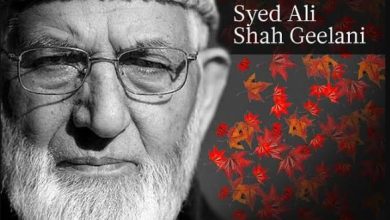
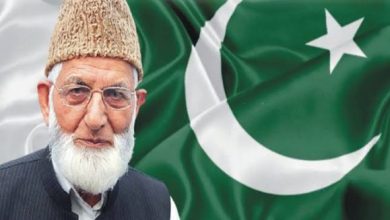
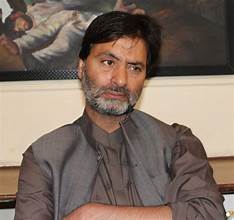
The controversy emerged because the books included chapters on prominent Kashmiri political personalities, including Syed Ali Geelani, Shabbir Ahmad Shah, Masarrat Alam Bhat, Maulvi Muhammad Farooq, Muhammad Maqbool Bhat and other figures associated with Kashmir’s political history. Whether one agrees with these individuals or not is beside the point. Historical figures are studied because they shaped political events, influenced public discourse and altered the course of history. Erasing their presence from educational material does not erase their historical significance.
History is rarely neat or comfortable. It is shaped by competing memories, conflicting interpretations, moments of triumph and episodes of suffering. The purpose of education is not to shield students from these complexities but to equip them with the intellectual tools to examine them critically. Removing books because they challenge an official narrative weakens that purpose and narrows the scope of learning.
The consequences extend far beyond the withdrawal of two publications. When educators risk suspension for recommending books approved through established academic procedures, fear begins to replace professional judgment. Librarians become cautious gatekeepers, teachers avoid sensitive subjects, and academic institutions gradually abandon their role as spaces for inquiry and debate. Intellectual freedom rarely disappears through a single decree; it erodes through a series of administrative actions that encourage self-censorship.
This trend has become increasingly visible in occupied Jammu and Kashmir since the constitutional changes of 5 August 2019, with greater scrutiny of educational content and expanding political oversight of academic institutions. Such developments raise a fundamental question: should education cultivate independent thinkers or merely reinforce officially sanctioned narratives? International human rights standards affirm that education must promote freedom of thought and the exchange of ideas. A confident society does not fear books. It trusts its citizens to engage with history critically and draw informed conclusions from competing perspectives.
International human rights standards leave little ambiguity on this question. Article 19 of the Universal Declaration of Human Rights guarantees the freedom to seek, receive and impart information and ideas. Article 13 of the International Covenant on Economic, Social and Cultural Rights emphasizes that education should promote the full development of the human personality and strengthen respect for fundamental freedoms. These principles cannot flourish where books are judged primarily through a political lens.
Kashmir possesses a civilizational legacy stretching back millennia. Its history encompasses Buddhist scholarship, Shaivite philosophy, Sanskrit learning, Persian literary traditions, Islamic intellectual thought and rich indigenous cultural practices. This heritage cannot be compressed into a single narrative without impoverishing its complexity. Future generations deserve access to that inheritance in its fullness, not in an edited version filtered through contemporary political preferences.
The question confronting Jammu and Kashmir is therefore larger than the fate of two books or eight suspended officials. It is whether knowledge will remain an open journey of discovery or become a carefully managed exercise in political approval. The answer will shape not only what students read today, but what future generations remember tomorrow.
The author is the head of the research and human rights department of Kashmir Institute of International Relations (KIIR). She can be reached at : mehr_dua@yahoo.com and on X @MHHRsay