10 Muslims arrested over paper scandal protest as West Bengal invokes Goonda Act
Targeting people on religion basis unlawful and deeply concerning, says CJP
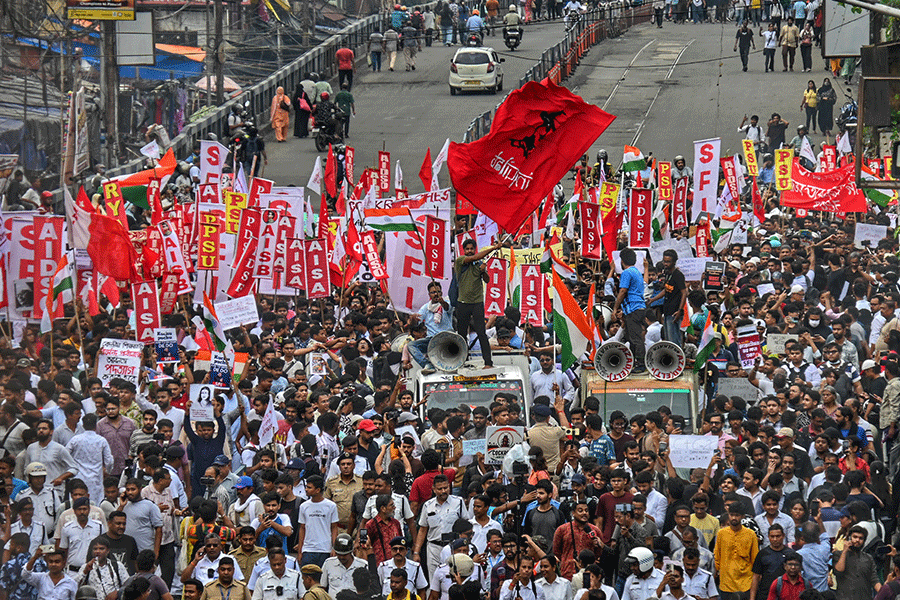
Kolkata: The West Bengal government led by Bharatiya Janata Party has invoked the draconian West Bengal Public Safety and Control of Anti-Social Activities Act, 2026, commonly known as the Goonda Act, for the first time after clashes during Friday’s protest over paper scandal in Kolkata, with police arresting 11 people, including 10 Muslims.
According to Kashmir Media Service, the Goonda Act allows for preventive detention of persons classified as “anti-social” for up to one year. Its constitutional validity is currently under challenge before the Calcutta High Court.
Police said seven FIRs had been registered in connection with the violence. Among those arrested was Mohammad Afroz, a resident of Metiabruz, detained from Andal. “We will take such action under the Goonda Act that these goons and even their next three generations will remember it,” Chief Minister Suvendu Adhikari, in a statement to the Assembly, said.


The march, organised by Left student organisations with support from the Kolkata unit of the Cockroach Janta Party (CJP), proceeded from Sealdah towards Dorina Crossing. Students’ Federation of India (SFI) state secretary Debanjan Dey condemned the attacks on journalists but alleged that the BJP had planted “agent provocateurs” to malign the protest. He accused Kolkata Police of using tear gas and batons against peaceful demonstrators and said several Left student and youth activists were injured.
Dey further alleged that video footage showed “saffron-clad BJP workers” throwing stones from atop a fire brigade vehicle and from the Moulali Yuva Kendra.
CJP spokesperson Ratna Singh said: “If these reports are accurate, any targeting of individuals on the basis of religion would be unlawful and deeply concerning.” Opposition parties and civil rights groups have criticised the Goonda Act, warning that its sweeping preventive detention powers are vulnerable to political misuse and could be used to suppress dissent.