Article 370 abrogation intensified repression in IIOJK: Analysts
Youm-e-Istehsal to reaffirm Kashmiris' rejection of India's Aug 5, 2019 move
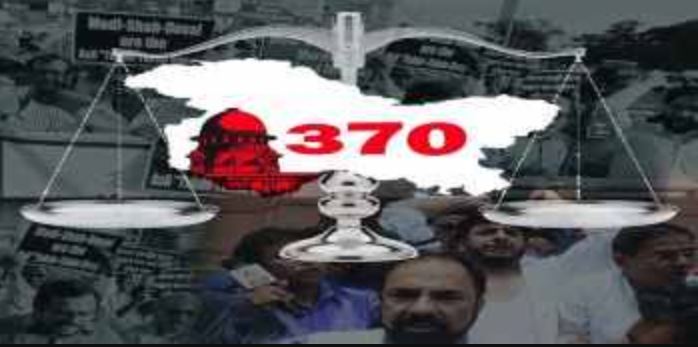
Islamabad: Kashmiris on both sides of the Line of Control and across the world will observe Youm-e-Istehsal on August 5 to mark the seventh anniversary of India’s unilateral abrogation of Articles 370 and 35A, reaffirming their rejection of New Delhi’s August 5, 2019 actions and renewing their demand for the implementation of the UN-mandated right to self-determination.
According to Kashmir Media Service, India’s BJP-led government revoked Articles 370 and 35A on August 5, 2019, stripping Indian illegally occupied Jammu and Kashmir (IIOJK) of its special constitutional status and reorganizing the disputed territory without the consent of its people. The move was accompanied by an unprecedented military lockdown, mass arrests, communication blackouts and sweeping restrictions on civil liberties.
Political analysts and Hurriyat leaders maintain that the revocation marked a major turning point in the Kashmir dispute, which remains an internationally recognized issue on the agenda of the United Nations. They said the dispute originated from the unfinished agenda of the partition of the subcontinent and that the future of Jammu and Kashmir was to be determined through a free and impartial plebiscite under UN auspices.
They recalled that India itself took the Kashmir dispute to the United Nations in 1948, following which the UN Security Council adopted Resolution 47 on April 21, 1948, calling for a plebiscite to determine the wishes of the Kashmiri people. They also cited statements by India’s founding leaders, including Mahatma Gandhi and Jawaharlal Nehru, acknowledging that the accession of Jammu and Kashmir was provisional and subject to the will of its people.
The leaders said Articles 370 and 35A had provided a special status to the occupied territory protecting the land and employment rights of its permanent residents. They said their abrogation opened the door to demographic changes, land acquisition by outsiders and erosion of Kashmir’s distinct political and cultural identity.
They maintained that the constitutional changes were carried out in violation of India’s own Constitution, as Article 370 could only be altered as ruled by the territory’s High Court.
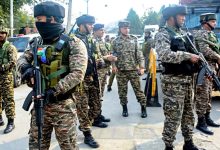
The analysts rejected India’s claims that the August 5 measures had restored peace, accelerated development and eliminated militancy. They said ground realities reflected continued militarization, political repression, economic decline, unemployment and restrictions on fundamental freedoms. They pointed to repeated cordon-and-search operations, arbitrary arrests under draconian laws, internet restrictions, shrinking civic space and growing concerns over demographic engineering in the occupied territory.
They further said key sectors of Kashmir’s economy, including tourism, horticulture, handicrafts and small businesses, had suffered severe setbacks since 2019, while thousands of people had lost livelihoods. They added that students, traders and growers continued to face mounting economic and social hardships amid prolonged uncertainty.
They reiterated that the people of occupied Jammu and Kashmir had consistently rejected India’s unilateral actions and continued to demand a peaceful resolution of the dispute in accordance with the UN Security Council resolutions and the aspirations of the Kashmiri people.
They urged the United Nations, the Organization of Islamic Cooperation and the international community to take effective measures to halt what they described as India’s demographic and political engineering in IIOJK, ensure accountability for human rights violations and facilitate a just and lasting settlement of the Kashmir dispute through the implementation of the relevant UN resolutions