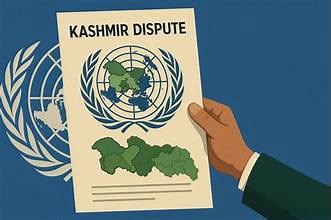
Seventy-eight years after the United Nations called for the future of Jammu and Kashmir to be determined according to the will of its people, the promise remains unfulfilled. The anniversary of the United Nations Commission for India and Pakistan (UNCIP) Resolution of August 13, 1948, is therefore not merely a date in diplomatic history. It is a reminder of an international commitment that has endured on paper while remaining unrealized in practice.
For the people of Jammu and Kashmir and the global Kashmiri diaspora, the anniversary raises a simple but fundamental question: If the international community once agreed that the people of Kashmir should determine their own future, why has that principle remained unimplemented for nearly eight decades?
The UNCIP resolution was not simply a statement of aspiration. Its proposals were accepted in writing by the governments of India and Pakistan, giving them the character of an international agreement. Part III stated that the two governments reaffirmed their wish that the future status of Jammu and Kashmir should be determined “in accordance with the will of the people” and agreed to establish conditions under which that will could be freely expressed.

Whatever disagreements existed between India and Pakistan over the details of the UNCIP proposals, the principle of allowing the people of Kashmir to determine their future was clearly part of the international diplomatic framework established at the time.
This was reinforced by Belgium’s Ambassador Fernand van Langenhove, then President of the UN Security Council. On January 28, 1948, he observed that the documents before the Council demonstrated agreement between the parties that a plebiscite should be conducted under conditions guaranteeing complete impartiality and under the aegis of the United Nations.
The historical record also shows that the United States and Great Britain played important roles in supporting the plebiscite framework. President Harry Truman and British Prime Minister Clement Attlee urged India and Pakistan to submit their differences over demilitarization to arbitration by Admiral Chester Nimitz, who had been designated as the UN Plebiscite Administrator. Senator Frank Graham of the United States subsequently served as the UN representative attempting to negotiate the conditions necessary for demilitarization and a plebiscite. And yet, the promised process never took place.
The Question India Once Accepted
The most striking aspect of the Kashmir dispute is that the principle of popular consent was not merely articulated by international officials. It was also repeatedly acknowledged by Indian representatives before the United Nations.
On January 15, 1948, Sir Gopalaswami Ayyangar, India’s representative at the Security Council, stated that when the Indian Independence Act came into force, Jammu and Kashmir, like other princely states, became free to decide whether to accede to India, Pakistan or remain independent.
On March 1, 1951, Indian representative Sir Benegal Rama Rau told the Security Council: “The people of Kashmir are not mere chattels to be disposed of according to a rigid formula; their future must be decided on their own interest and in accordance with their own desires.”
And on January 31, 1952, during the Security Council’s 572nd meeting, another Indian representative, Mr. Setalvad, stated: “I was the first to declare that the people of Jammu and Kashmir should freely decide their own future.”
These statements should not be dismissed as relics of another era. They go to the heart of the dispute today.
If the people of Kashmir were once recognized as possessing a legitimate interest in determining their political future, what principle allows that interest to be permanently set aside?
Washington’s Historical Record
The United States, too, has a substantial record of supporting the principle that Kashmir could not be settled unilaterally.
On February 15, 1957, US Ambassador Henry Cabot Lodge Jr. reminded the Security Council that the resolutions of August 13, 1948, provided for a cease-fire, a truce and ultimately the determination of the future status of Jammu and Kashmir “in accordance with the will of the people.”
On June 15, 1962, US Ambassador Adlai Stevenson similarly argued that the larger interests of South Asian peace and security required a settlement of Kashmir and that the dispute could not be resolved unilaterally by either India or Pakistan. A settlement, he said, required agreement and compromise while taking into account the freely expressed will of the people concerned.
These statements present an uncomfortable challenge to today’s international diplomacy. The words have changed little. The circumstances have changed enormously. But the underlying question remains the same.
Kashmir and the Nuclear Shadow
The cost of leaving Kashmir unresolved is not borne by Kashmiris alone. India and Pakistan are nuclear-armed states whose military confrontation has repeatedly brought South Asia dangerously close to a wider conflict. The crisis following the Pahalgam attack in April 2025 once again demonstrated how quickly tensions between the two countries can escalate. That should have been a warning to the international community.
It is unrealistic to believe that South Asia can achieve durable strategic stability while the political dispute that has fueled repeated India-Pakistan confrontations remains unresolved. Arms-control measures, missile limitations and military confidence-building are important. But they cannot substitute for a political settlement. Reducing the weapons while leaving the underlying conflict untouched risks treating the symptom while ignoring the disease.
Can the World Continue to Look Away?
For decades, India’s control over Jammu and Kashmir has continued while the international community has largely moved from attempting to resolve the dispute toward managing its consequences. But management is not resolution. Nor can the passage of time, administrative changes or unilateral measures transform an internationally disputed territory into a settled question.
The issuance of millions of domicile certificates following changes to domicile rules by BJP-led Indian government has intensified concerns among Kashmiris about demographic transformation. Critics argue that such measures threaten to alter the demographic character of the territory before its final political status has been determined. Those concerns deserve serious international scrutiny, particularly in light of UN Security Council resolutions emphasizing that unilateral material changes cannot constitute a final settlement of the dispute.
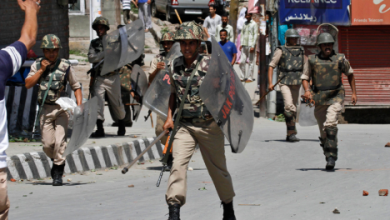
At the same time, concerns about freedom of expression, political participation, assembly, movement and independent journalism raise an even broader question: Can a people meaningfully exercise the right to determine their future in an environment where fundamental freedoms are restricted? Any legitimate exercise of self-determination would require conditions in which people can express their political preferences freely—without coercion, intimidation or fear.
The United Nations Has a Responsibility
The United Nations cannot change history. But it can decide whether its own history still matters. The organization possesses decades of resolutions, debates and diplomatic commitments concerning Kashmir. Its archives contain a record of what the international community promised and what the parties themselves once accepted.
The challenge now is not to resurrect the past for its own sake. It is to apply enduring principles to a conflict that continues to threaten regional peace. A just and peaceful settlement would benefit everyone.
For the people of Kashmir, it would mean an opportunity to have their political future determined through a credible and peaceful process. For India, it could offer a way out of a costly and dangerous strategic confrontation, freeing resources and political energy for economic development and its legitimate aspirations to global leadership. For Pakistan, it could reduce a longstanding security burden and allow greater attention to economic development.
For South Asia, it could replace one of the world’s most dangerous rivalries with a framework for cooperation. And for the United States and the wider international community, it would demonstrate that diplomacy, human rights and the principle of self-determination are not merely words to be invoked when convenient.
The Promise Must Mean Something
The Kashmir dispute has survived governments, wars, cease-fires, diplomatic initiatives and generations of political leaders. What it has not survived is the belief that the problem can simply be wished away. The international community has repeatedly called for peace. But peace cannot mean permanent silence imposed upon one side of a dispute.
It cannot mean that the aspirations of millions disappear simply because decades have passed. And it cannot mean that an international commitment becomes meaningless merely because implementing it has proved difficult.
The people of Kashmir have waited long enough for the world to reconcile its principles with its actions.
As the 78th anniversary of the UNCIP Resolution approaches, the international community should return to the UN archives—not simply to remember what was promised, but to ask why that promise remains unfulfilled.
The question before the world is no longer whether Kashmir was once the subject of international commitments. The historical record is unmistakable. The question is whether those commitments still have meaning.
Let this anniversary mark the end of broken promises. Let the United Nations reclaim its role in seeking a peaceful, just and durable settlement of Kashmir—and let the will of the people finally matter.
Dr. Ghulam Nabi Fai is Chairman of the World Forum for Peace & Justice. He can be reached at [email protected]