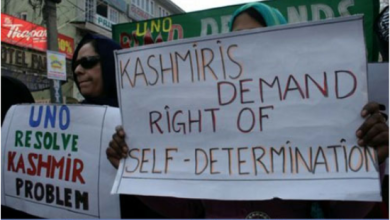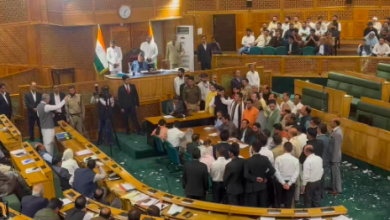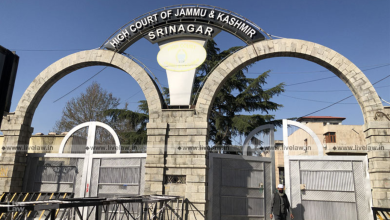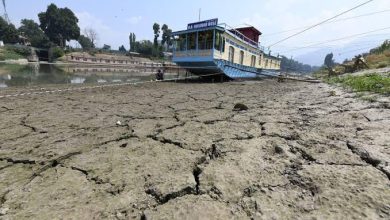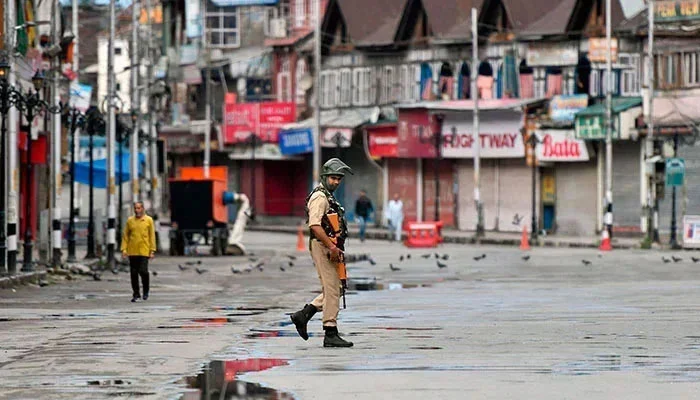
 “Normalcy” was presented as the promise that would follow the removal of Indian illegally occupied Jammu & Kashmir’s special status. Instead, the revocation of Article 370 in August 2019 ushered in a new phase of political uncertainty, restrictions and human rights concerns in the region. The Indian government under Prime Minister Narendra Modi unilaterally stripped Jammu & Kashmir of the special status it had enjoyed since the 1950s, ending a significant measure of internal autonomy. The BJP government justified the move as necessary to combat militancy, strengthen integration and promote economic development, while assuring that normalcy would soon return. This justification, however, largely disregarded the sentiments of Kashmiris, the natives of the land, who strongly opposed the abrogation and warned that it represented a covert attempt at demographic engineering and political control.
The measures accompanying the abrogation reinforced these apprehensions. Article 35A, a provision associated with Article 370, was revoked, ending the legal framework under which the Jammu & Kashmir legislature could define “permanent residents” and grant them specific rights and privileges, including land ownership, government employment and residency. The former state was also reorganized into two Union Territories, Jammu & Kashmir and Ladakh, fundamentally altering its political and constitutional status without the consent of its people.
The transition itself was marred by grave human rights violations. Attempts to dismantle Kashmir’s autonomy were met with considerable resistance from its resilient inhabitants, but their efforts to safeguard their right to exist on their own terms were met with atrocities by Indian forces. Political leaders were unlawfully detained, thousands of Kashmiri youth were arbitrarily arrested, and a complete communication blackout was imposed on internet and mobile services. Movement was heavily restricted and the curfew lasted for months, during which people struggled to access basic necessities.
There were also reports of mistreatment and torture of detainees. The Indian government made sure that voices of dissent were met with brute force rather than meaningful political engagement. What was presented as a measure to bring integration, development and normalcy consequently became a source of profound political and human rights concerns for the people of IIOJK.
Beyond the moral weight of these events lies a more uncomfortable question for New Delhi: Does international law actually permit any of what has unfolded over the past seven years and before?
The issue of IIOJK is not an internal matter of India, nor does India has the right to act as the sole authority over it. UN Security Council Resolutions 47, 51, 80, and 91 have called for the region’s future to be settled through a free and impartial plebiscite, with UNSC Resolution 91 explicitly stating that any decision by a locally convened constituent assembly “would not constitute a disposition of the State” and that the final status must be decided “through the democratic method of a free and impartial plebiscite.” New Delhi, however, has disregarded this entirely by altering the region’s fundamental status through the annulment of Article 370. The unlawful arrests made during the transition period are a clear violation of Article 9 of the ICCPR, which guarantees the right to liberty, access to a fair trial, and protection from arbitrary arrest, while Article 19 raises serious concerns regarding the months-long communication blackout.
Then comes the question of demography. The repeal of Article 35A and the domicile rules that replaced it in 2020 granted land ownership rights to non-Kashmiris for the first time since 1954. Critics consider this move to be in contradiction with Article 49 of the Fourth Geneva Convention, which prohibits an occupying power from transferring parts of its own civilian population into territory it controls but does not sovereignly own. India, however, outrightly rejects this comparison since it does not consider IIOJK an occupied territory but a part of its own territory.
None of this has drawn the kind of international pressure that the scale of these violations would seem to warrant. The ugly truth is that the international community rarely intervenes out of principle alone; intervention is enforced only when incentives align. The cause of IIOJK may not have much to offer global powers, which explains why it has failed to capture the interest of those in the corridors of power and influence. But irrespective of what the trajectory of IIOJK’s cause or fate may be, we must keep the stories of its people’s indomitable spirit alive and known to the world, an idea the Palestinian poet Refaat Alareer also captured in his own context, in words that have outlived him: even when a life is lost, the story it carries must live on, carried by whoever hears it next. IIOJK right now may be a pulsating nerve to some, but for us, it is an ummatic project yet to be realized. Its story must not be allowed to die in silence.
The writer is a student of Peace & Conflict Studies at the National Defence University, Islamabad. Currently she is working with the KIIR as a Research Associate.