Manual scavenging persists in India despite Modi govt’s eradication claim
Dalit women’s testimonies expose continued caste-linked practice across the country
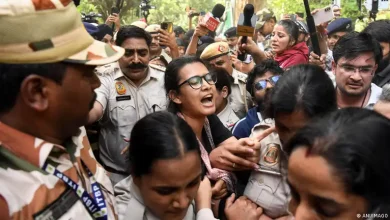
New Delhi : Women from Uttar Pradesh, Madhya Pradesh, Bihar and other Indian states have challenged the BJP-led Indian government’s claim that manual scavenging has been eliminated across the country, travelling to New Delhi to testify that the outlawed, caste-linked practice continues.
According to Kashmir Media Service, the women travelled to New Delhi on September 1 to speak about their experiences of manual scavenging, according to an Indian media report. Their testimonies directly contradict a recent government claim in Parliament that every district in the country had been declared free of manual scavenging.
“How can the government say there is no manual scavenging when we are still forced to clean dry latrines every day?” the women asked. “When are we going to get freedom from this untouchability and slavery?”


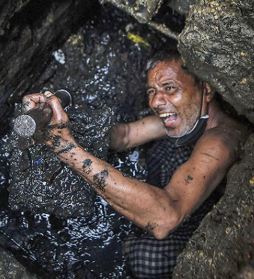
Manual scavenging involves manually cleaning, carrying or disposing of human excreta from insanitary toilets and has historically been imposed on India’s most marginalized caste communities.
Modi govt to extend Article 371 provisions to Ladakh, claims BJP minister Rijiju
Although India outlawed the practice under a 2013 law, activists say caste discrimination, poverty and inadequate sanitation infrastructure have allowed it to survive.
Seventy-year-old Mussi Devi from Uttar Pradesh said she had spent her entire life cleaning human excreta and wanted to see the practice disappear before she died. Anguri Bai from Madhya Pradesh said her mother-in-law introduced her to cleaning dry latrines after she married at 14 and that she continues to do the work. Chanjotiya Devi from Bihar said she began manual scavenging at 15 and wanted the practice eliminated so that another generation would not inherit it.
The testimonies came as the Safai Karmachari Andolan (SKA), an organization campaigning against manual scavenging, launched its year-long INDIA @ 80 campaign, demanding the complete eradication of manual scavenging and dry latrines.
The accounts contrast sharply with the Modi government’s position. During Parliament’s recently concluded monsoon session, Indian Minister of State for Social Justice and Empowerment Ramdas Athawale said a 2024-25 survey had found no manual scavengers.
“All the districts of the country have completed the survey and declared themselves as manual scavengers’ free,” he told lawmakers.
However, the Indian government itself identified 58,098 manual scavengers through surveys conducted in 2013 and 2018.
SKA founder Bezwada Wilson said the fact that workers had to travel to Delhi to demonstrate that manual scavenging still existed reflected what he described as a continuing casteist mindset.
55 Dalit sanitation workers’ deaths expose India’s enduring caste-based exploitation
“I started the fight when I was 16 years old and now I am 63 years old,” Wilson said. “Many things have changed, but manual scavenging in dry latrines still remains.”
SKA has also accused the Indian government of undercounting sanitation-worker deaths, saying 593 workers died while cleaning sewers and septic tanks between January 2021 and July 2026, compared with 332 deaths reported by the government to Parliament.
Despite legal prohibitions and repeated Indian Supreme Court orders calling for mechanised sanitation, activists say India’s failure to eradicate manual scavenging remains closely linked to the caste hierarchy that has forced generations of marginalized communities to handle human waste.